Showing posts with label Jerusalem. Show all posts

Wednesday, April 29, 2026

On the Road from Jerusalem: A Study of Acts (The Plot Thickens - Acts 23:1-35)

In our Wednesday morning Bible study, we're using the Acts of the Apostles to discuss the growth of the earlier church from its birth in the city of Jerusalem to Paul’s arrival in Rome. During our time together, we’ll look at the following:

In our twenty-fourth session, we looked at Acts 23:1-35 and discussed Paul speaking before the Jewish council in Jerusalem. The discussion and passage are below.


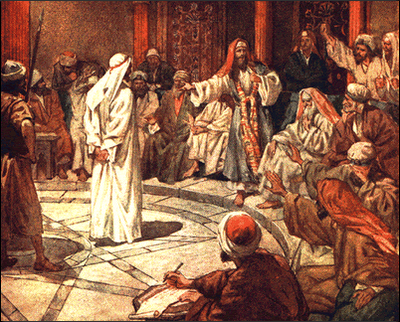
While Paul was looking intently at the council he said, “Brothers, up to this day I have lived my life with a clear conscience before God.” Then the high priest Ananias ordered those standing near him to strike him on the mouth. At this Paul said to him, “God will strike you, you whitewashed wall! Are you sitting there to judge me according to the law, and yet in violation of the law you order me to be struck?” Those standing nearby said, “Do you dare to insult God’s high priest?” And Paul said, “I did not realize, brothers, that he was high priest, for it is written, ‘You shall not speak evil of a leader of your people.’ ”

When Paul noticed that some were Sadducees and others were Pharisees, he called out in the council, “Brothers, I am a Pharisee, a son of Pharisees. I am on trial concerning the hope of the resurrection of the dead.” When he said this, a dissension began between the Pharisees and the Sadducees, and the assembly was divided. (The Sadducees say that there is no resurrection or angel or spirit, but the Pharisees acknowledge all three.) Then a great clamor arose, and certain scribes of the Pharisees’ group stood up and contended, “We find nothing wrong with this man. What if a spirit or an angel has spoken to him?” When the dissension became violent, the tribune, fearing that they would tear Paul to pieces, ordered the soldiers to go down, take him by force, and bring him into the barracks.

That night the Lord stood near him and said, “Keep up your courage! For just as you have testified for me in Jerusalem, so you must bear witness also in Rome.”

In the morning the Jews joined in a conspiracy and bound themselves by an oath neither to eat nor drink until they had killed Paul. There were more than forty who joined in this conspiracy. They went to the chief priests and elders and said, “We have strictly bound ourselves by an oath to taste no food until we have killed Paul. Now then, you and the council must notify the tribune to bring him down to you, on the pretext that you want to make a more thorough examination of his case. And we are ready to do away with him before he arrives.”
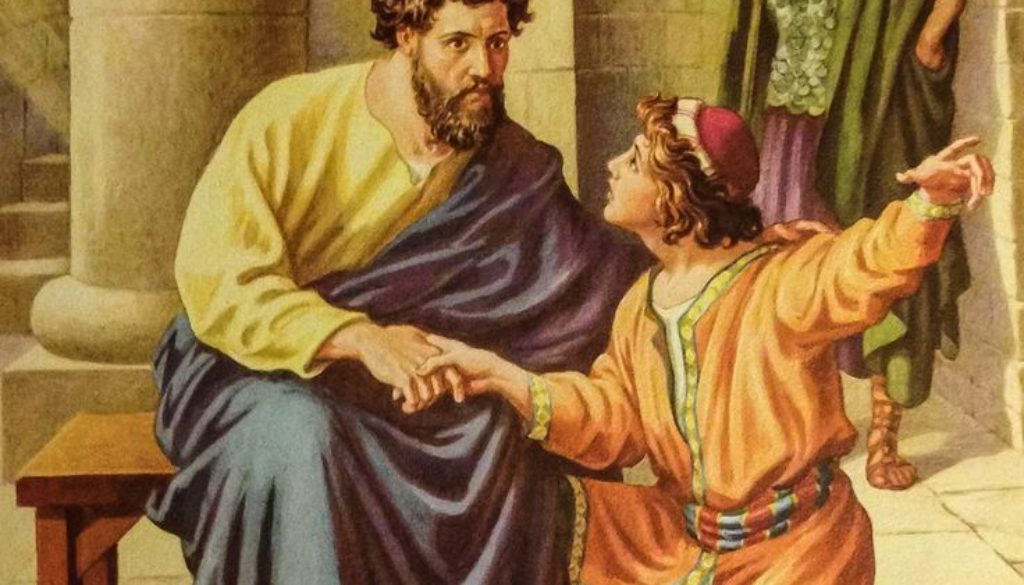
Now the son of Paul’s sister heard about the ambush, so he went and gained entrance to the barracks and told Paul. Paul called one of the centurions and said, “Take this young man to the tribune, for he has something to report to him.” So he took him, brought him to the tribune, and said, “The prisoner Paul called me and asked me to bring this young man to you; he has something to tell you.” The tribune took him by the hand, drew him aside privately, and asked, “What is it that you have to report to me?” He answered, “The Jews have agreed to ask you to bring Paul down to the council tomorrow, as though they were going to inquire more thoroughly into his case. But do not be persuaded by them, for more than forty of their men are lying in ambush for him. They have bound themselves by an oath neither to eat nor drink until they kill him. They are ready now and are waiting for your consent.” So the tribune dismissed the young man, ordering him, “Tell no one that you have informed me of this.”

Then he summoned two of the centurions and said, “Get ready to leave by nine o’clock tonight for Caesarea with two hundred soldiers, seventy horsemen, and two hundred spearmen. Also provide mounts for Paul to ride and take him safely to Felix the governor.” He wrote a letter to this effect:

“Claudius Lysias to his Excellency the governor Felix, greetings. This man was seized by the Jews and was about to be killed by them, but when I had learned that he was a Roman, I came with the guard and rescued him. Since I wanted to know the charge for which they accused him, I had him brought to their council. I found that he was accused concerning questions of their law but was charged with nothing deserving death or imprisonment. When I was informed that there would be a plot against the man, I sent him to you at once, ordering his accusers also to state before you what they have against him.”

So the soldiers, according to their instructions, took Paul and brought him during the night to Antipatris. The next day they let the horsemen go on with him, while they returned to the barracks. When they came to Caesarea and delivered the letter to the governor, they presented Paul also before him. On reading the letter, he asked what province he belonged to, and when he learned that he was from Cilicia, he said, “I will give you a hearing when your accusers arrive.” Then he ordered that he be kept under guard in Herod’s headquarters.

Wednesday, April 22, 2026

On the Road from Jerusalem: A Study of Acts (A Personal Testimony - Acts 22:1-30)

In our Wednesday morning Bible study, we're using the Acts of the Apostles to discuss the growth of the earlier church from its birth in the city of Jerusalem to Paul’s arrival in Rome. During our time together, we’ll look at the following:

In our twenty-third session, we looked at Acts 22:1-30 and discussed Paul's personal testimony to the Jewish mob in Jerusalem. The discussion and passage are below.


“Brothers and fathers, listen to the defense that I now make before you.”

When they heard him addressing them in Hebrew, they became even more quiet. Then he said:

“I am a Jew born in Tarsus in Cilicia but brought up in this city at the feet of Gamaliel, educated strictly according to our ancestral law, being zealous for God, just as all of you are today. I persecuted this Way up to the point of death by binding both men and women and putting them in prison, as the high priest and the whole council of elders can testify about me. From them I also received letters to the brothers in Damascus, and I went there in order to bind those who were there and to bring them back to Jerusalem for punishment.

“While I was on my way and approaching Damascus, about noon a great light from heaven suddenly shone about me. I fell to the ground and heard a voice saying to me, ‘Saul, Saul, why are you persecuting me?’ I answered, ‘Who are you, Lord?’ Then he said to me, ‘I am Jesus of Nazareth whom you are persecuting.’ Now those who were with me saw the light but did not hear the voice of the one who was speaking to me. I asked, ‘What am I to do, Lord?’ The Lord said to me, ‘Get up and go to Damascus; there you will be told everything that has been assigned to you to do.’ Since I could not see because of the brightness of that light, those who were with me took my hand and led me to Damascus.

“A certain Ananias, who was a devout man according to the law and well spoken of by all the Jews living there, came to me, and standing beside me, he said, ‘Brother Saul, regain your sight!’ In that very hour I regained my sight and saw him. Then he said, ‘The God of our ancestors has chosen you to know his will, to see the Righteous One, and to hear his own voice, for you will be his witness to all the world of what you have seen and heard. And now why do you delay? Get up, be baptized, and have your sins washed away, calling on his name.’

“After I had returned to Jerusalem and while I was praying in the temple, I fell into a trance and saw Jesus saying to me, ‘Hurry and get out of Jerusalem quickly, because they will not accept your testimony about me.’ And I said, ‘Lord, they themselves know that in every synagogue I imprisoned and beat those who believed in you. And while the blood of your witness Stephen was shed, I myself was standing by, approving and keeping the coats of those who killed him.’ Then he said to me, ‘Go, for I will send you far away to the gentiles.’ ”

Up to this point they listened to him, but then they shouted, “Away with such a fellow from the earth! For he should not be allowed to live.” And while they were shouting, throwing off their cloaks, and tossing dust into the air, the tribune directed that he was to be brought into the barracks and ordered him to be examined by flogging, to find out the reason for this outcry against him. But when they had tied him up with straps, Paul said to the centurion who was standing by, “Is it legal for you to flog a Roman person who is uncondemned?” When the centurion heard that, he went to the tribune and said to him, “What are you about to do? This man is a Roman.” The tribune came and asked Paul, “Tell me, are you a Roman?” And he said, “Yes.” The tribune answered, “It cost me a large sum of money to get my citizenship.” Paul said, “But I was born a Roman.” Immediately those who were about to examine him drew back from him, and the tribune also was afraid, for he realized that Paul was a Roman and that he had bound him.

Since he wanted to find out what Paul was being accused of by the Jews, the next day he released him and ordered the chief priests and the entire council to meet. He brought Paul down and had him stand before them.

Wednesday, April 15, 2026

On the Road from Jerusalem: A Study of Acts (Jerusalem - Acts 21:1-40)

In our Wednesday morning Bible study, we're using the Acts of the Apostles to discuss the growth of the earlier church from its birth in the city of Jerusalem to Paul’s arrival in Rome. During our time together, we’ll look at the following:

In our twenty-second session, we looked at Acts 21:1-40 and discussed Paul's journey to and reception in Jerusalem. The discussion and passage are below.


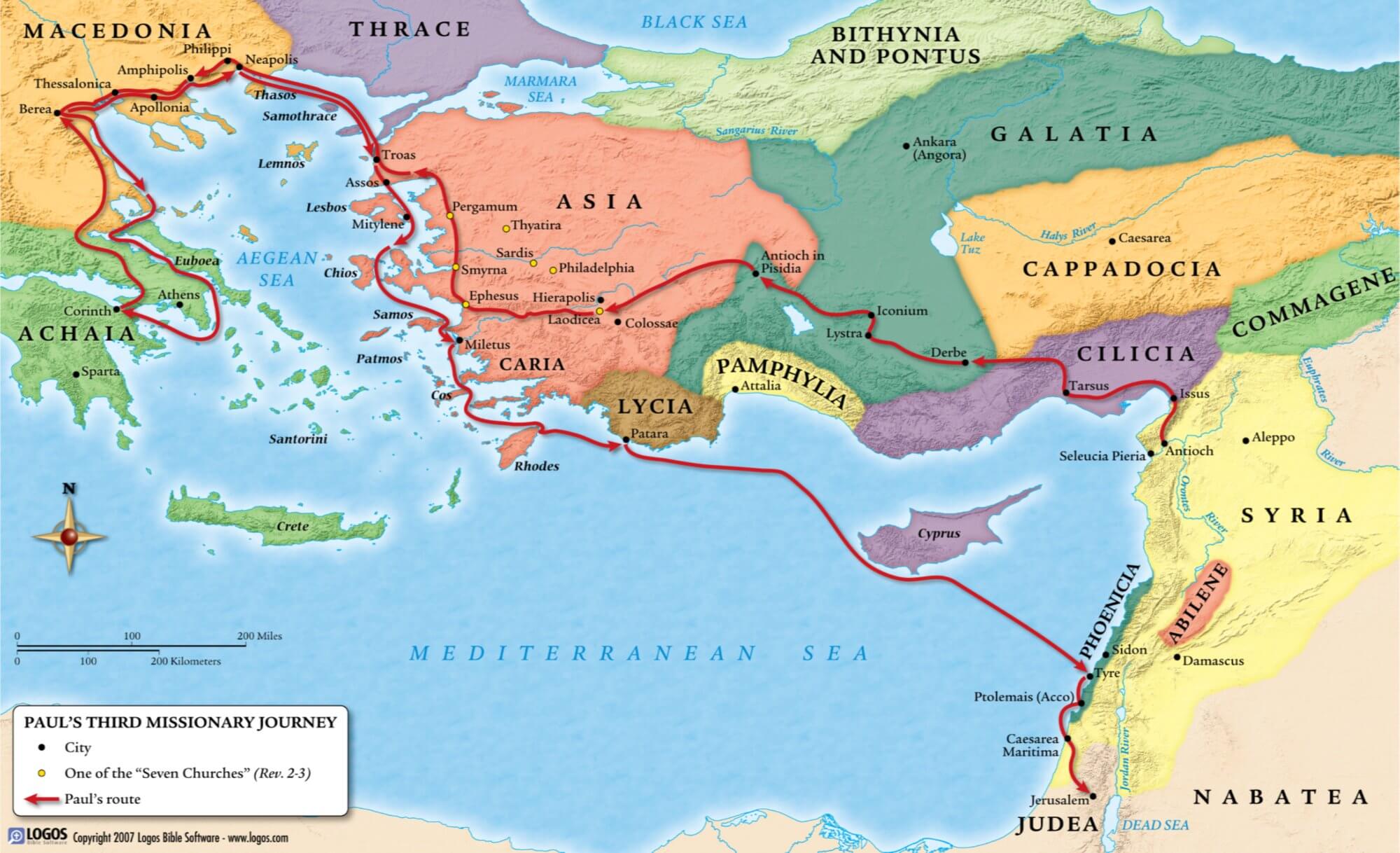
When we had parted from them and set sail, we came by a straight course to Cos, and the next day to Rhodes, and from there to Patara. When we found a ship bound for Phoenicia, we went on board and set sail. We came in sight of Cyprus, and leaving it on our left, we sailed to Syria and landed at Tyre, because the ship was to unload its cargo there. We looked up the disciples and stayed there for seven days. Through the Spirit they told Paul not to go on to Jerusalem. When our days there were ended, we left and proceeded on our journey, and all of them, with wives and children, escorted us outside the city. There we knelt down on the beach and prayed and said farewell to one another. Then we went on board the ship, and they returned home.

When we had finished the voyage from Tyre, we arrived at Ptolemais, and we greeted the brothers and sisters and stayed with them for one day. The next day we left and came to Caesarea, and we went into the house of Philip the evangelist, one of the seven, and stayed with him. He had four unmarried daughters who had the gift of prophecy. While we were staying there for several days, a prophet named Agabus came down from Judea. He came to us and took Paul’s belt, bound his own feet and hands with it, and said, “Thus says the Holy Spirit, ‘This is the way the Jews in Jerusalem will bind the man who owns this belt and will hand him over to the gentiles.’ ” When we heard this, we and the people there urged him not to go up to Jerusalem. Then Paul answered, “What are you doing, weeping and breaking my heart? For I am ready not only to be bound but even to die in Jerusalem for the name of the Lord Jesus.” Since he would not be persuaded, we remained silent except to say, “The Lord’s will be done.”

After these days we got ready and started to go up to Jerusalem. Some of the disciples from Caesarea also came along and brought us to the house of Mnason of Cyprus, an early disciple, with whom we were to stay.

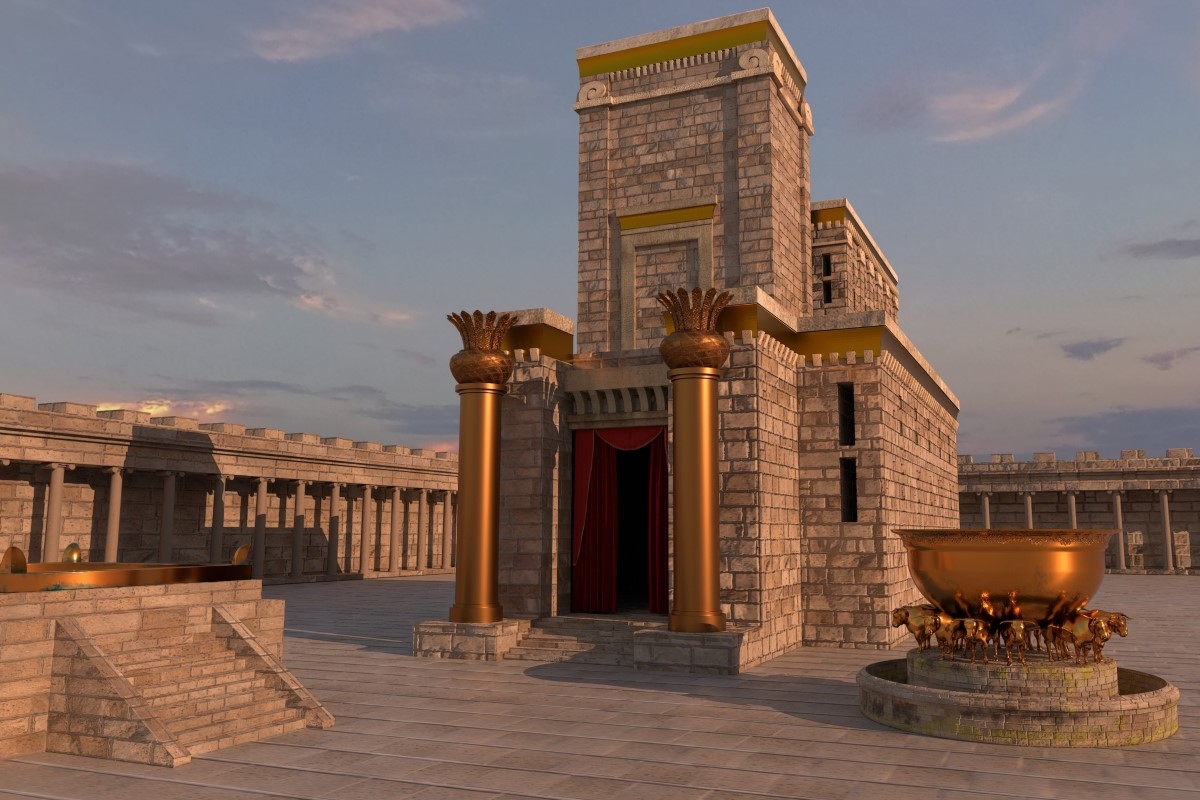
When we arrived in Jerusalem, the brothers welcomed us warmly. The next day Paul went with us to visit James, and all the elders were present. After greeting them, he related one by one the things that God had done among the gentiles through his ministry. When they heard it, they praised God. Then they said to him, “You see, brother, how many thousands of believers there are among the Jews, and they are all zealous for the law. They have been told about you that you teach all the Jews living among the gentiles to forsake Moses and that you tell them not to circumcise their children or observe the customs. What then is to be done? They will certainly hear that you have come. So do what we tell you. We have four men who are under a vow. Join these men, go through the rite of purification with them, and pay for the shaving of their heads. Thus all will know that there is nothing in what they have been told about you but that you yourself observe and guard the law. But as for the gentiles who have become believers, we have sent a letter with our judgment that they should abstain from what has been sacrificed to idols and from blood and from what is strangled and from sexual immorality.” Then Paul took the men, and the next day, having purified himself, he entered the temple with them, making public the completion of the days of purification when the sacrifice would be made for each of them.

When the seven days were almost completed, the Jews from Asia, who had seen him in the temple, stirred up the whole crowd. They seized him, shouting, “Fellow Israelites, help! This is the man who is teaching everyone everywhere against our people, our law, and this place; more than that, he has actually brought Greeks into the temple and has defiled this holy place.” For they had previously seen Trophimus the Ephesian with him in the city, and they supposed that Paul had brought him into the temple. Then all the city was aroused, and the people rushed together. They seized Paul and dragged him out of the temple, and immediately the doors were shut. While they were trying to kill him, word came to the tribune of the cohort that all Jerusalem was in an uproar. Immediately he took soldiers and centurions and ran down to them. When they saw the tribune and the soldiers, they stopped beating Paul. Then the tribune came, arrested him, and ordered him to be bound with two chains; he inquired who he was and what he had done. Some in the crowd shouted one thing, some another, and as he could not learn the facts because of the uproar, he ordered him to be brought into the barracks. When Paul came to the steps, the violence of the mob was so great that he had to be carried by the soldiers. The crowd that followed kept shouting, “Away with him!”

Just as Paul was about to be brought into the barracks, he said to the tribune, “May I say something to you?” The tribune replied, “Do you know Greek? Then you are not the Egyptian who recently stirred up a revolt and led the four thousand assassins out into the wilderness?” Paul replied, “I am a Jew from Tarsus in Cilicia, a citizen of an important city; I beg you, let me speak to the people.” When he had given him permission, Paul stood on the steps and motioned to the people for silence, and when there was a great hush, he addressed them in the Hebrew language, saying:

Wednesday, January 21, 2026

On the Road from Jerusalem: A Study of Acts (Phase Three Begins - Acts 11:1-30)

In our Wednesday morning Bible study, we're using the Acts of the Apostles to discuss the growth of the earlier church from its birth in the city of Jerusalem to Paul’s arrival in Rome. During our time together, we’ll look at the following:

In our eleventh session, we looked at Acts 11:1-30 and discussed the beginning of the church's outreach to the world. The discussion and passage are below.


Now the apostles and the brothers and sisters who were in Judea heard that the gentiles had also accepted the word of God. So when Peter went up to Jerusalem, the circumcised believers criticized him, saying, “Why did you go to uncircumcised men and eat with them?” Then Peter began to explain it to them, step by step, saying, “I was in the city of Joppa praying, and in a trance I saw a vision. There was something like a large sheet coming down from heaven, being lowered by its four corners, and it came close to me. As I looked at it closely I saw four-footed animals, beasts of prey, reptiles, and birds of the air. I also heard a voice saying to me, ‘Get up, Peter; kill and eat.’ But I replied, ‘By no means, Lord, for nothing profane or unclean has ever entered my mouth.’ But a second time the voice answered from heaven, ‘What God has made clean, you must not call profane.’ This happened three times; then everything was pulled up again to heaven. At that very moment three men, sent to me from Caesarea, arrived at the house where we were. The Spirit told me to go with them and not to make a distinction between them and us. These six brothers also accompanied me, and we entered the man’s house. He told us how he had seen the angel standing in his house and saying, ‘Send to Joppa and bring Simon, who is called Peter; he will give you a message by which you and your entire household will be saved.’ And as I began to speak, the Holy Spirit fell upon them just as it had upon us at the beginning. And I remembered the word of the Lord, how he had said, ‘John baptized with water, but you will be baptized with the Holy Spirit.’ If then God gave them the same gift that he gave us when we believed in the Lord Jesus Christ, who was I that I could hinder God?” When they heard this, they were silenced. And they praised God, saying, “Then God has given even to the gentiles the repentance that leads to life.”

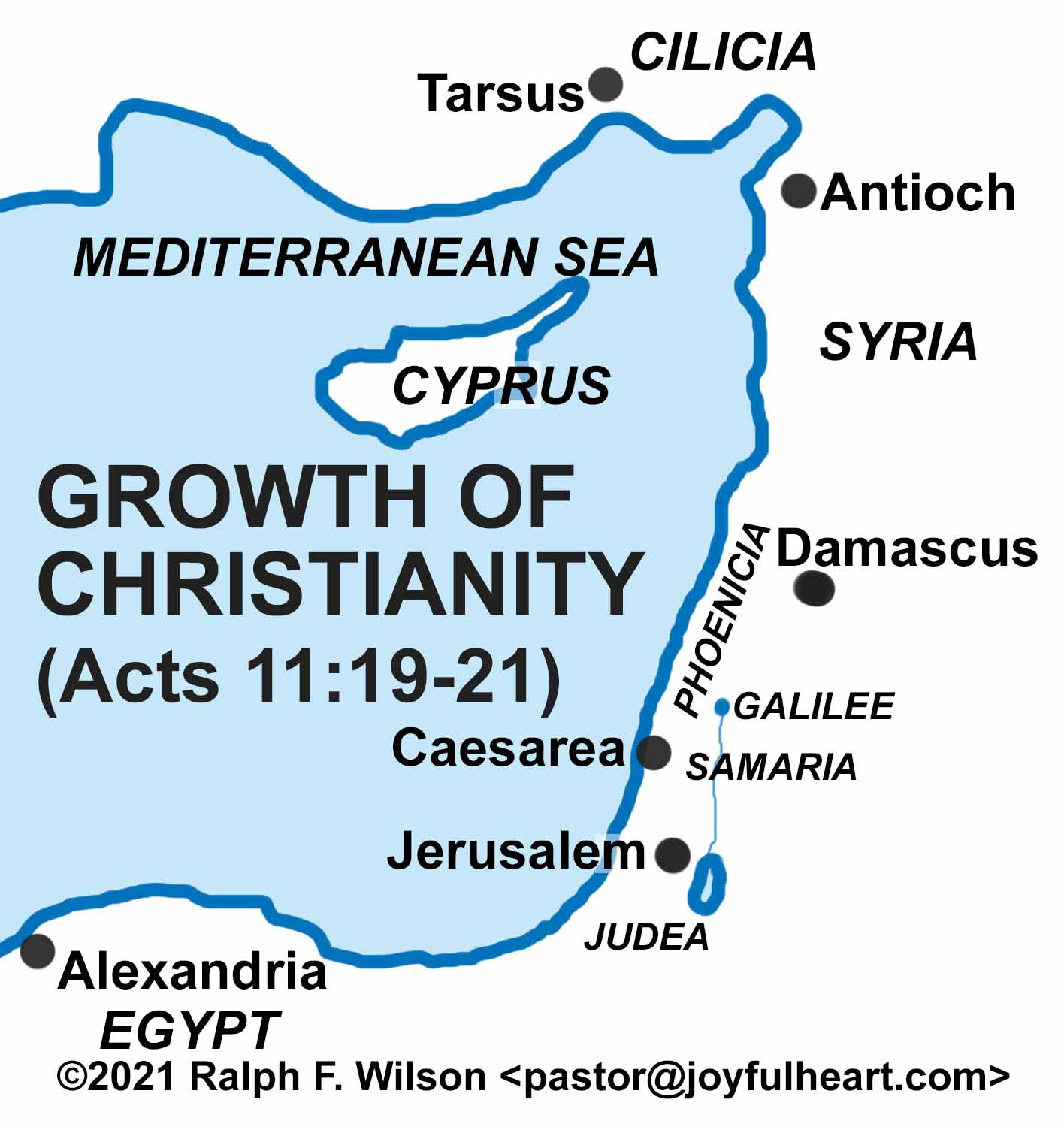
Now those who were scattered because of the persecution that took place over Stephen traveled as far as Phoenicia, Cyprus, and Antioch, and they spoke the word to no one except Jews. But among them were some men of Cyprus and Cyrene who, on coming to Antioch, spoke to the Hellenists also, proclaiming the Lord Jesus. The hand of the Lord was with them, and a great number became believers and turned to the Lord. News of this came to the ears of the church in Jerusalem, and they sent Barnabas to Antioch. When he came and saw the grace of God, he rejoiced, and he exhorted them all to remain faithful to the Lord with steadfast devotion, for he was a good man, full of the Holy Spirit and of faith. And a great many people were brought to the Lord. Then Barnabas went to Tarsus to look for Saul, and when he had found him he brought him to Antioch. So it was that for an entire year they met with the church and taught a great many people, and it was in Antioch that the disciples were first called “Christians.”

At that time prophets came down from Jerusalem to Antioch. One of them named Agabus stood up and predicted by the Spirit that there would be a severe famine over all the world, and this took place during the reign of Claudius. The disciples determined that, according to their ability, each would send relief to the brothers and sisters living in Judea; this they did, sending it to the elders by Barnabas and Saul.

Wednesday, December 3, 2025

On the Road from Jerusalem: A Study of Acts (When Something Bad Happens - Acts 7:1-60)

Join us as we use the Acts of the Apostles to discuss the growth of the earlier church from its birth in the city of Jerusalem to Paul’s arrival in Rome. During our time together, we’ll look at the following:

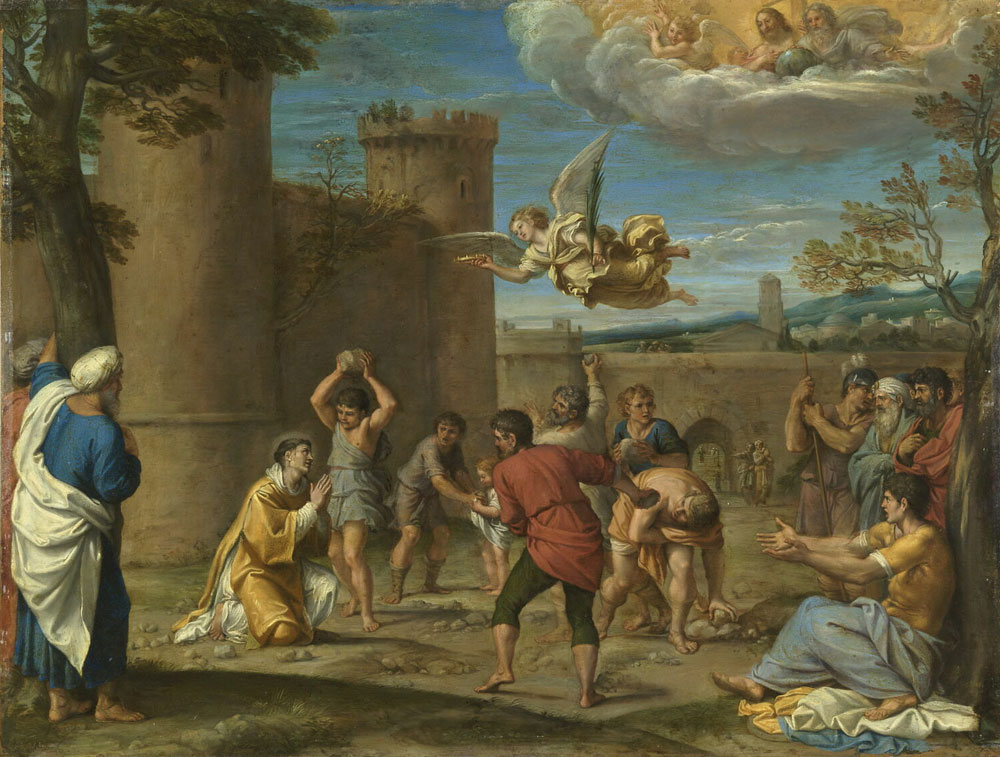
In our eighth session, we looked at Acts 7:1-60 and discussed the message and stoning of Stephen. The discussion and passage are below.


Then the high priest asked him, “Are these things so?” And Stephen replied:

“Brothers and fathers, listen to me. The God of glory appeared to our ancestor Abraham when he was in Mesopotamia, before he lived in Haran, and said to him, ‘Leave your country and your relatives and go to the land that I will show you.’ Then he left the country of the Chaldeans and settled in Haran. After his father died, God had him move from there to this country in which you are now living. He did not give him any of it as a heritage, not even a foot’s length, but promised to give it to him as his possession and to his descendants after him, even though he had no child. And God spoke in these terms, that his descendants would be resident aliens in a country belonging to others, who would enslave them and mistreat them during four hundred years. ‘But I will judge the people whom they serve,’ said God, ‘and after that they shall come out and worship me in this place.’ Then he gave him the covenant of circumcision. And so Abraham became the father of Isaac and circumcised him on the eighth day, and Isaac did likewise to Jacob and Jacob to the twelve patriarchs.

“The patriarchs, jealous of Joseph, sold him into Egypt; but God was with him and rescued him from all his afflictions and enabled him to win favor and to show wisdom when he stood before Pharaoh, king of Egypt, who appointed him ruler over Egypt and over all his household. Now there came a famine throughout Egypt and Canaan and great suffering, and our ancestors could find no food. But when Jacob heard that there was grain in Egypt, he sent our ancestors there on their first visit. On the second visit Joseph made himself known to his brothers, and Joseph’s family became known to Pharaoh. Then Joseph sent and invited his father Jacob and all his relatives to come to him, seventy-five in all; so Jacob went down to Egypt. He himself died there as well as our ancestors, and their bodies were brought back to Shechem and laid in the tomb that Abraham had bought for a sum of silver from the sons of Hamor in Shechem.

“But as the time drew near for the fulfillment of the promise that God had made to Abraham, our people in Egypt increased and multiplied until another king who had not known Joseph ruled over Egypt. He dealt craftily with our people and forced our ancestors to abandon their infants so that they would die. At this time Moses was born, and he was beautiful before God. For three months he was brought up in his father’s house, and when he was abandoned, Pharaoh’s daughter adopted him and brought him up as her own son. So Moses was instructed in all the wisdom of the Egyptians and was powerful in his words and deeds.

“When he was forty years old, it came into his heart to visit his kinfolk, the Israelites. When he saw one of them being wronged, he defended the oppressed man and avenged him by striking down the Egyptian. He supposed that his kinsfolk would understand that God through him was rescuing them, but they did not understand. The next day he came to some of them as they were quarreling and tried to reconcile them, saying, ‘Men, you are brothers; why do you wrong each other?’ But the man who was wronging his neighbor pushed Moses aside, saying, ‘Who made you a ruler and a judge over us? Do you want to kill me as you killed the Egyptian yesterday?’ When he heard this, Moses fled and became a resident alien in the land of Midian. There he became the father of two sons.

“Now when forty years had passed, an angel appeared to him in the wilderness of Mount Sinai, in the flame of a burning bush. When Moses saw it, he was amazed at the sight, and as he approached to look, there came the voice of the Lord: ‘I am the God of your ancestors, the God of Abraham, Isaac, and Jacob.’ Moses began to tremble and did not dare to look. Then the Lord said to him, ‘Take off the sandals from your feet, for the place where you are standing is holy ground. I have surely seen the mistreatment of my people who are in Egypt and have heard their groaning, and I have come down to rescue them. Come now, I will send you to Egypt.’

“It was this Moses whom they rejected when they said, ‘Who made you a ruler and a judge?’ and whom God now sent as both ruler and liberator through the angel who appeared to him in the bush. He led them out, having performed wonders and signs in Egypt, at the Red Sea, and in the wilderness for forty years. This is the Moses who said to the Israelites, ‘God will raise up a prophet for you from your own people as he raised me up.’ He is the one who was in the congregation in the wilderness with the angel who spoke to him at Mount Sinai and with our ancestors, and he received living oracles to give to us. Our ancestors were unwilling to obey him; instead, they pushed him aside, and in their hearts they turned back to Egypt, saying to Aaron, ‘Make gods for us who will lead the way for us; as for this Moses who led us out from the land of Egypt, we do not know what has happened to him.’ At that time they made a calf, offered a sacrifice to the idol, and reveled in the works of their hands. But God turned away from them and handed them over to worship the host of heaven, as it is written in the book of the prophets:

‘Did you offer to me slain victims and sacrifices
    forty years in the wilderness, O house of Israel?
No; you took along the tent of Moloch
    and the star of your god Rephan,
        the images that you made to worship;
so I will remove you beyond Babylon.’

“Our ancestors had the tent of testimony in the wilderness, as God directed when he spoke to Moses, ordering him to make it according to the pattern he had seen. Our ancestors in turn brought it in with Joshua when they dispossessed the peoples whom God drove out before our ancestors. And it was there until the time of David, who found favor with God and asked that he might find a dwelling place for the house of Jacob. But it was Solomon who built a house for him. Yet the Most High does not dwell in houses made with human hands; as the prophet says,

‘Heaven is my throne,
    and the earth is my footstool.
What kind of house will you build for me, says the Lord,
    or what is the place of my rest?
Did not my hand make all these things?’

“You stiff-necked people, uncircumcised in heart and ears, you are forever opposing the Holy Spirit, just as your ancestors used to do. Which of the prophets did your ancestors not persecute? They killed those who foretold the coming of the Righteous One, and now you have become his betrayers and murderers. You are the ones who received the law as ordained by angels, and yet you have not kept it.”

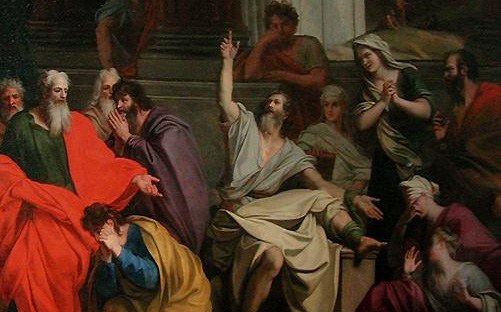
When they heard these things, they became enraged and ground their teeth at Stephen. But filled with the Holy Spirit, he gazed into heaven and saw the glory of God and Jesus standing at the right hand of God. “Look,” he said, “I see the heavens opened and the Son of Man standing at the right hand of God!” But they covered their ears, and with a loud shout all rushed together against him. Then they dragged him out of the city and began to stone him, and the witnesses laid their coats at the feet of a young man named Saul. While they were stoning Stephen, he prayed, “Lord Jesus, receive my spirit.” Then he knelt down and cried out in a loud voice, “Lord, do not hold this sin against them.” When he had said this, he died.

Wednesday, November 19, 2025

On the Road from Jerusalem: A Study of Acts (Problem Solved - Acts 6:1-15)

Join us as we use the Acts of the Apostles to discuss the growth of the earlier church from its birth in the city of Jerusalem to Paul’s arrival in Rome. During our time together, we’ll look at the following:

  • Session 1 - Preparing for the Journey (Acts 1:1-2)
  • Session 2 - Transition (Acts 1:3-26)
  • Session 3 - Birth (Acts 2:1-47)
  • Session 4 - The Work Begins (Acts 3:1-26)
  • Session 5 - When Faced with Opposition (Acts 4:1-37)
  • Session 6 - But... (Acts 5:1-42)
  • Session 7 - Problem Solved (Acts 6:1-15)
  • Session 8 - When Something Bad Happens (Acts 7:1-60)
  • Session 9 - Step Two (Acts 8:1-40)
  • Session 10 - Saul (Acts 9:1-43)
  • Session 11 - Clean People (Acts 10:1-48)
  • Session 12 - Phase Three Begins (Acts 11:1-30)
  • Session 13 - Even Above Kings (Acts 12:1-25)
  • Session 14 - The New Kid Takes the Stage (Acts 13:1-52)
  • Session 15 - Approaching a New Community (Acts 14:1-28)
  • Session 16 - Issue Resolved (Acts 15:1-41)
  • Session 17 -  A New World (Acts 16:1-40)
  • Session 18 - Know Your Audience (Acts 17:1-34)
  • Session 19 - The Big Time (Acts 18:1-28)
  • Session 20 - Christ and Culture (Acts 19:1-41)
  • Session 21 - Farewell (Acts 20:1-38)
  • Session 22 - Jerusalem (Acts 21:1-40)
  • Session 23 - A Personal Testimony (Acts 22:1-30)
  • Session 24 - The Plot Thickens (Acts 23:1-35)
  • Session 25 - The Way Continues (Acts 24:1-27)
  • Session 26 - Different Singer, Same Song (Acts 25:1-27)
  • Session 27 - A Message to God’s People (Acts 26:1-32)
  • Session 28 - Will He Make It (Acts 27:1-44)
  • Session 29 - Without Hindrance (Acts 28:1-31)
In our seventh session, we looked at Acts 6:1-15 and discussed how the church dealt with its first divisive issue. The discussion and passage are below.


Now during those days, when the disciples were increasing in number, the Hellenists complained against the Hebrews because their widows were being neglected in the daily distribution of food. And the twelve called together the whole community of the disciples and said, “It is not right that we should neglect the word of God in order to wait on tables. Therefore, brothers and sisters, select from among yourselves seven men of good standing, full of the Spirit and of wisdom, whom we may appoint to this task, while we, for our part, will devote ourselves to prayer and to serving the word.” What they said pleased the whole community, and they chose Stephen, a man full of faith and the Holy Spirit, together with Philip, Prochorus, Nicanor, Timon, Parmenas, and Nicolaus, a proselyte of Antioch. They had these men stand before the apostles, who prayed and laid their hands on them.

The word of God continued to spread; the number of the disciples increased greatly in Jerusalem, and a great many of the priests became obedient to the faith.

Stephen, full of grace and power, did great wonders and signs among the people. Then some of those who belonged to the synagogue of the Freedmen (as it was called), Cyrenians, Alexandrians, and others of those from Cilicia and Asia, stood up and argued with Stephen. But they could not withstand the wisdom and the Spirit with which he spoke. Then they secretly instigated some men to say, “We have heard him speak blasphemous words against Moses and God.” They stirred up the people as well as the elders and the scribes; then they suddenly confronted him, seized him, and brought him before the council. They set up false witnesses who said, “This man never stops saying things against this holy place and the law, for we have heard him say that this Jesus of Nazareth will destroy this place and will change the customs that Moses handed on to us.” And all who sat in the council looked intently at him, and they saw that his face was like the face of an angel.

What We Believe: The Faith of the Presbyterian Church (What does the Holy Spirit do?)

At Sligo Presbyterian Church, we're discussing what Presbyterians believe and how Presbyterian congregations govern themselves. During t...