
Friday, October 27, 2023
Prayers for Our Community, Our Nation and Our World

On the Road from Jerusalem: A Study of Acts (Problem Solved - Acts 6:1-15)

In this series, we're using the Acts of the Apostles to discuss the growth of the earlier church from its birth in the city of Jerusalem to Paul’s arrival in Rome. During our time together, we’ll look at the following:
- Session 1 - Preparing for the Journey (Acts 1:1-2)
- Session 2 - Transition (Acts 1:3-26)
- Session 3 - Birth (Acts 2:1-47)
- Session 4 - The Work Begins (Acts 3:1-26)
- Session 5 - When Faced with Opposition (Acts 4:1-26)
- Session 6 - But... (Acts 5:1-42)
- Session 7 - Problem Solved (Acts 6:1-15)
- Session 8 - When Something Bad Happens (Acts 7:1-60)
- Session 9 - Step Two (Acts 8:1-40)
- Session 10 - Saul (Acts 9:1-43)
- Session 11 - Clean People (Acts 10:1-48)
- Session 12 - Phase Three Begins (Acts 11:1-30)
- Session 13 - Even Above Kings (Acts 12:1-25)
- Session 14 - The New Kid Takes the Stage (Acts 13:1-52)
- Session 15 - Approaching a New Community (Acts 14:1-28)
- Session 16 - Issue Resolved (Acts 15:1-41)
- Session 17 - A New World (Acts 16:1-40)
- Session 18 - Know Your Audience (Acts 17:1-34)
- Session 19 - The Big Time (Acts 18:1-28)
- Session 20 - Christ and Culture (Acts 19:1-41)
- Session 21 - Farewell (Acts 20:1-38)
- Session 22 - Jerusalem (Acts 21:1-40)
- Session 23 - A Personal Testimony (Acts 22:1-30)
- Session 24 - The Plot Thickens (Acts 23:1-35)
- Session 25 - The Way Continues (Acts 24:1-27)
- Session 26 - Different Singer, Same Song (Acts 25:1-27)
- Session 27 - A Message to God’s People (Acts 26:1-32)
- Session 28 - Will He Make It (Acts 27:1-44)
- Session 29 - Without Hindrance (Acts 28:1-31)
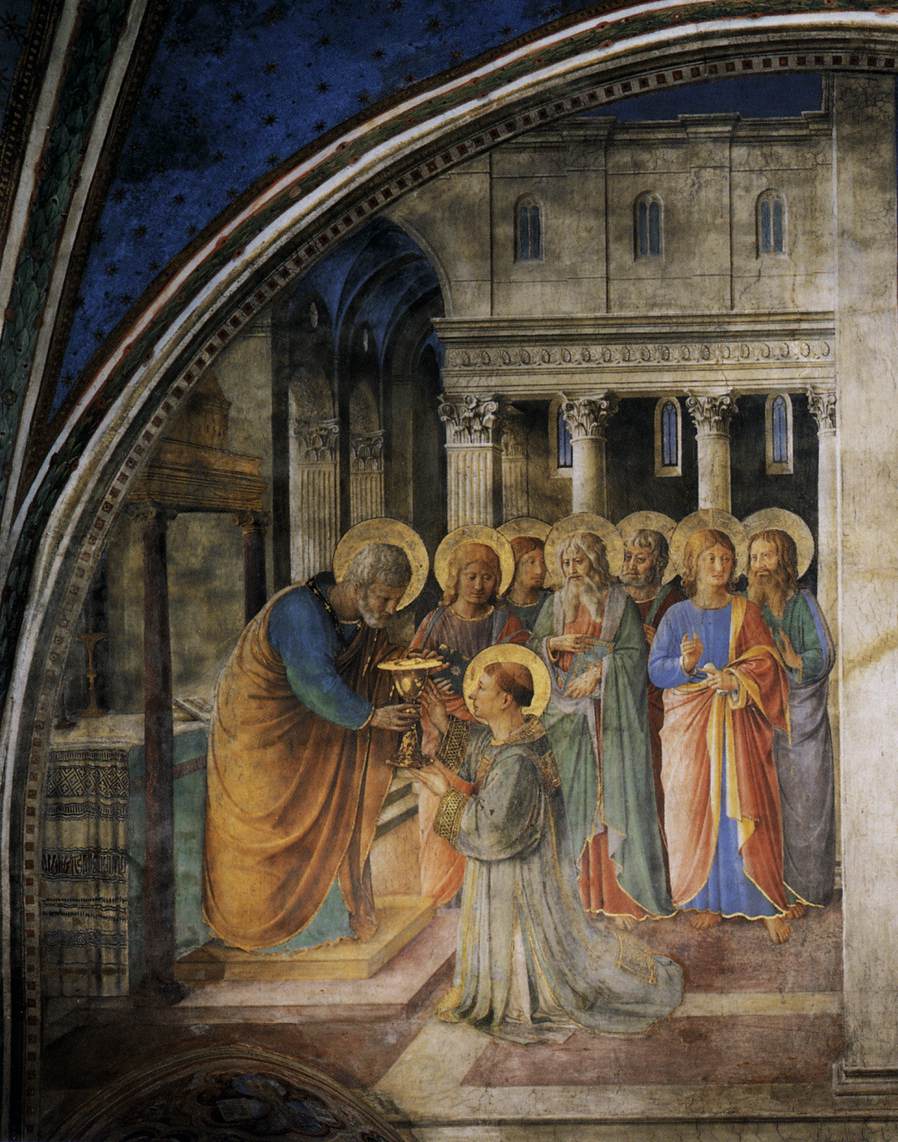
In our seventh session, we looked at the appointment of the first seven deacons (Acts 6:1-15). The discussion and passage are below:
Acts 6:1-15 [New Revised Standard Version]

Bible Stories for Kids - Passing through the Red Sea

On Thursdays, Pastor Rudiger reads a story to the children who attend the Dancer’s Studio Performing Arts Christian Preschool in Clarion, Pennsylvania. On October 26, he shared with the children the story of Moses leading the people of Israel through the Red Sea. Below is a recording of their time together.
Thursday, October 26, 2023
Today in the Mission Yearbook - Westminster Presbyterian Church in Lincoln, Nebraska, holds a ‘service of service’

Wednesday, October 25, 2023
Today in the Mission Yearbook - Intergenerational Creation care, solar eclipse event planned for Presbyterians in 2024

The Bible Passage for Our Sunday Service (Matthew 18:23-35)

- October 8 - Wolves & Fig Trees (Matthew 7:15-20)
- October 15 - Weeds with the Wheat (Matthew 13:24-30)
- October 22 - The Kingdom of Heaven (Matthew 13:44-48)
- October 29 - The Two Debtors (Matthew 18:23-35)
- November 5 - Laborers in a Vineyard (Matthew 20:1-16)
- November 12 - Two Sons (Matthew 21:28-32)
- November 19 - The Wise and the Foolish (Matthew 25:1-13)
- November 26 - Sheep from Goats (Matthew 25:31-46)
On Sunday, we'll focus on a parable dealing with two debtors, Matthew 18:23-35. Below is the passage on which we'll focus.
Matthew 18:23-35 [Contemporary English Version]
23 This story will show you what the kingdom of heaven is like:

26 The official got down on his knees and began begging, “Have pity on me, and I will pay you every cent I owe!” 27 The king felt sorry for him and let him go free. He even told the official that he did not have to pay back the money.
28 But as this official was leaving, he happened to meet another official, who owed him 100 silver coins. So he grabbed the man by the throat. He started choking him and said, “Pay me what you owe!”
29 The man got down on his knees and began begging, “Have pity on me, and I will pay you back.” 30 But the first official refused to have pity. Instead, he went and had the other official put in jail until he could pay what he owed.

Rise and Fall: A Study of Joshua and Judges (From Success to Failure - Judges 1:1–3:6)

Their entry into the land didn’t end the triumphs and trials faced by the Israelites. After entering the land promised to Abraham, Isaac and Jacob, they faced the challenges of conquering the inhabitants and establishing themselves. During this fifteen-session series, we’re considering the rise and the fall of the Israelites as they take possession of their promised land. We’ll address the following:
- Session 1 - Preparing the Conquest (Joshua 1:1–2:24)
- Session 2 - Crossing the Jordan (Joshua 3:1–5:12)
- Session 3 - The Destruction of Jericho (Joshua 5:13–6:21)
- Session 4 - Achan, Ai and Ebal (Joshua 7:1–8:35)
- Session 5 - Turning South (Joshua 9:1–10:43)
- Session 6 - Turning North and Dividing the Land (Joshua 11:1–21:45)
- Session 7 - Mission Accomplished (Joshua 22:1–24:33)
- Session 8 - From Success to Failure (Judges 1:1–3:6)
- Session 9 - Model Judges (Judges 3:7–5:31)
- Session 10 - The Timid Judge (Judges 6:1–8:3)
- Session 11 - Flirting with Kingship (Judges 8:4–10:1-5)
- Session 12 - A Tragic Vow (Judge 10:6–12:15)
- Session 13 - The Last Judge (Judge 13:1–16:31)
- Session 14 - Rapid Decline (Judges 17:1–18:31)
- Session 15 - Chaos (Judges 19:1–21:25)
During our eighth discussion, we looked at Judges 1:1–3:6. A recording of the discussion and the passage are below:
Judges 1:1–3:6 [New Revised Standard Version]

Afterward the people of Judah went down to fight against the Canaanites who lived in the hill country, in the Negeb, and in the lowland. Judah went against the Canaanites who lived in Hebron (the name of Hebron was formerly Kiriath-arba); and they defeated Sheshai and Ahiman and Talmai. From there they went against the inhabitants of Debir (the name of Debir was formerly Kiriath-sepher). Then Caleb said, “Whoever attacks Kiriath-sepher and takes it, I will give him my daughter Achsah as wife.” And Othniel son of Kenaz, Caleb’s younger brother, took it; and he gave him his daughter Achsah as wife. When she came to him, she urged him to ask her father for a field. As she dismounted from her donkey, Caleb said to her, “What do you wish?” She said to him, “Give me a present; since you have set me in the land of the Negeb, give me also Gulloth-mayim.” So Caleb gave her Upper Gulloth and Lower Gulloth. The descendants of Hobab the Kenite, Moses’ father-in-law, went up with the people of Judah from the city of palms into the wilderness of Judah, which lies in the Negeb near Arad. Then they went and settled with the Amalekites. Judah went with his brother Simeon, and they defeated the Canaanites who inhabited Zephath, and devoted it to destruction. So the city was called Hormah. Judah took Gaza with its territory, Ashkelon with its territory, and Ekron with its territory. The Lord was with Judah, and he took possession of the hill country, but could not drive out the inhabitants of the plain, because they had chariots of iron. Hebron was given to Caleb, as Moses had said; and he drove out from it the three sons of Anak.

Now the angel of the Lord went up from Gilgal to Bochim, and said, “I brought you up from Egypt, and brought you into the land that I had promised to your ancestors. I said, ‘I will never break my covenant with you. For your part, do not make a covenant with the inhabitants of this land; tear down their altars.’ But you have not obeyed my command. See what you have done! So now I say, I will not drive them out before you; but they shall become adversaries to you, and their gods shall be a snare to you.” When the angel of the Lord spoke these words to all the Israelites, the people lifted up their voices and wept. So they named that place Bochim, and there they sacrificed to the Lord.

Now these are the nations that the Lord left to test all those in Israel who had no experience of any war in Canaan (it was only that successive generations of Israelites might know war, to teach those who had no experience of it before): the five lords of the Philistines, and all the Canaanites, and the Sidonians, and the Hivites who lived on Mount Lebanon, from Mount Baal-hermon as far as Lebo-hamath. They were for the testing of Israel, to know whether Israel would obey the commandments of the Lord, which he commanded their ancestors by Moses. So the Israelites lived among the Canaanites, the Hittites, the Amorites, the Perizzites, the Hivites, and the Jebusites; and they took their daughters as wives for themselves, and their own daughters they gave to their sons; and they worshiped their gods.
Subscribe to:
Posts (Atom)
The Sligo Presbyterian Church Celebration Service - Sunday, November 22, 2026
Thursday, November 26 is Thanksgiving and on Sunday, November 22 we celebrated Christ the King. During our worship service we combined both ...

-
 Even though life can seem threatening and overwhelming, Isaiah 40:10 reminds us that we don’t need to be afraid: Don’t be afraid. I am with ...
-
 Through Word Vision, Sligo Presbyterian Church sponsors Jodike Bimenyimana, a child from the African country of Burundi. Since he'll be...
-
 Jesus reframes the ten commandments from a list of external rules into matters of the heart. He taught that true righteousness is not merely...