Showing posts with label Exodus. Show all posts

Friday, November 3, 2023

Bible Stories for Kids - The Ten Commandments

On Thursdays, Pastor Rudiger reads a story to the children who attend the Dancer’s Studio Performing Arts Christian Preschool in Clarion, Pennsylvania. On November 2, he shared with the children the story of Moses receiving the Ten Commandments from God.  Below is a recording of their time together.


Friday, October 27, 2023

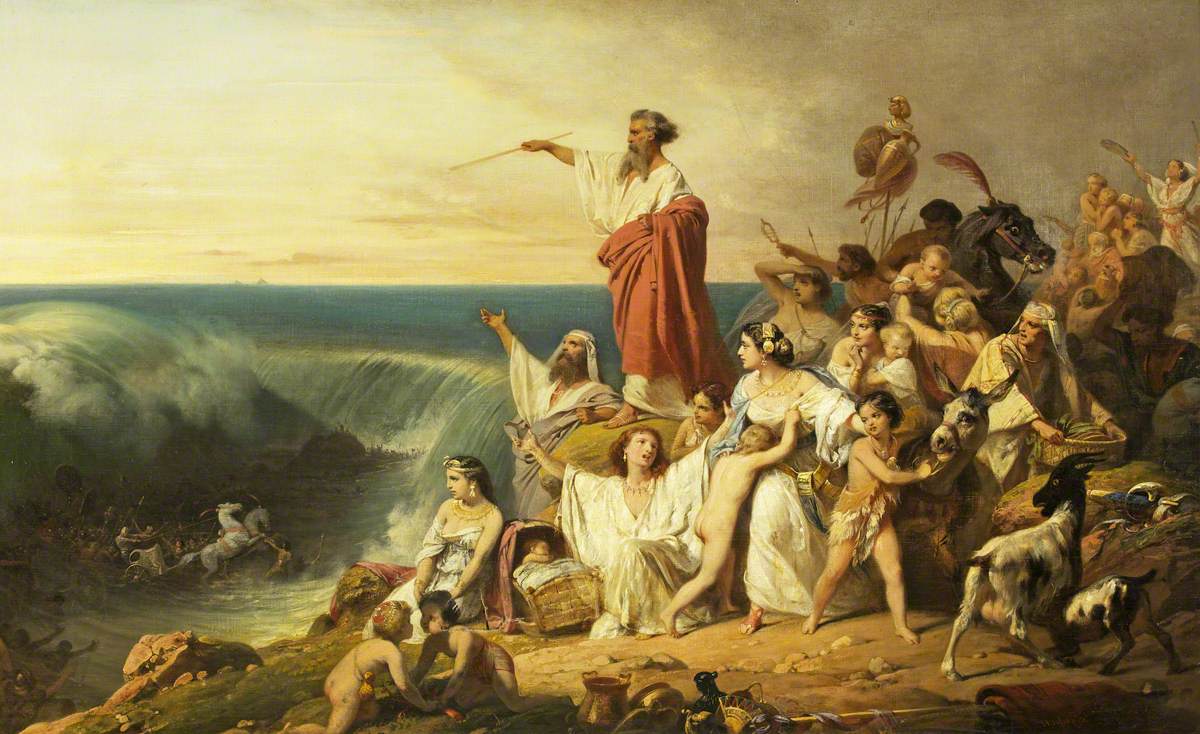
Bible Stories for Kids - Passing through the Red Sea

On Thursdays, Pastor Rudiger reads a story to the children who attend the Dancer’s Studio Performing Arts Christian Preschool in Clarion, Pennsylvania. On October 26, he shared with the children the story of Moses leading the people of Israel through the Red Sea.  Below is a recording of their time together. 

Wednesday, July 26, 2023

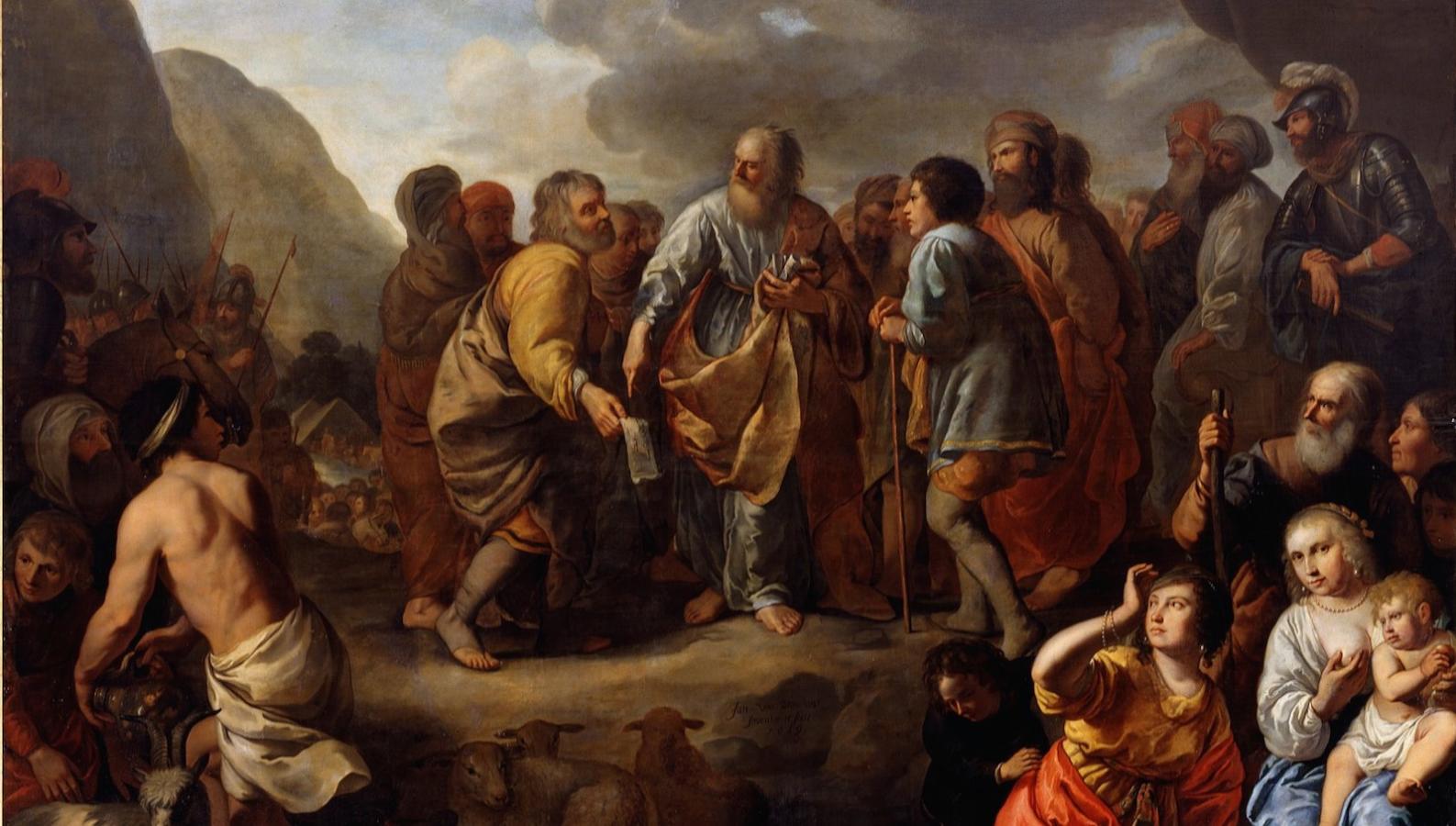
From Captivity to Freedom: A Study of the Exodus - Moses Is the Man (Exodus 33:9 – 34:35; 40:1-38; Numbers 10:11-36)

During the SPC Wednesday morning Bible Study, we're studying the story of the Hebrew Exodus as recorded in the books of Exodus and Numbers. During the ten sessions in this series, we’ll look at the following topics:

During our sixth session, we looked at Exodus 33:9 – 34:35; 40:1-38; and Numbers 10:11-36. Below is a recording our discussion and the passage.


Exodus 33:9 – 34:35; 40:1-38; Numbers 10:11-36

When Moses entered the tent, the pillar of cloud would descend and stand at the entrance of the tent, and the Lord would speak with Moses. When all the people saw the pillar of cloud standing at the entrance of the tent, all the people would rise and bow down, all of them, at the entrance of their tent. Thus the Lord used to speak to Moses face to face, as one speaks to a friend. Then he would return to the camp; but his young assistant, Joshua son of Nun, would not leave the tent.

Moses said to the Lord, “See, you have said to me, ‘Bring up this people’; but you have not let me know whom you will send with me. Yet you have said, ‘I know you by name, and you have also found favor in my sight.’ Now if I have found favor in your sight, show me your ways, so that I may know you and find favor in your sight. Consider too that this nation is your people.” He said, “My presence will go with you, and I will give you rest.” And he said to him, “If your presence will not go, do not carry us up from here. For how shall it be known that I have found favor in your sight, I and your people, unless you go with us? In this way, we shall be distinct, I and your people, from every people on the face of the earth.” The Lord said to Moses, “I will do the very thing that you have asked; for you have found favor in my sight, and I know you by name.” Moses said, “Show me your glory, I pray.” And he said, “I will make all my goodness pass before you, and will proclaim before you the name, ‘The Lord’; and I will be gracious to whom I will be gracious, and will show mercy on whom I will show mercy. But,” he said, “you cannot see my face; for no one shall see me and live.” And the Lord continued, “See, there is a place by me where you shall stand on the rock; and while my glory passes by I will put you in a cleft of the rock, and I will cover you with my hand until I have passed by; then I will take away my hand, and you shall see my back; but my face shall not be seen.”

The Lord said to Moses, “Cut two tablets of stone like the former ones, and I will write on the tablets the words that were on the former tablets, which you broke. Be ready in the morning, and come up in the morning to Mount Sinai and present yourself there to me, on the top of the mountain. No one shall come up with you, and do not let anyone be seen throughout all the mountain; and do not let flocks or herds graze in front of that mountain.” So Moses cut two tablets of stone like the former ones; and he rose early in the morning and went up on Mount Sinai, as the Lord had commanded him, and took in his hand the two tablets of stone.

The Lord descended in the cloud and stood with him there, and proclaimed the name, “The Lord.” The Lord passed before him, and proclaimed, “The Lord, the Lord, a God merciful and gracious, slow to anger, and abounding in steadfast love and faithfulness, keeping steadfast love for the thousandth generation, forgiving iniquity and transgression and sin, yet by no means clearing the guilty, but visiting the iniquity of the parents upon the children and the children’s children, to the third and the fourth generation.” And Moses quickly bowed his head toward the earth, and worshiped. He said, “If now I have found favor in your sight, O Lord, I pray, let the Lord go with us. Although this is a stiff-necked people, pardon our iniquity and our sin, and take us for your inheritance.”

He said: I hereby make a covenant. Before all your people I will perform marvels, such as have not been performed in all the earth or in any nation; and all the people among whom you live shall see the work of the Lord; for it is an awesome thing that I will do with you. Observe what I command you today. See, I will drive out before you the Amorites, the Canaanites, the Hittites, the Perizzites, the Hivites, and the Jebusites. Take care not to make a covenant with the inhabitants of the land to which you are going, or it will become a snare among you. You shall tear down their altars, break their pillars, and cut down their sacred poles (for you shall worship no other god, because the Lord, whose name is Jealous, is a jealous God). You shall not make a covenant with the inhabitants of the land, for when they prostitute themselves to their gods and sacrifice to their gods, someone among them will invite you, and you will eat of the sacrifice. And you will take wives from among their daughters for your sons, and their daughters who prostitute themselves to their gods will make your sons also prostitute themselves to their gods. You shall not make cast idols.

You shall keep the festival of unleavened bread. Seven days you shall eat unleavened bread, as I commanded you, at the time appointed in the month of Abib; for in the month of Abib you came out from Egypt. All that first opens the womb is mine, all your male livestock, the firstborn of cow and sheep. The firstborn of a donkey you shall redeem with a lamb, or if you will not redeem it you shall break its neck. All the firstborn of your sons you shall redeem. No one shall appear before me empty-handed. Six days you shall work, but on the seventh day you shall rest; even in plowing time and in harvest time you shall rest. You shall observe the festival of weeks, the first fruits of wheat harvest, and the festival of ingathering at the turn of the year. Three times in the year all your males shall appear before the Lord God, the God of Israel. For I will cast out nations before you, and enlarge your borders; no one shall covet your land when you go up to appear before the Lord your God three times in the year. You shall not offer the blood of my sacrifice with leaven, and the sacrifice of the festival of the passover shall not be left until the morning. The best of the first fruits of your ground you shall bring to the house of the Lord your God. You shall not boil a kid in its mother’s milk. The Lord said to Moses: Write these words; in accordance with these words I have made a covenant with you and with Israel.

He was there with the Lord forty days and forty nights; he neither ate bread nor drank water. And he wrote on the tablets the words of the covenant, the ten commandments. Moses came down from Mount Sinai. As he came down from the mountain with the two tablets of the covenant in his hand, Moses did not know that the skin of his face shone because he had been talking with God. When Aaron and all the Israelites saw Moses, the skin of his face was shining, and they were afraid to come near him. But Moses called to them; and Aaron and all the leaders of the congregation returned to him, and Moses spoke with them. Afterward all the Israelites came near, and he gave them in commandment all that the Lord had spoken with him on Mount Sinai. When Moses had finished speaking with them, he put a veil on his face; but whenever Moses went in before the Lord to speak with him, he would take the veil off, until he came out; and when he came out, and told the Israelites what he had been commanded, the Israelites would see the face of Moses, that the skin of his face was shining; and Moses would put the veil on his face again, until he went in to speak with him.

The Lord spoke to Moses: On the first day of the first month you shall set up the tabernacle of the tent of meeting. You shall put in it the ark of the covenant, and you shall screen the ark with the curtain. You shall bring in the table, and arrange its setting; and you shall bring in the lampstand, and set up its lamps. You shall put the golden altar for incense before the ark of the covenant, and set up the screen for the entrance of the tabernacle. You shall set the altar of burnt offering before the entrance of the tabernacle of the tent of meeting, and place the basin between the tent of meeting and the altar, and put water in it. You shall set up the court all around, and hang up the screen for the gate of the court. Then you shall take the anointing oil, and anoint the tabernacle and all that is in it, and consecrate it and all its furniture, so that it shall become holy. You shall also anoint the altar of burnt offering and all its utensils, and consecrate the altar, so that the altar shall be most holy. You shall also anoint the basin with its stand, and consecrate it. Then you shall bring Aaron and his sons to the entrance of the tent of meeting, and shall wash them with water, and put on Aaron the sacred vestments, and you shall anoint him and consecrate him, so that he may serve me as priest. You shall bring his sons also and put tunics on them, and anoint them, as you anointed their father, that they may serve me as priests: and their anointing shall admit them to a perpetual priesthood throughout all generations to come.

Moses did everything just as the Lord had commanded him. In the first month in the second year, on the first day of the month, the tabernacle was set up. Moses set up the tabernacle; he laid its bases, and set up its frames, and put in its poles, and raised up its pillars; and he spread the tent over the tabernacle, and put the covering of the tent over it; as the Lord had commanded Moses. He took the covenant and put it into the ark, and put the poles on the ark, and set the mercy seat above the ark; and he brought the ark into the tabernacle, and set up the curtain for screening, and screened the ark of the covenant; as the Lord had commanded Moses. He put the table in the tent of meeting, on the north side of the tabernacle, outside the curtain, and set the bread in order on it before the Lord; as the Lord had commanded Moses. He put the lampstand in the tent of meeting, opposite the table on the south side of the tabernacle, and set up the lamps before the Lord; as the Lord had commanded Moses. He put the golden altar in the tent of meeting before the curtain, and offered fragrant incense on it; as the Lord had commanded Moses. He also put in place the screen for the entrance of the tabernacle. He set the altar of burnt offering at the entrance of the tabernacle of the tent of meeting, and offered on it the burnt offering and the grain offering as the Lord had commanded Moses. He set the basin between the tent of meeting and the altar, and put water in it for washing, with which Moses and Aaron and his sons washed their hands and their feet. When they went into the tent of meeting, and when they approached the altar, they washed; as the Lord had commanded Moses. He set up the court around the tabernacle and the altar, and put up the screen at the gate of the court. So Moses finished the work.

Then the cloud covered the tent of meeting, and the glory of the Lord filled the tabernacle. Moses was not able to enter the tent of meeting because the cloud settled upon it, and the glory of the Lord filled the tabernacle. Whenever the cloud was taken up from the tabernacle, the Israelites would set out on each stage of their journey; but if the cloud was not taken up, then they did not set out until the day that it was taken up. For the cloud of the Lord was on the tabernacle by day, and fire was in the cloud by night, before the eyes of all the house of Israel at each stage of their journey.

In the second year, in the second month, on the twentieth day of the month, the cloud lifted from over the tabernacle of the covenant. Then the Israelites set out by stages from the wilderness of Sinai, and the cloud settled down in the wilderness of Paran. They set out for the first time at the command of the Lord by Moses. The standard of the camp of Judah set out first, company by company, and over the whole company was Nahshon son of Amminadab. Over the company of the tribe of Issachar was Nethanel son of Zuar; and over the company of the tribe of Zebulun was Eliab son of Helon. Then the tabernacle was taken down, and the Gershonites and the Merarites, who carried the tabernacle, set out. Next the standard of the camp of Reuben set out, company by company; and over the whole company was Elizur son of Shedeur. Over the company of the tribe of Simeon was Shelumiel son of Zurishaddai, and over the company of the tribe of Gad was Eliasaph son of Deuel. Then the Kohathites, who carried the holy things, set out; and the tabernacle was set up before their arrival. Next the standard of the Ephraimite camp set out, company by company, and over the whole company was Elishama son of Ammihud. Over the company of the tribe of Manasseh was Gamaliel son of Pedahzur, and over the company of the tribe of Benjamin was Abidan son of Gideoni. Then the standard of the camp of Dan, acting as the rear guard of all the camps, set out, company by company, and over the whole company was Ahiezer son of Ammishaddai. Over the company of the tribe of Asher was Pagiel son of Ochran, and over the company of the tribe of Naphtali was Ahira son of Enan. This was the order of march of the Israelites, company by company, when they set out.

Moses said to Hobab son of Reuel the Midianite, Moses’ father-in-law, “We are setting out for the place of which the Lord said, ‘I will give it to you’; come with us, and we will treat you well; for the Lord has promised good to Israel.” But he said to him, “I will not go, but I will go back to my own land and to my kindred.” He said, “Do not leave us, for you know where we should camp in the wilderness, and you will serve as eyes for us. Moreover, if you go with us, whatever good the Lord does for us, the same we will do for you.” So they set out from the mount of the Lord three days’ journey with the ark of the covenant of the Lord going before them three days’ journey, to seek out a resting place for them, the cloud of the Lord being over them by day when they set out from the camp. Whenever the ark set out, Moses would say, “Arise, O Lord, let your enemies be scattered, and your foes flee before you.” And whenever it came to rest, he would say, “Return, O Lord of the ten thousand thousands of Israel.”

Wednesday, July 19, 2023

From Captivity to Freedom: A Study of the Exodus - OOPS (Exodus 19:1 – 20:26; 24:1-18; 32:1 – 33:8)

During the SPC Wednesday morning Bible Study, we're studying the story of the Hebrew Exodus as recorded in the books of Exodus and Numbers. During the ten sessions in this series, we’ll look at the following topics:

During our fifth session, we looked at Exodus 19:1 – 20:26; 24:1-18; 32:1 – 33:8. Below is a recording our discussion and the passage.


Exodus 19:1 – 20:26; 24:1-18; 32:1 – 33:8

On the third new moon after the Israelites had gone out of the land of Egypt, on that very day, they came into the wilderness of Sinai. They had journeyed from Rephidim, entered the wilderness of Sinai, and camped in the wilderness; Israel camped there in front of the mountain. Then Moses went up to God; the Lord called to him from the mountain, saying, “Thus you shall say to the house of Jacob, and tell the Israelites: You have seen what I did to the Egyptians, and how I bore you on eagles’ wings and brought you to myself. Now therefore, if you obey my voice and keep my covenant, you shall be my treasured possession out of all the peoples. Indeed, the whole earth is mine, but you shall be for me a priestly kingdom and a holy nation. These are the words that you shall speak to the Israelites.” So Moses came, summoned the elders of the people, and set before them all these words that the Lord had commanded him. The people all answered as one: “Everything that the Lord has spoken we will do.” Moses reported the words of the people to the Lord.

Then the Lord said to Moses, “I am going to come to you in a dense cloud, in order that the people may hear when I speak with you and so trust you ever after.” When Moses had told the words of the people to the Lord, the Lord said to Moses: “Go to the people and consecrate them today and tomorrow. Have them wash their clothes and prepare for the third day, because on the third day the Lord will come down upon Mount Sinai in the sight of all the people. You shall set limits for the people all around, saying, ‘Be careful not to go up the mountain or to touch the edge of it. Any who touch the mountain shall be put to death. No hand shall touch them, but they shall be stoned or shot with arrows; whether animal or human being, they shall not live.’ When the trumpet sounds a long blast, they may go up on the mountain.” So Moses went down from the mountain to the people. He consecrated the people, and they washed their clothes. And he said to the people, “Prepare for the third day; do not go near a woman.”

On the morning of the third day there was thunder and lightning, as well as a thick cloud on the mountain, and a blast of a trumpet so loud that all the people who were in the camp trembled. Moses brought the people out of the camp to meet God. They took their stand at the foot of the mountain. Now Mount Sinai was wrapped in smoke, because the Lord had descended upon it in fire; the smoke went up like the smoke of a kiln, while the whole mountain shook violently. As the blast of the trumpet grew louder and louder, Moses would speak and God would answer him in thunder. When the Lord descended upon Mount Sinai, to the top of the mountain, the Lord summoned Moses to the top of the mountain, and Moses went up. Then the Lord said to Moses, “Go down and warn the people not to break through to the Lord to look; otherwise many of them will perish. Even the priests who approach the Lord must consecrate themselves or the Lord will break out against them.” Moses said to the Lord, “The people are not permitted to come up to Mount Sinai; for you yourself warned us, saying, ‘Set limits around the mountain and keep it holy.’” The Lord said to him, “Go down, and come up bringing Aaron with you; but do not let either the priests or the people break through to come up to the Lord; otherwise he will break out against them.” So Moses went down to the people and told them.

Then God spoke all these words: I am the Lord your God, who brought you out of the land of Egypt, out of the house of slavery; you shall have no other gods before me. You shall not make for yourself an idol, whether in the form of anything that is in heaven above, or that is on the earth beneath, or that is in the water under the earth. You shall not bow down to them or worship them; for I the Lord your God am a jealous God, punishing children for the iniquity of parents, to the third and the fourth generation of those who reject me, but showing steadfast love to the thousandth generation of those who love me and keep my commandments. You shall not make wrongful use of the name of the Lord your God, for the Lord will not acquit anyone who misuses his name. Remember the sabbath day, and keep it holy. Six days you shall labor and do all your work. But the seventh day is a sabbath to the Lord your God; you shall not do any work—you, your son or your daughter, your male or female slave, your livestock, or the alien resident in your towns. For in six days the Lord made heaven and earth, the sea, and all that is in them, but rested the seventh day; therefore the Lord blessed the sabbath day and consecrated it.

Honor your father and your mother, so that your days may be long in the land that the Lord your God is giving you. You shall not murder. You shall not commit adultery. You shall not steal. You shall not bear false witness against your neighbor. You shall not covet your neighbor’s house; you shall not covet your neighbor’s wife, or male or female slave, or ox, or donkey, or anything that belongs to your neighbor.

When all the people witnessed the thunder and lightning, the sound of the trumpet, and the mountain smoking, they were afraid and trembled and stood at a distance, and said to Moses, “You speak to us, and we will listen; but do not let God speak to us, or we will die.” Moses said to the people, “Do not be afraid; for God has come only to test you and to put the fear of him upon you so that you do not sin.” Then the people stood at a distance, while Moses drew near to the thick darkness where God was.

The Lord said to Moses: Thus you shall say to the Israelites: “You have seen for yourselves that I spoke with you from heaven. You shall not make gods of silver alongside me, nor shall you make for yourselves gods of gold. You need make for me only an altar of earth and sacrifice on it your burnt offerings and your offerings of well-being, your sheep and your oxen; in every place where I cause my name to be remembered I will come to you and bless you. But if you make for me an altar of stone, do not build it of hewn stones; for if you use a chisel upon it you profane it. You shall not go up by steps to my altar, so that your nakedness may not be exposed on it.”

Then he said to Moses, “Come up to the Lord, you and Aaron, Nadab, and Abihu, and seventy of the elders of Israel, and worship at a distance. Moses alone shall come near the Lord; but the others shall not come near, and the people shall not come up with him.” Moses came and told the people all the words of the Lord and all the ordinances; and all the people answered with one voice, and said, “All the words that the Lord has spoken we will do.” And Moses wrote down all the words of the Lord. He rose early in the morning, and built an altar at the foot of the mountain, and set up twelve pillars, corresponding to the twelve tribes of Israel. He sent young men of the people of Israel, who offered burnt offerings and sacrificed oxen as offerings of well-being to the Lord. Moses took half of the blood and put it in basins, and half of the blood he dashed against the altar. Then he took the book of the covenant, and read it in the hearing of the people; and they said, “All that the Lord has spoken we will do, and we will be obedient.” Moses took the blood and dashed it on the people, and said, “See the blood of the covenant that the Lord has made with you in accordance with all these words.”

Then Moses and Aaron, Nadab, and Abihu, and seventy of the elders of Israel went up, and they saw the God of Israel. Under his feet there was something like a pavement of sapphire stone, like the very heaven for clearness. God did not lay his hand on the chief men of the people of Israel; also they beheld God, and they ate and drank.

The Lord said to Moses, “Come up to me on the mountain, and wait there; and I will give you the tablets of stone, with the law and the commandment, which I have written for their instruction.” So Moses set out with his assistant Joshua, and Moses went up into the mountain of God. To the elders he had said, “Wait here for us, until we come to you again; for Aaron and Hur are with you; whoever has a dispute may go to them.” Then Moses went up on the mountain, and the cloud covered the mountain. The glory of the Lord settled on Mount Sinai, and the cloud covered it for six days; on the seventh day he called to Moses out of the cloud. Now the appearance of the glory of the Lord was like a devouring fire on the top of the mountain in the sight of the people of Israel. Moses entered the cloud, and went up on the mountain. Moses was on the mountain for forty days and forty nights.

When the people saw that Moses delayed to come down from the mountain, the people gathered around Aaron, and said to him, “Come, make gods for us, who shall go before us; as for this Moses, the man who brought us up out of the land of Egypt, we do not know what has become of him.” Aaron said to them, “Take off the gold rings that are on the ears of your wives, your sons, and your daughters, and bring them to me.” So all the people took off the gold rings from their ears, and brought them to Aaron. He took the gold from them, formed it in a mold, and cast an image of a calf; and they said, “These are your gods, O Israel, who brought you up out of the land of Egypt!” When Aaron saw this, he built an altar before it; and Aaron made proclamation and said, “Tomorrow shall be a festival to the Lord.” They rose early the next day, and offered burnt offerings and brought sacrifices of well-being; and the people sat down to eat and drink, and rose up to revel.

The Lord said to Moses, “Go down at once! Your people, whom you brought up out of the land of Egypt, have acted perversely; they have been quick to turn aside from the way that I commanded them; they have cast for themselves an image of a calf, and have worshiped it and sacrificed to it, and said, ‘These are your gods, O Israel, who brought you up out of the land of Egypt!’” The Lord said to Moses, “I have seen this people, how stiff-necked they are. Now let me alone, so that my wrath may burn hot against them and I may consume them; and of you I will make a great nation.” But Moses implored the Lord his God, and said, “O Lord, why does your wrath burn hot against your people, whom you brought out of the land of Egypt with great power and with a mighty hand? Why should the Egyptians say, ‘It was with evil intent that he brought them out to kill them in the mountains, and to consume them from the face of the earth’? Turn from your fierce wrath; change your mind and do not bring disaster on your people. Remember Abraham, Isaac, and Israel, your servants, how you swore to them by your own self, saying to them, ‘I will multiply your descendants like the stars of heaven, and all this land that I have promised I will give to your descendants, and they shall inherit it forever.’” And the Lord changed his mind about the disaster that he planned to bring on his people.

Then Moses turned and went down from the mountain, carrying the two tablets of the covenant in his hands, tablets that were written on both sides, written on the front and on the back. The tablets were the work of God, and the writing was the writing of God, engraved upon the tablets. When Joshua heard the noise of the people as they shouted, he said to Moses, “There is a noise of war in the camp.” But he said, “It is not the sound made by victors, or the sound made by losers; it is the sound of revelers that I hear.” As soon as he came near the camp and saw the calf and the dancing, Moses’ anger burned hot, and he threw the tablets from his hands and broke them at the foot of the mountain. He took the calf that they had made, burned it with fire, ground it to powder, scattered it on the water, and made the Israelites drink it.

Moses said to Aaron, “What did this people do to you that you have brought so great a sin upon them?” And Aaron said, “Do not let the anger of my lord burn hot; you know the people, that they are bent on evil. They said to me, ‘Make us gods, who shall go before us; as for this Moses, the man who brought us up out of the land of Egypt, we do not know what has become of him.’ So I said to them, ‘Whoever has gold, take it off’; so they gave it to me, and I threw it into the fire, and out came this calf!” When Moses saw that the people were running wild (for Aaron had let them run wild, to the derision of their enemies), then Moses stood in the gate of the camp, and said, “Who is on the Lord’s side? Come to me!” And all the sons of Levi gathered around him. He said to them, “Thus says the Lord, the God of Israel, ‘Put your sword on your side, each of you! Go back and forth from gate to gate throughout the camp, and each of you kill your brother, your friend, and your neighbor.’” The sons of Levi did as Moses commanded, and about three thousand of the people fell on that day. Moses said, “Today you have ordained yourselves for the service of the Lord, each one at the cost of a son or a brother, and so have brought a blessing on yourselves this day.”

On the next day Moses said to the people, “You have sinned a great sin. But now I will go up to the Lord; perhaps I can make atonement for your sin.” So Moses returned to the Lord and said, “Alas, this people has sinned a great sin; they have made for themselves gods of gold. But now, if you will only forgive their sin—but if not, blot me out of the book that you have written.” But the Lord said to Moses, “Whoever has sinned against me I will blot out of my book. But now go, lead the people to the place about which I have spoken to you; see, my angel shall go in front of you. Nevertheless, when the day comes for punishment, I will punish them for their sin.” Then the Lord sent a plague on the people, because they made the calf—the one that Aaron made.

The Lord said to Moses, “Go, leave this place, you and the people whom you have brought up out of the land of Egypt, and go to the land of which I swore to Abraham, Isaac, and Jacob, saying, ‘To your descendants I will give it.’ I will send an angel before you, and I will drive out the Canaanites, the Amorites, the Hittites, the Perizzites, the Hivites, and the Jebusites. Go up to a land flowing with milk and honey; but I will not go up among you, or I would consume you on the way, for you are a stiff-necked people.” When the people heard these harsh words, they mourned, and no one put on ornaments. For the Lord had said to Moses, “Say to the Israelites, ‘You are a stiff-necked people; if for a single moment I should go up among you, I would consume you. So now take off your ornaments, and I will decide what to do to you.’” Therefore the Israelites stripped themselves of their ornaments, from Mount Horeb onward.

Now Moses used to take the tent and pitch it outside the camp, far off from the camp; he called it the tent of meeting. And everyone who sought the Lord would go out to the tent of meeting, which was outside the camp. Whenever Moses went out to the tent, all the people would rise and stand, each of them, at the entrance of their tents and watch Moses until he had gone into the tent.

Wednesday, July 12, 2023

From Captivity to Freedom: A Study of the Exodus - Now What (Exodus 15:21 – 18:27)

During the SPC Wednesday morning Bible Study, we're studying the story of the Hebrew Exodus as recorded in the books of Exodus and Numbers. During the ten sessions in this series, we’ll look at the following topics:

During our fourth session, we looked at Exodus 15:21 – 18:27. Below is a recording our discussion and the passage.


Exodus 15:21 – 18:27

And Miriam sang to them: “Sing to the Lord, for he has triumphed gloriously; horse and rider he has thrown into the sea.”

Then Moses ordered Israel to set out from the Red Sea, and they went into the wilderness of Shur. They went three days in the wilderness and found no water. When they came to Marah, they could not drink the water of Marah because it was bitter. That is why it was called Marah. And the people complained against Moses, saying, “What shall we drink?” He cried out to the Lord; and the Lord showed him a piece of wood; he threw it into the water, and the water became sweet. There the Lord made for them a statute and an ordinance and there he put them to the test. He said, “If you will listen carefully to the voice of the Lord your God, and do what is right in his sight, and give heed to his commandments and keep all his statutes, I will not bring upon you any of the diseases that I brought upon the Egyptians; for I am the Lord who heals you.” Then they came to Elim, where there were twelve springs of water and seventy palm trees; and they camped there by the water.

The whole congregation of the Israelites set out from Elim; and Israel came to the wilderness of Sin, which is between Elim and Sinai, on the fifteenth day of the second month after they had departed from the land of Egypt. The whole congregation of the Israelites complained against Moses and Aaron in the wilderness. The Israelites said to them, “If only we had died by the hand of the Lord in the land of Egypt, when we sat by the fleshpots and ate our fill of bread; for you have brought us out into this wilderness to kill this whole assembly with hunger.” Then the Lord said to Moses, “I am going to rain bread from heaven for you, and each day the people shall go out and gather enough for that day. In that way I will test them, whether they will follow my instruction or not. On the sixth day, when they prepare what they bring in, it will be twice as much as they gather on other days.” So Moses and Aaron said to all the Israelites, “In the evening you shall know that it was the Lord who brought you out of the land of Egypt, and in the morning you shall see the glory of the Lord, because he has heard your complaining against the Lord. For what are we, that you complain against us?” And Moses said, “When the Lord gives you meat to eat in the evening and your fill of bread in the morning, because the Lord has heard the complaining that you utter against him—what are we? Your complaining is not against us but against the Lord.” Then Moses said to Aaron, “Say to the whole congregation of the Israelites, ‘Draw near to the Lord, for he has heard your complaining.’” And as Aaron spoke to the whole congregation of the Israelites, they looked toward the wilderness, and the glory of the Lord appeared in the cloud. The Lord spoke to Moses and said, “I have heard the complaining of the Israelites; say to them, ‘At twilight you shall eat meat, and in the morning you shall have your fill of bread; then you shall know that I am the Lord your God.’”

In the evening quails came up and covered the camp; and in the morning there was a layer of dew around the camp. When the layer of dew lifted, there on the surface of the wilderness was a fine flaky substance, as fine as frost on the ground. When the Israelites saw it, they said to one another, “What is it?” For they did not know what it was. Moses said to them, “It is the bread that the Lord has given you to eat. This is what the Lord has commanded: ‘Gather as much of it as each of you needs, an omer to a person according to the number of persons, all providing for those in their own tents.’” The Israelites did so, some gathering more, some less. But when they measured it with an omer, those who gathered much had nothing over, and those who gathered little had no shortage; they gathered as much as each of them needed. And Moses said to them, “Let no one leave any of it over until morning.” But they did not listen to Moses; some left part of it until morning, and it bred worms and became foul. And Moses was angry with them. Morning by morning they gathered it, as much as each needed; but when the sun grew hot, it melted.

On the sixth day they gathered twice as much food, two omers apiece. When all the leaders of the congregation came and told Moses, he said to them, “This is what the Lord has commanded: ‘Tomorrow is a day of solemn rest, a holy sabbath to the Lord; bake what you want to bake and boil what you want to boil, and all that is left over put aside to be kept until morning.’” So they put it aside until morning, as Moses commanded them; and it did not become foul, and there were no worms in it. Moses said, “Eat it today, for today is a sabbath to the Lord; today you will not find it in the field. Six days you shall gather it; but on the seventh day, which is a sabbath, there will be none.” On the seventh day some of the people went out to gather, and they found none. The Lord said to Moses, “How long will you refuse to keep my commandments and instructions? See! The Lord has given you the sabbath, therefore on the sixth day he gives you food for two days; each of you stay where you are; do not leave your place on the seventh day.” So the people rested on the seventh day. The house of Israel called it manna; it was like coriander seed, white, and the taste of it was like wafers made with honey.

Moses said, “This is what the Lord has commanded: ‘Let an omer of it be kept throughout your generations, in order that they may see the food with which I fed you in the wilderness, when I brought you out of the land of Egypt.’” And Moses said to Aaron, “Take a jar, and put an omer of manna in it, and place it before the Lord, to be kept throughout your generations.” As the Lord commanded Moses, so Aaron placed it before the covenant, for safekeeping. The Israelites ate manna forty years, until they came to a habitable land; they ate manna, until they came to the border of the land of Canaan. An omer is a tenth of an ephah.

From the wilderness of Sin the whole congregation of the Israelites journeyed by stages, as the Lord commanded. They camped at Rephidim, but there was no water for the people to drink. The people quarreled with Moses, and said, “Give us water to drink.” Moses said to them, “Why do you quarrel with me? Why do you test the Lord?” But the people thirsted there for water; and the people complained against Moses and said, “Why did you bring us out of Egypt, to kill us and our children and livestock with thirst?” So Moses cried out to the Lord, “What shall I do with this people? They are almost ready to stone me.” The Lord said to Moses, “Go on ahead of the people, and take some of the elders of Israel with you; take in your hand the staff with which you struck the Nile, and go. I will be standing there in front of you on the rock at Horeb. Strike the rock, and water will come out of it, so that the people may drink.” Moses did so, in the sight of the elders of Israel. He called the place Massah and Meribah, because the Israelites quarreled and tested the Lord, saying, “Is the Lord among us or not?”

Then Amalek came and fought with Israel at Rephidim. Moses said to Joshua, “Choose some men for us and go out, fight with Amalek. Tomorrow I will stand on the top of the hill with the staff of God in my hand.” So Joshua did as Moses told him, and fought with Amalek, while Moses, Aaron, and Hur went up to the top of the hill. Whenever Moses held up his hand, Israel prevailed; and whenever he lowered his hand, Amalek prevailed. But Moses’ hands grew weary; so they took a stone and put it under him, and he sat on it. Aaron and Hur held up his hands, one on one side, and the other on the other side; so his hands were steady until the sun set. And Joshua defeated Amalek and his people with the sword. Then the Lord said to Moses, “Write this as a reminder in a book and recite it in the hearing of Joshua: I will utterly blot out the remembrance of Amalek from under heaven.” And Moses built an altar and called it, The Lord is my banner. He said, “A hand upon the banner of the Lord! The Lord will have war with Amalek from generation to generation.”

Jethro, the priest of Midian, Moses’ father-in-law, heard of all that God had done for Moses and for his people Israel, how the Lord had brought Israel out of Egypt. After Moses had sent away his wife Zipporah, his father-in-law Jethro took her back, along with her two sons. The name of the one was Gershom (for he said, “I have been an alien in a foreign land”), and the name of the other, Eliezer (for he said, “The God of my father was my help, and delivered me from the sword of Pharaoh”). Jethro, Moses’ father-in-law, came into the wilderness where Moses was encamped at the mountain of God, bringing Moses’ sons and wife to him. He sent word to Moses, “I, your father-in-law Jethro, am coming to you, with your wife and her two sons.”

Moses went out to meet his father-in-law; he bowed down and kissed him; each asked after the other’s welfare, and they went into the tent. Then Moses told his father-in-law all that the Lord had done to Pharaoh and to the Egyptians for Israel’s sake, all the hardship that had beset them on the way, and how the Lord had delivered them. Jethro rejoiced for all the good that the Lord had done to Israel, in delivering them from the Egyptians. Jethro said, “Blessed be the Lord, who has delivered you from the Egyptians and from Pharaoh. Now I know that the Lord is greater than all gods, because he delivered the people from the Egyptians, when they dealt arrogantly with them.” And Jethro, Moses’ father-in-law, brought a burnt offering and sacrifices to God; and Aaron came with all the elders of Israel to eat bread with Moses’ father-in-law in the presence of God.

The next day Moses sat as judge for the people, while the people stood around him from morning until evening. When Moses’ father-in-law saw all that he was doing for the people, he said, “What is this that you are doing for the people? Why do you sit alone, while all the people stand around you from morning until evening?” Moses said to his father-in-law, “Because the people come to me to inquire of God. When they have a dispute, they come to me and I decide between one person and another, and I make known to them the statutes and instructions of God.” Moses’ father-in-law said to him, “What you are doing is not good. You will surely wear yourself out, both you and these people with you. For the task is too heavy for you; you cannot do it alone. Now listen to me. I will give you counsel, and God be with you! You should represent the people before God, and you should bring their cases before God; teach them the statutes and instructions and make known to them the way they are to go and the things they are to do. You should also look for able men among all the people, men who fear God, are trustworthy, and hate dishonest gain; set such men over them as officers over thousands, hundreds, fifties and tens. Let them sit as judges for the people at all times; let them bring every important case to you, but decide every minor case themselves. So it will be easier for you, and they will bear the burden with you. If you do this, and God so commands you, then you will be able to endure, and all these people will go to their home in peace.” So Moses listened to his father-in-law and did all that he had said. Moses chose able men from all Israel and appointed them as heads over the people, as officers over thousands, hundreds, fifties, and tens. And they judged the people at all times; hard cases they brought to Moses, but any minor case they decided themselves. Then Moses let his father-in-law depart, and he went off to his own country.

Wednesday, July 5, 2023

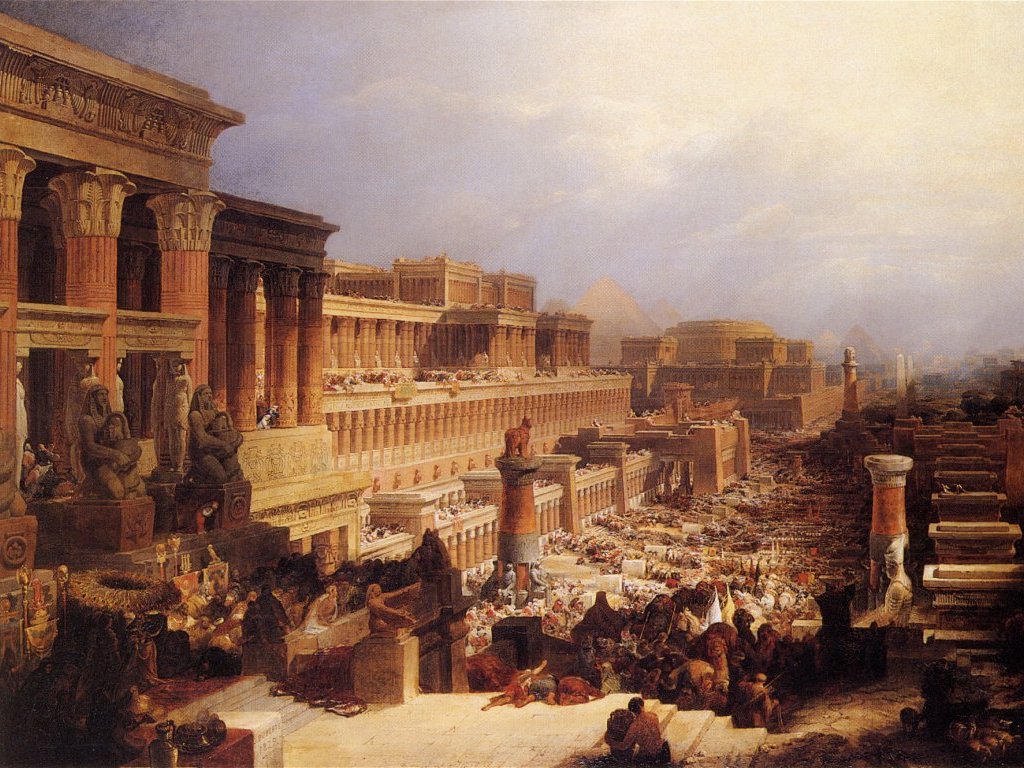
From Captivity to Freedom: A Study of the Exodus - Exit (Exodus 12:1 – 15:21)

During the SPC Wednesday morning Bible Study, we're studying the story of the Hebrew Exodus as recorded in the books of Exodus and Numbers. During the ten sessions in this series, we’ll look at the following topics:

  • Session 1 – The Man of the Hour (Exodus 1:1 – 4:31)
  • Session 2 – Let My People Go (Exodus 5:1 – 11:10)
  • Session 3 – Exit (Exodus 12:1 – 15:21)
  • Session 4 – Now What (Exodus 15:21 – 18:27)
  • Session 5 – OOPS (19:1 – 20:26; 24:1-18; 32:1 – 33 8)
  • Session 6 – Moses Is the Man (Exodus 33:9 – 34:35; 40:1-38; Numbers 10:11-36)
  • Session 7 – A Complaining Bunch (Numbers 11:1 – 14:45)
  • Session 8 – Leadership and Control (Numbers 16:1 – 20:13)
  • Session 9 – About to Enter the Land (Numbers 20:14 – 24:25)
  • Session 10 – On Your Mark, Get Set (Numbers 25:1 – 26:4; 31:1 – 32:42)
During our third session, we looked at Exodus 12:1 – 15:21. Below is a recording our discussion and the passage.


Exodus 12:1–15:21 [New Revised Standard Version]

The Lord said to Moses and Aaron in the land of Egypt: This month shall mark for you the beginning of months; it shall be the first month of the year for you. Tell the whole congregation of Israel that on the tenth of this month they are to take a lamb for each family, a lamb for each household. If a household is too small for a whole lamb, it shall join its closest neighbor in obtaining one; the lamb shall be divided in proportion to the number of people who eat of it. Your lamb shall be without blemish, a year-old male; you may take it from the sheep or from the goats. You shall keep it until the fourteenth day of this month; then the whole assembled congregation of Israel shall slaughter it at twilight. They shall take some of the blood and put it on the two doorposts and the lintel of the houses in which they eat it. They shall eat the lamb that same night; they shall eat it roasted over the fire with unleavened bread and bitter herbs. Do not eat any of it raw or boiled in water, but roasted over the fire, with its head, legs, and inner organs. You shall let none of it remain until the morning; anything that remains until the morning you shall burn. This is how you shall eat it: your loins girded, your sandals on your feet, and your staff in your hand; and you shall eat it hurriedly. It is the passover of the Lord. For I will pass through the land of Egypt that night, and I will strike down every firstborn in the land of Egypt, both human beings and animals; on all the gods of Egypt I will execute judgments: I am the Lord. The blood shall be a sign for you on the houses where you live: when I see the blood, I will pass over you, and no plague shall destroy you when I strike the land of Egypt. This day shall be a day of remembrance for you. You shall celebrate it as a festival to the Lord; throughout your generations you shall observe it as a perpetual ordinance. Seven days you shall eat unleavened bread; on the first day you shall remove leaven from your houses, for whoever eats leavened bread from the first day until the seventh day shall be cut off from Israel. On the first day you shall hold a solemn assembly, and on the seventh day a solemn assembly; no work shall be done on those days; only what everyone must eat, that alone may be prepared by you. You shall observe the festival of unleavened bread, for on this very day I brought your companies out of the land of Egypt: you shall observe this day throughout your generations as a perpetual ordinance. In the first month, from the evening of the fourteenth day until the evening of the twenty-first day, you shall eat unleavened bread. For seven days no leaven shall be found in your houses; for whoever eats what is leavened shall be cut off from the congregation of Israel, whether an alien or a native of the land. You shall eat nothing leavened; in all your settlements you shall eat unleavened bread.

Then Moses called all the elders of Israel and said to them, “Go, select lambs for your families, and slaughter the passover lamb. Take a bunch of hyssop, dip it in the blood that is in the basin, and touch the lintel and the two doorposts with the blood in the basin. None of you shall go outside the door of your house until morning. For the Lord will pass through to strike down the Egyptians; when he sees the blood on the lintel and on the two doorposts, the Lord will pass over that door and will not allow the destroyer to enter your houses to strike you down. You shall observe this rite as a perpetual ordinance for you and your children. When you come to the land that the Lord will give you, as he has promised, you shall keep this observance. And when your children ask you, ‘What do you mean by this observance?’ you shall say, ‘It is the passover sacrifice to the Lord, for he passed over the houses of the Israelites in Egypt, when he struck down the Egyptians but spared our houses.’” And the people bowed down and worshiped. The Israelites went and did just as the Lord had commanded Moses and Aaron.

At midnight the Lord struck down all the firstborn in the land of Egypt, from the firstborn of Pharaoh who sat on his throne to the firstborn of the prisoner who was in the dungeon, and all the firstborn of the livestock. Pharaoh arose in the night, he and all his officials and all the Egyptians; and there was a loud cry in Egypt, for there was not a house without someone dead. Then he summoned Moses and Aaron in the night, and said, “Rise up, go away from my people, both you and the Israelites! Go, worship the Lord, as you said. Take your flocks and your herds, as you said, and be gone. And bring a blessing on me too!” The Egyptians urged the people to hasten their departure from the land, for they said, “We shall all be dead.” So the people took their dough before it was leavened, with their kneading bowls wrapped up in their cloaks on their shoulders. The Israelites had done as Moses told them; they had asked the Egyptians for jewelry of silver and gold, and for clothing, and the Lord had given the people favor in the sight of the Egyptians, so that they let them have what they asked. And so they plundered the Egyptians.

The Israelites journeyed from Rameses to Succoth, about six hundred thousand men on foot, besides children. A mixed crowd also went up with them, and livestock in great numbers, both flocks and herds. They baked unleavened cakes of the dough that they had brought out of Egypt; it was not leavened, because they were driven out of Egypt and could not wait, nor had they prepared any provisions for themselves. The time that the Israelites had lived in Egypt was four hundred thirty years. At the end of four hundred thirty years, on that very day, all the companies of the Lord went out from the land of Egypt. That was for the Lord a night of vigil, to bring them out of the land of Egypt. That same night is a vigil to be kept for the Lord by all the Israelites throughout their generations.

The Lord said to Moses and Aaron: This is the ordinance for the passover: no foreigner shall eat of it, but any slave who has been purchased may eat of it after he has been circumcised; no bound or hired servant may eat of it. It shall be eaten in one house; you shall not take any of the animal outside the house, and you shall not break any of its bones. The whole congregation of Israel shall celebrate it. If an alien who resides with you wants to celebrate the passover to the Lord, all his males shall be circumcised; then he may draw near to celebrate it; he shall be regarded as a native of the land. But no uncircumcised person shall eat of it; there shall be one law for the native and for the alien who resides among you. All the Israelites did just as the Lord had commanded Moses and Aaron. That very day the Lord brought the Israelites out of the land of Egypt, company by company.

The Lord said to Moses: Consecrate to me all the firstborn; whatever is the first to open the womb among the Israelites, of human beings and animals, is mine. Moses said to the people, “Remember this day on which you came out of Egypt, out of the house of slavery, because the Lord brought you out from there by strength of hand; no leavened bread shall be eaten. Today, in the month of Abib, you are going out. When the Lord brings you into the land of the Canaanites, the Hittites, the Amorites, the Hivites, and the Jebusites, which he swore to your ancestors to give you, a land flowing with milk and honey, you shall keep this observance in this month. Seven days you shall eat unleavened bread, and on the seventh day there shall be a festival to the Lord. Unleavened bread shall be eaten for seven days; no leavened bread shall be seen in your possession, and no leaven shall be seen among you in all your territory. You shall tell your child on that day, ‘It is because of what the Lord did for me when I came out of Egypt.’ It shall serve for you as a sign on your hand and as a reminder on your forehead, so that the teaching of the Lord may be on your lips; for with a strong hand the Lord brought you out of Egypt. You shall keep this ordinance at its proper time from year to year.

“When the Lord has brought you into the land of the Canaanites, as he swore to you and your ancestors, and has given it to you, you shall set apart to the Lord all that first opens the womb. All the firstborn of your livestock that are males shall be the Lord’s. But every firstborn donkey you shall redeem with a sheep; if you do not redeem it, you must break its neck. Every firstborn male among your children you shall redeem. When in the future your child asks you, ‘What does this mean?’ you shall answer, ‘By strength of hand the Lord brought us out of Egypt, from the house of slavery. When Pharaoh stubbornly refused to let us go, the Lord killed all the firstborn in the land of Egypt, from human firstborn to the firstborn of animals. Therefore I sacrifice to the Lord every male that first opens the womb, but every firstborn of my sons I redeem.’ It shall serve as a sign on your hand and as an emblem on your forehead that by strength of hand the Lord brought us out of Egypt.”

When Pharaoh let the people go, God did not lead them by way of the land of the Philistines, although that was nearer; for God thought, “If the people face war, they may change their minds and return to Egypt.” So God led the people by the roundabout way of the wilderness toward the Red Sea. The Israelites went up out of the land of Egypt prepared for battle. And Moses took with him the bones of Joseph who had required a solemn oath of the Israelites, saying, “God will surely take notice of you, and then you must carry my bones with you from here.” They set out from Succoth, and camped at Etham, on the edge of the wilderness. The Lord went in front of them in a pillar of cloud by day, to lead them along the way, and in a pillar of fire by night, to give them light, so that they might travel by day and by night. Neither the pillar of cloud by day nor the pillar of fire by night left its place in front of the people.

Then the Lord said to Moses: “Tell the Israelites to turn back and camp in front of Pi-hahiroth, between Migdol and the sea, in front of Baal-zephon; you shall camp opposite it, by the sea. Pharaoh will say of the Israelites, ‘They are wandering aimlessly in the land; the wilderness has closed in on them.’ I will harden Pharaoh’s heart, and he will pursue them, so that I will gain glory for myself over Pharaoh and all his army; and the Egyptians shall know that I am the Lord.” And they did so. When the king of Egypt was told that the people had fled, the minds of Pharaoh and his officials were changed toward the people, and they said, “What have we done, letting Israel leave our service?” So he had his chariot made ready, and took his army with him; he took six hundred picked chariots and all the other chariots of Egypt with officers over all of them. The Lord hardened the heart of Pharaoh king of Egypt and he pursued the Israelites, who were going out boldly. The Egyptians pursued them, all Pharaoh’s horses and chariots, his chariot drivers and his army; they overtook them camped by the sea, by Pi-hahiroth, in front of Baal-zephon.

As Pharaoh drew near, the Israelites looked back, and there were the Egyptians advancing on them. In great fear the Israelites cried out to the Lord. They said to Moses, “Was it because there were no graves in Egypt that you have taken us away to die in the wilderness? What have you done to us, bringing us out of Egypt? Is this not the very thing we told you in Egypt, ‘Let us alone and let us serve the Egyptians’? For it would have been better for us to serve the Egyptians than to die in the wilderness.” But Moses said to the people, “Do not be afraid, stand firm, and see the deliverance that the Lord will accomplish for you today; for the Egyptians whom you see today you shall never see again. The Lord will fight for you, and you have only to keep still.”

Then the Lord said to Moses, “Why do you cry out to me? Tell the Israelites to go forward. But you lift up your staff, and stretch out your hand over the sea and divide it, that the Israelites may go into the sea on dry ground. Then I will harden the hearts of the Egyptians so that they will go in after them; and so I will gain glory for myself over Pharaoh and all his army, his chariots, and his chariot drivers. And the Egyptians shall know that I am the Lord, when I have gained glory for myself over Pharaoh, his chariots, and his chariot drivers.” The angel of God who was going before the Israelite army moved and went behind them; and the pillar of cloud moved from in front of them and took its place behind them. It came between the army of Egypt and the army of Israel. And so the cloud was there with the darkness, and it lit up the night; one did not come near the other all night.

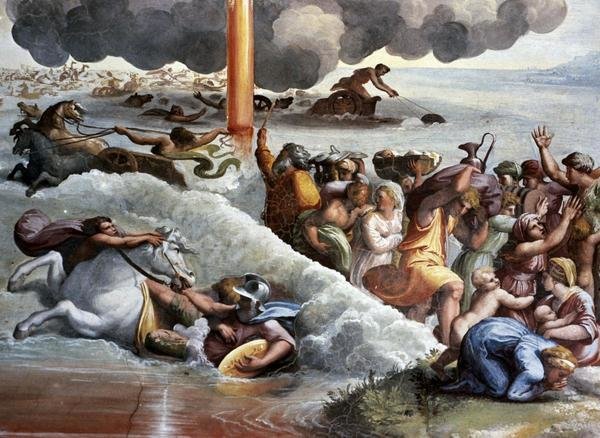
Then Moses stretched out his hand over the sea. The Lord drove the sea back by a strong east wind all night, and turned the sea into dry land; and the waters were divided. The Israelites went into the sea on dry ground, the waters forming a wall for them on their right and on their left. The Egyptians pursued, and went into the sea after them, all of Pharaoh’s horses, chariots, and chariot drivers. At the morning watch the Lord in the pillar of fire and cloud looked down upon the Egyptian army, and threw the Egyptian army into panic. He clogged their chariot wheels so that they turned with difficulty. The Egyptians said, “Let us flee from the Israelites, for the Lord is fighting for them against Egypt.” Then the Lord said to Moses, “Stretch out your hand over the sea, so that the water may come back upon the Egyptians, upon their chariots and chariot drivers.” So Moses stretched out his hand over the sea, and at dawn the sea returned to its normal depth. As the Egyptians fled before it, the Lord tossed the Egyptians into the sea. The waters returned and covered the chariots and the chariot drivers, the entire army of Pharaoh that had followed them into the sea; not one of them remained. But the Israelites walked on dry ground through the sea, the waters forming a wall for them on their right and on their left. Thus the Lord saved Israel that day from the Egyptians; and Israel saw the Egyptians dead on the seashore. Israel saw the great work that the Lord did against the Egyptians. So the people feared the Lord and believed in the Lord and in his servant Moses.

Then Moses and the Israelites sang this song to the Lord: “I will sing to the Lord, for he has triumphed gloriously; horse and rider he has thrown into the sea. The Lord is my strength and my might, and he has become my salvation; this is my God, and I will praise him, my father’s God, and I will exalt him. The Lord is a warrior; the Lord is his name. “Pharaoh’s chariots and his army he cast into the sea; his picked officers were sunk in the Red Sea. The floods covered them; they went down into the depths like a stone. Your right hand, O Lord, glorious in power— your right hand, O Lord, shattered the enemy. In the greatness of your majesty you overthrew your adversaries; you sent out your fury, it consumed them like stubble. At the blast of your nostrils the waters piled up, the floods stood up in a heap; the deeps congealed in the heart of the sea. The enemy said, ‘I will pursue, I will overtake, I will divide the spoil, my desire shall have its fill of them. I will draw my sword, my hand shall destroy them.’ You blew with your wind, the sea covered them; they sank like lead in the mighty waters. “Who is like you, O Lord, among the gods? Who is like you, majestic in holiness, awesome in splendor, doing wonders? You stretched out your right hand, the earth swallowed them. “In your steadfast love you led the people whom you redeemed; you guided them by your strength to your holy abode. The peoples heard, they trembled; pangs seized the inhabitants of Philistia. Then the chiefs of Edom were dismayed; trembling seized the leaders of Moab; all the inhabitants of Canaan melted away. Terror and dread fell upon them; by the might of your arm, they became still as a stone until your people, O Lord, passed by, until the people whom you acquired passed by. You brought them in and planted them on the mountain of your own possession, the place, O Lord, that you made your abode, the sanctuary, O Lord, that your hands have established. The Lord will reign forever and ever.” When the horses of Pharaoh with his chariots and his chariot drivers went into the sea, the Lord brought back the waters of the sea upon them; but the Israelites walked through the sea on dry ground. Then the prophet Miriam, Aaron’s sister, took a tambourine in her hand; and all the women went out after her with tambourines and with dancing. And Miriam sang to them: “Sing to the Lord, for he has triumphed gloriously; horse and rider he has thrown into the sea.”

The Kiski Weekly - August 2, 2026

Below is the most recent edition of The Kiski Weekly, the newsletter of the Presbytery of Kiskiminetas.