In this blog, we'll focus on the working being done at Sligo Presbyterian Church, Sligo, Pennsylvania. We'll also look at what's happening in Sligo, Rimersburg, Clarion, and all the other communities served by our congregation.
Below is a recording and the text of an article that Pastor Rudiger wrote for The Clarion News.
On New Year’s Day, a little before 8 in the morning, we experienced a power loss in Sligo, something that became total about an hour later. And over the next six hours, we got three notices estimating the time when it would be back on, each two hours after the last one. Around 3:30, it was restored, and life was again good. Of course, this was a little inconvenient, especially since I was looking forward to watching the Peach Bowl at 1:00. But in the vast spectrum of things, this was a speed bump, at worst. And yet, I’ve got to admit that, as I was staring at a blank screen, my first thought was far broader than missing one game. I remember thinking, “This is a great way to kick off a new year. If this is the way it starts, what will the next twelve months be like?”
Of course, I recognize that’s just silly. One power outage isn’t prophetic. Still, that thought made its way through my gray matter. And frankly, feeling some trepidation as we enter 2025, well, I don’t think that’s all that unusual. I mean, on one hand, it’s not hard to be a little bit discouraged, I mean, 2024 was a challenging year at best, with wars in Ukraine and Gaza and an all-consuming, all-encompassing political campaign with its constant message that we should be afraid of something. And all this we’re dragging into the new year.
And maybe, because of that, on the other hand, I find it really easy to be a little scared as we enter 2025. My gosh, as a brand new college graduate, will my daughter be able to afford health insurance or will a case of appendicitis permanently distort her future? Will consumer prices drop while the national debt increases? And maybe most important of all, by the end of the year, will the Steelers have a quarterback that they can count on for the future or will they still be trending water? You see, as we enter this new year, I think it’s really not surprising that a lot of folks are feeling both a little discouraged and a little scared as they peer into the next 365 days. I know I am.
But you know, it’s when those feelings begin to rear their ugly heads that I think we might need to pause and remember something that we might have overlooked. In other words, when we’re feeling discouraged as we look back and scared as we look forward, I believe it’s important for us to take seriously these words that the Apostle Paul wrote to the Corinthians:
Anyone who belongs to Christ is a new person. The past is forgotten, and everything is new. God has done it all! He sent Christ to make peace between himself and us, and he has given us the work of making peace between himself and others. [2 Corinthians 5:17-18, CEV]
Now that’s what Paul wrote.
And I’ll tell you, if we accept this as true and apply it to our lives, I think we’ll be able to do two things that we might have had a hard time doing before. For example, first, I think we’ll be able to enter the new year with freedom, confident that we don’t have to carry forward all those thoughts and opinions and attitudes that can do nothing but hold us back. You see, thanks to Jesus Christ, the chain has been broken and we can leave the anchor behind. And as we begin to move ahead, second, I believe we’ll be able to enter the new year with hope. Of course, we’re going to face challenges both in our personal lives and within our communities. And only a fool would step off the curb with his eyes tightly shut. Still, because everything really is new and because God has really done it all and because Christ has really made peace between himself and us, I think we can pull it together. And we can look past all the obstacles and distractions that can prevent us from taking that step. And we can actively and intentionally do what we’ve been called and equipped to do, namely to love one another as we’ve been loved. You see, this can be our perspective as we step forward.
Now, I think we can expect other speed bumps in the next twelve months. And there will be times when we’ll feel a little bit discouraged as we look back and a little bit scared as we look forward. That’s just life in the fast lane. But rather than giving in to those feelings and allowing them to determine who we are and what we do, we can decide to pause. And we can choose to listen to what the Apostle Paul had to say to the Corinthians. And then, we can enter this new year with both freedom and hope. And I’ll tell you, we can do it whether WestPenn has restored power or not.
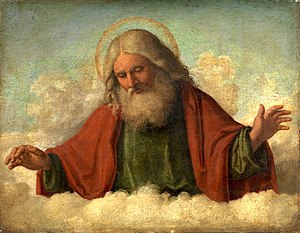
During our Sunday service, we considered the Trinity. Below is a a copy and a recording of the sermon.
******
You may not know this, but Coco Chanel and I have been residents of Sligo, Pennsylvania for exactly two years and eleven days. And you know, it’s really been a lot of fun. And I’ve got to tell you, for me, it’s proved beyond a shadow of a doubt that my great grandmother Price was wrong about Yankees. As a matter of fact, the folks up here are an awful lot like the folks back home, except for y’all’s accent and the fact that y’all serve noodles with every big meal. Let’s just say, Debbie, Coco and I really like being in Sligo.
Of course, moving here, well, that was a different kettle of fish. I mean, even though, in the last thirty-six years I’ve moved five times, it’s never easy. And as a minister, one of the biggest pains has always been packing up the books. Now, y’all need to know something about clergy; you see, for a whole bunch of ministers, books represent a lot more than just information. They’re kind of status symbols, signs of dedication and learning. And I’ve got to admit, that pretty much described me. And so, with that in mind, over the years, I’d accumulated a pretty big library that I’d packed up, moved and unpacked four different times. And trust me, I assumed I’d be doing it again, some time in the future. But you know, it’s kind of interesting, about two years ago, I came to a realization that had the potential of changing everything. You see, it suddenly hit me, I really wasn’t using my great big library anymore. I mean, I had no plans to reread anything I’d read before, and the commentaries I once used every week, most of that information I was finding online. And so, as I thought about leaving Weirton, moving all those stupid books to Sligo just didn’t make sense. I mean, even though they were still kind of important to me, taking them all just didn’t seem practical.
And I’ll tell you, the reason I mention all this is really simple; it’s because I think there are other things that we see as meaningful and even important but that just don’t seem to be all that practical either. In other words, sometimes we sort of hold on to things that probably don’t make much of a difference in our daily living. And let me be clear, I’m not just talking about the kind of stuff we move around in U-Hauls; I’m also talking about ideas and beliefs we carry around in our heads. For example, take the focus of our service this morning, the Trinity, you know, how God is Father, Son and Holy Spirit. I mean, even if they can get their heads around it and then accept the idea that their one God is actually three persons, something that both Jews and Muslims find ridiculous, you see, even if they can get pass the understanding and the accepting, for a lot of Christians, I think it’s hard to see how this reality can really impact who they are and what they do. You see, in a sense, I think they see the Trinity a lot like I saw my library, you know, as something that may be important but that really doesn’t make a genuine difference in the lives they live, and I’m talking about the lives they live as followers of Jesus Christ. In other words, I think it’s easy to see the Trinity as important theologically and liturgically and maybe even emotionally, but practically, well, not so much.
And I’ll tell you, that’s what we’ve going to talk about this morning. You see, we’re going to take what I think you could call a practical approach to the Trinity. And to do that we’re going to use the last three verses Paul wrote in this second letter to the Corinthians, a little passage in which he offered these Christians some final instructions about how they should be living, something that I think Paul believed the Trinity could help them accomplish. And so, for the next ten minutes or so, we’re going to look at two things: first, we’re going to look at what he told them to do and then second, we’re going to consider why he followed his instructions with a blessing that focused on what each person in the Trinity had to offer. And I’ll tell you, what applied to them, I believe also applies to us.
You see, as he tied up his letter, Paul gave the Corinthians some very specific commands, commands that I think we can certainly apply to ourselves. I mean, just listen to what he wrote:
Finally, brothers [and sisters], rejoice; amend your ways; encourage one another; be of one mind, be at peace. And the God of love and peace is with you. Greet one another with a holy kiss. All the saints greet you. [2 Corinthians 13:11-12, my own translation]
Now this was what Paul wanted the Corinthians to do, you know, how he wanted them to live. And you know, if he were this morning, I think he’d say the exact same thing to us.
And I’ll tell you, when you look at the list, in my opinion, they all make a lot of sense, especially if you want your congregation to be optimistic and united in the face of a challenging world. I mean, Paul said to rejoice, which, by the way, is the same thing he wrote to the Philippians when he told them to “rejoice in the Lord always; again I will say, rejoice.” [Philippians 4:4, NRSV] But not only that, he also told them and us to amend our ways, in other words, to change what we might be doing and how we might be thinking so that we can restore that wonderful sense of peace and hope we had when we first realized that we are loved by the Lord God. And you know, for Paul, a congregation should be a place where people actively encourage and comfort and console one another, and it should be a community that sets humility and harmony as priorities, and I’m talking about the kind of place where folks look after the interests of one another and by doing that, follow the example of Jesus Christ. Now that’s what Paul wanted the church to be. But again, that’s not all, because he also tells Christians to work as hard as they can to live in peace with one another, and that peace should reflect God himself and be seen by the entire world when we greet one another with what Paul called “a holy kiss.” You see, as he was closing this letter to a church that he’d planted himself but that was really struggling to keep its focus, something that’s just as real today as it was back then, Paul challenged those Christians and he challenges us to rejoice, to amend our ways and to encourage one another, to be of one mind and to live in peace, and of course, to show who we are and what we believe by how we greet one another. Now those were the specific commands that Paul offered to the church.
And you know, if that’s all he wrote, I mean, if that’s how he ended his letter, I think we’d have good reason to be discouraged. My goodness, let’s get real, it’s not easy to be optimistic and unified, not in the kind of world we face. But here’s the good news; he didn’t end his letter with a bunch of commands. You see, after he told them what he wanted them to do, Paul gave his church a blessing that should help them actually do it. In other words, after outlining the what and the how, I think he got real practical with the why, you know, why they should be able to do it. And for him, that’s where the Trinity enters the picture. I mean, right after talking about six things he thought Christians should be doing, he wrote this:
The grace of the Lord Jesus Christ and the love of God and the communion of the Holy Spirit be with all of you. [2 Corinthians 13:13, my own translation]
Now that’s what he wrote. You see, after giving his list of commands, Paul blessed his people by telling them what each person in the Trinity offers.
And I’ll tell you, I think this is crucial for us to remember as we go about living as we’ve been called to live. I mean, whether we’re talking about Paul’s list of “dos” offered in this passage or Christ’s command that we love one another as we’ve been loved, we’re not going to be able to do it by ourselves no matter how hard we try. And the reason, man, the reason is that we’re limited; therefore, in spite of our best efforts, we’re probably going to come up a little short. And that’s why we’re going to need some help along the way. And for him, that help comes from the one we believe to be the Trinity, because each person offers us something special that can help us become everything we were created to be.
For example, according to Paul, we’re able to do what we’ve been called to do because of “the grace of the Lord Jesus Christ.” [2 Corinthians 13:13a, my own translation] You see, Jesus offers us grace. And what’s this grace business all about? Just listen to what he wrote a little earlier in this same letter:
You know our Lord Jesus Christ treated us with undeserved grace by giving up all his riches, so you could become rich. [2 Corinthians 8:9, CEV]
In other words, through his life and death and resurrection, through these generous and gracious acts, not only can we finally move past all the shame and guilt we might be carrying around from the past, but right now we can enter into a rich and fulfilling relationship with our savior. And that can help us do what we’ve been created to do. Using an image from the Gospel of John, because the Word made flesh, we have a connection with God we couldn’t get on our own. But that wouldn’t have been possible if the Word hadn’t literally come down and pitched his tent among us. You see, right here and now, we can claim the grace of the Lord Jesus Christ, the son of God.
But that’s not our only source of assistance, because we’re also able to do what we’ve been called to do because of “the love of God,” [2 Corinthians 13:13b, my own translation], and I’m talking about the love of God the Father. You see, his love helps us too. But then how could it not help? I mean, just knowing we’re loved by the creator of the universe, my goodness, that’s got to make an enormous difference in how we live our lives. I’m telling you, it can give us the strength, it can give us the confidence, man, it can give us the faith to keep moving no matter how lousy life has become. It’s just like Paul wrote the Romans:
We gladly suffer, because we know that suffering helps us to endure. And endurance builds character, which gives us a hope that will never disappoint us. All of this happens because God has given us the Holy Spirit, who fills our hearts with his love. [Romans 5:3b-5, CEV]
I’ll tell you, it’s sort of like the words to that old hymn: “Love lifted me! Love lifted me! When nothing else could help, love lifted me.” Now that’s good stuff. But for something even better, just listen to what else Paul wrote to the Romans,
I am sure that nothing can separate us from God’s love—not life or death, not angels or spirits, not the present or the future, and not powers above or powers below. Nothing in all creation can separate us from God's love for us in Christ Jesus our Lord! [Romans 8:38-39, CEV]
Amen. You see, right here and now, we also claim the love of God, the Father, and along with the grace from the Son, claiming it can really help us become what we were created to be.
But even that’s not all, because for Paul, we’re also able to do what we've been called to do because of “the communion of the Holy Spirit.” [2 Corinthians 13:13c, my own translation] Now before I say anything else, let me be clear. The communion Paul’s talking about isn’t what we shared a couple of weeks ago, you know, the Lord’s Supper. No, instead, he was talking about a fellowship and a sharing we can enjoy right this minute. And I’ll tell you, this is really what the Holy Spirit does; he shares with us the things of God. I mean, like we already heard, he shares with us God’s love. And like we talked about on Pentecost, the Spirit shares with us those gifts and qualities that make us the men and women God created us to be. You see, who we are and what we have is the result of our communion with the Holy Spirit. And that’s why it was part of Paul’s blessing to the church in Corinthian, and if he were here today, would be part of his blessing to the church in Sligo as well. I’m telling you, we can claim the communion of the Holy Spirit and through that Spirit, we’re better able to do what we were called to do.
Now, remember how I was talking about the library I’d accumulated over thirty years, books that actually gave me a sense of pride as I sat at my desk and looked at them on the shelves. Well like I said; a couple of years ago, as I was thinking about packing them again, well, doing it, well, it just didn’t seem to make a lot of sense. And so, as impressive as I thought they made my office look and as dedicated and learned as they made me feel, I decided to leave almost all of them behind, giving them to Cove Presbyterian Church, do with as they please. And even though it kind of hurt, you know, it felt sort of like I was leaving behind a part of my life and walking away from some very good friends, I did it, because they really didn’t have any practical value to me anymore.
But I’ll tell you, that’s definitely not the case with the Trinity. You see, even though it’s not hard to see the Trinity as important theologically and liturgically and even emotionally, the reality that God is three persons, well, that can have some very real and concrete practical value to us right here and now. You see, we’re able to live the kind of lives we’ve been called to live because of “the grace of the Lord Jesus Christ and the love of God and the communion of the Holy Spirit.” [2 Corinthians 13:13a-c, my own translation] And you know, when we claim the help we’ve been given, that’s taking what I think you could call a practical approach to the Trinity.
During our worship service on Sunday, June 11, we'll use 2 Corinthians 13:11-13 to talk about what the Trinity is and why it's important. Below is a copy of the bulletin.