In this blog, we'll focus on the working being done at Sligo Presbyterian Church, Sligo, Pennsylvania. We'll also look at what's happening in Sligo, Rimersburg, Clarion, and all the other communities served by our congregation.
Showing posts with label John the Baptist. Show all posts
Showing posts with label John the Baptist. Show all posts
Join us as we use the Gospel of Luke to discuss the journey made by Jesus Christ to the city of Jerusalem, from his birth to his ascension. During our time together, we’ll look at the following:
Session 23 - The Problem with Wealth (Luke 16:1-31)
Session 24 - Forgiveness and Faith (Luke 17:1-19)
Session 25 - The Kingdom Is Coming (Luke 17:20–18:8)
Session 26 - Rich and Poor (Luke 18:9-18:30)
Session 27 - Approaching the City (Luke 18:31–19:28)
Session 28 - The Entry into Jerusalem (Luke 19:29-48)
Session 29 - Jesus in the Temple Again (Luke 20:1–21:4)
Session 30 - The Coming End (Luke 21:5-38)
Session 31 - The Last Supper (Luke 22:1-20)
Session 32 - Parting Words (Luke 22:21-38)
Session 33 - Prayer, Arrest and Denials (Luke 22:39-62)
Session 34 - Trials (Luke 22:63–23:25)
Session 35 - Crucifixion and Death (Luke 23:26-56)
Session 36 - Empty Tomb and Emmaus Road (Luke 24:1-35)
Session 37 - The Blessing and Departure (Luke 24:36-53)
In our fifth session, we looked at Luke 3:21–4:13 and talked about how was identified at his baptism and during the temptations. The latter part of our discussion and passage are below.
Now when all the people were baptized, and when Jesus also had been baptized and was praying, the heaven was opened, and the Holy Spirit descended upon him in bodily form like a dove. And a voice came from heaven, “You are my Son, the Beloved; with you I am well pleased.” Jesus was about thirty years old when he began his work. He was the son (as was thought) of Joseph son of Heli, son of Matthat, son of Levi, son of Melchi, son of Jannai, son of Joseph, son of Mattathias, son of Amos, son of Nahum, son of Esli, son of Naggai, son of Maath, son of Mattathias, son of Semein, son of Josech, son of Joda, son of Joanan, son of Rhesa, son of Zerubbabel, son of Shealtiel, son of Neri, son of Melchi, son of Addi, son of Cosam, son of Elmadam, son of Er, son of Joshua, son of Eliezer, son of Jorim, son of Matthat, son of Levi, son of Simeon, son of Judah, son of Joseph, son of Jonam, son of Eliakim, son of Melea, son of Menna, son of Mattatha, son of Nathan, son of David, son of Jesse, son of Obed, son of Boaz, son of Sala, son of Nahshon, son of Amminadab, son of Admin, son of Arni, son of Hezron, son of Perez, son of Judah, son of Jacob, son of Isaac, son of Abraham, son of Terah, son of Nahor, son of Serug, son of Reu, son of Peleg, son of Eber, son of Shelah, son of Cainan, son of Arphaxad, son of Shem, son of Noah, son of Lamech, son of Methuselah, son of Enoch, son of Jared, son of Mahalaleel, son of Cainan, son of Enos, son of Seth, son of Adam, son of God.
Jesus, full of the Holy Spirit, returned from the Jordan and was led by the Spirit in the wilderness, where for forty days he was tempted by the devil. He ate nothing at all during those days, and when they were over, he was famished. The devil said to him, “If you are the Son of God, command this stone to become a loaf of bread.” Jesus answered him, “It is written, ‘One does not live by bread alone.’” Then the devil led him up and showed him in an instant all the kingdoms of the world. And the devil said to him, “To you I will give their glory and all this authority; for it has been given over to me, and I give it to anyone I please. If you, then, will worship me, it will all be yours.” Jesus answered him, “It is written, ‘Worship the Lord your God, and serve only him.’” Then the devil took him to Jerusalem, and placed him on the pinnacle of the temple, saying to him, “If you are the Son of God, throw yourself down from here, for it is written, ‘He will command his angels concerning you, to protect you,’ and ‘On their hands they will bear you up, so that you will not dash your foot against a stone.’” Jesus answered him, “It is said, ‘Do not put the Lord your God to the test.’” When the devil had finished every test, he departed from him until an opportune time.
Although the life and work of Jesus Christ is the focus of the gospels, other characters play a role in his story. During eleven sessions, we’re looking at the following individuals and groups who encountered Jesus as he moved from birth to the cross. During the series, we'll look at the following persons:
Session 8 - The Scribes, Pharisees and Teachers of the Law
Session 9 - The Herods
Session 10 - Pilate and the Other Romans
Session 11 - The Crowds
Session 12 - The Rich Young Ruler and His Friend
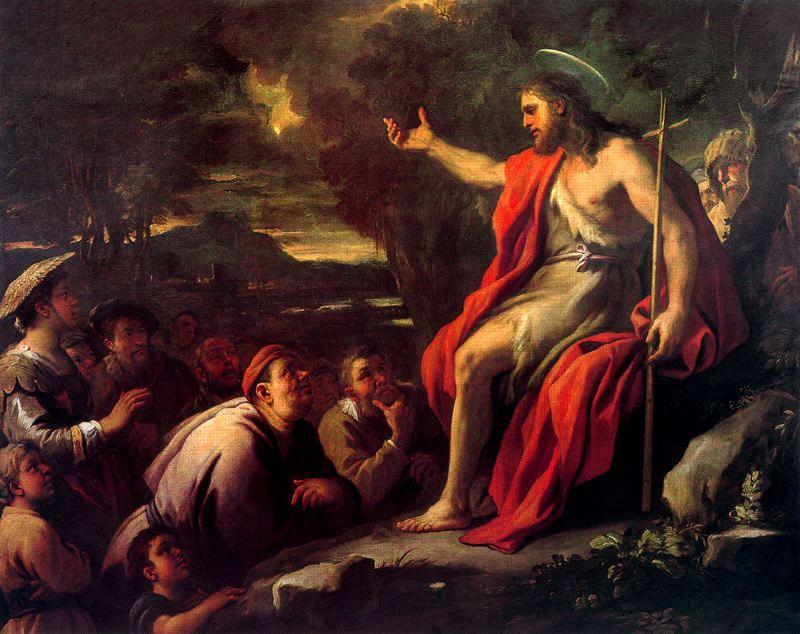
In our second session, we considered John the Baptist. A recording of our discussion and the passages we discussed are below.
From Mark
John Appears - Mark 1:4-8: John the baptizer appeared in the wilderness, proclaiming a baptism of repentance for the forgiveness of sins. And people from the whole Judean countryside and all the people of Jerusalem were going out to him, and were baptized by him in the river Jordan, confessing their sins. Now John was clothed with camel’s hair, with a leather belt around his waist, and he ate locusts and wild honey. He proclaimed, “The one who is more powerful than I is coming after me; I am not worthy to stoop down and untie the thong of his sandals. I have baptized you with water; but he will baptize you with the Holy Spirit.”
John Baptizes Jesus - Mark 1:9-12: - In those days Jesus came from Nazareth of Galilee and was baptized by John in the Jordan. And just as he was coming up out of the water, he saw the heavens torn apart and the Spirit descending like a dove on him. And a voice came from heaven, “You are my Son, the Beloved; with you I am well pleased.” And the Spirit immediately drove him out into the wilderness.
John Is Arrested and Beheaded - Mark 6:14-29: King Herod heard of it, for Jesus’ name had become known. Some were saying, “John the baptizer has been raised from the dead; and for this reason these powers are at work in him.” But others said, “It is Elijah.” And others said, “It is a prophet, like one of the prophets of old.” But when Herod heard of it, he said, “John, whom I beheaded, has been raised.”
For Herod himself had sent men who arrested John, bound him, and put him in prison on account of Herodias, his brother Philip’s wife, because Herod had married her. For John had been telling Herod, “It is not lawful for you to have your brother’s wife.” And Herodias had a grudge against him, and wanted to kill him. But she could not, for Herod feared John, knowing that he was a righteous and holy man, and he protected him. When he heard him, he was greatly perplexed; and yet he liked to listen to him. But an opportunity came when Herod on his birthday gave a banquet for his courtiers and officers and for the leaders of Galilee. When his daughter Herodias came in and danced, she pleased Herod and his guests; and the king said to the girl, “Ask me for whatever you wish, and I will give it.” And he solemnly swore to her, “Whatever you ask me, I will give you, even half of my kingdom.” She went out and said to her mother, “What should I ask for?” She replied, “The head of John the baptizer.” Immediately she rushed back to the king and requested, “I want you to give me at once the head of John the Baptist on a platter.” The king was deeply grieved; yet out of regard for his oaths and for the guests, he did not want to refuse her. Immediately the king sent a soldier of the guard with orders to bring John’s head. He went and beheaded him in the prison, brought his head on a platter, and gave it to the girl. Then the girl gave it to her mother. When his disciples heard about it, they came and took his body, and laid it in a tomb.
From Matthew
John Appears - Matthew 3:1-12: In those days John the Baptist appeared in the wilderness of Judea, proclaiming, “Repent, for the kingdom of heaven has come near.” This is the one of whom the prophet Isaiah spoke when he said, “The voice of one crying out in the wilderness: ‘Prepare the way of the Lord, make his paths straight.’” Now John wore clothing of camel’s hair with a leather belt around his waist, and his food was locusts and wild honey. Then the people of Jerusalem and all Judea were going out to him, and all the region along the Jordan, and they were baptized by him in the river Jordan, confessing their sins.
But when he saw many Pharisees and Sadducees coming for baptism, he said to them, “You brood of vipers! Who warned you to flee from the wrath to come? Bear fruit worthy of repentance. Do not presume to say to yourselves, ‘We have Abraham as our ancestor’; for I tell you, God is able from these stones to raise up children to Abraham. Even now the ax is lying at the root of the trees; every tree therefore that does not bear good fruit is cut down and thrown into the fire. “I baptize you with water for repentance, but one who is more powerful than I is coming after me; I am not worthy to carry his sandals. He will baptize you with the Holy Spirit and fire. His winnowing fork is in his hand, and he will clear his threshing floor and will gather his wheat into the granary; but the chaff he will burn with unquenchable fire.”
John Baptizes Jesus - Matthew 3:13-17: Then Jesus came from Galilee to John at the Jordan, to be baptized by him. John would have prevented him, saying, “I need to be baptized by you, and do you come to me?” But Jesus answered him, “Let it be so now; for it is proper for us in this way to fulfill all righteousness.” Then he consented. And when Jesus had been baptized, just as he came up from the water, suddenly the heavens were opened to him and he saw the Spirit of God descending like a dove and alighting on him. And a voice from heaven said, “This is my Son, the Beloved, with whom I am well pleased.”
John Is Arrested and Beheaded - Matthew 14:1-12: At that time Herod the ruler heard reports about Jesus; and he said to his servants, “This is John the Baptist; he has been raised from the dead, and for this reason these powers are at work in him.” For Herod had arrested John, bound him, and put him in prison on account of Herodias, his brother Philip’s wife, because John had been telling him, “It is not lawful for you to have her.” Though Herod wanted to put him to death, he feared the crowd, because they regarded him as a prophet. But when Herod’s birthday came, the daughter of Herodias danced before the company, and she pleased Herod so much that he promised on oath to grant her whatever she might ask. Prompted by her mother, she said, “Give me the head of John the Baptist here on a platter.” The king was grieved, yet out of regard for his oaths and for the guests, he commanded it to be given; he sent and had John beheaded in the prison. The head was brought on a platter and given to the girl, who brought it to her mother. His disciples came and took the body and buried it; then they went and told Jesus.
From Luke
John’s Birth Is Promised - Luke 1:5-25: In the days of King Herod of Judea, there was a priest named Zechariah, who belonged to the priestly order of Abijah. His wife was a descendant of Aaron, and her name was Elizabeth. Both of them were righteous before God, living blamelessly according to all the commandments and regulations of the Lord. But they had no children, because Elizabeth was barren, and both were getting on in years. Once when he was serving as priest before God and his section was on duty, he was chosen by lot, according to the custom of the priesthood, to enter the sanctuary of the Lord and offer incense. Now at the time of the incense offering, the whole assembly of the people was praying outside. Then there appeared to him an angel of the Lord, standing at the right side of the altar of incense. When Zechariah saw him, he was terrified; and fear overwhelmed him. But the angel said to him, “Do not be afraid, Zechariah, for your prayer has been heard. Your wife Elizabeth will bear you a son, and you will name him John. You will have joy and gladness, and many will rejoice at his birth, for he will be great in the sight of the Lord. He must never drink wine or strong drink; even before his birth he will be filled with the Holy Spirit. He will turn many of the people of Israel to the Lord their God. With the spirit and power of Elijah he will go before him, to turn the hearts of parents to their children, and the disobedient to the wisdom of the righteous, to make ready a people prepared for the Lord.” Zechariah said to the angel, “How will I know that this is so? For I am an old man, and my wife is getting on in years.” The angel replied, “I am Gabriel. I stand in the presence of God, and I have been sent to speak to you and to bring you this good news. But now, because you did not believe my words, which will be fulfilled in their time, you will become mute, unable to speak, until the day these things occur.” Meanwhile the people were waiting for Zechariah, and wondered at his delay in the sanctuary. When he did come out, he could not speak to them, and they realized that he had seen a vision in the sanctuary. He kept motioning to them and remained unable to speak. When his time of service was ended, he went to his home. After those days his wife Elizabeth conceived, and for five months she remained in seclusion. She said, “This is what the Lord has done for me when he looked favorably on me and took away the disgrace I have endured among my people.”
John Is Born - Luke 1:57-80: Now the time came for Elizabeth to give birth, and she bore a son. Her neighbors and relatives heard that the Lord had shown his great mercy to her, and they rejoiced with her. On the eighth day they came to circumcise the child, and they were going to name him Zechariah after his father. But his mother said, “No; he is to be called John.” They said to her, “None of your relatives has this name.” Then they began motioning to his father to find out what name he wanted to give him. He asked for a writing tablet and wrote, “His name is John.” And all of them were amazed. Immediately his mouth was opened and his tongue freed, and he began to speak, praising God. Fear came over all their neighbors, and all these things were talked about throughout the entire hill country of Judea. All who heard them pondered them and said, “What then will this child become?” For, indeed, the hand of the Lord was with him.
Then his father Zechariah was filled with the Holy Spirit and spoke this prophecy: “Blessed be the Lord God of Israel, for he has looked favorably on his people and redeemed them. He has raised up a mighty savior for us in the house of his servant David, as he spoke through the mouth of his holy prophets from of old, that we would be saved from our enemies and from the hand of all who hate us. Thus he has shown the mercy promised to our ancestors, and has remembered his holy covenant, the oath that he swore to our ancestor Abraham, to grant us that we, being rescued from the hands of our enemies, might serve him without fear, in holiness and righteousness before him all our days. And you, child, will be called the prophet of the Most High; for you will go before the Lord to prepare his ways, to give knowledge of salvation to his people by the forgiveness of their sins. By the tender mercy of our God, the dawn from on high will break upon us, to give light to those who sit in darkness and in the shadow of death, to guide our feet into the way of peace.” The child grew and became strong in spirit, and he was in the wilderness until the day he appeared publicly to Israel.
John Appears - Luke 3:1-18: In the fifteenth year of the reign of Emperor Tiberius, when Pontius Pilate was governor of Judea, and Herod was ruler of Galilee, and his brother Philip ruler of the region of Ituraea and Trachonitis, and Lysanias ruler of Abilene, during the high priesthood of Annas and Caiaphas, the word of God came to John son of Zechariah in the wilderness. He went into all the region around the Jordan, proclaiming a baptism of repentance for the forgiveness of sins, as it is written in the book of the words of the prophet Isaiah, “The voice of one crying out in the wilderness: ‘Prepare the way of the Lord, make his paths straight. Every valley shall be filled, and every mountain and hill shall be made low, and the crooked shall be made straight, and the rough ways made smooth; and all flesh shall see the salvation of God.’” John said to the crowds that came out to be baptized by him, “You brood of vipers! Who warned you to flee from the wrath to come? Bear fruits worthy of repentance. Do not begin to say to yourselves, ‘We have Abraham as our ancestor’; for I tell you, God is able from these stones to raise up children to Abraham. Even now the ax is lying at the root of the trees; every tree therefore that does not bear good fruit is cut down and thrown into the fire.” And the crowds asked him, “What then should we do?” In reply he said to them, “Whoever has two coats must share with anyone who has none; and whoever has food must do likewise.” Even tax collectors came to be baptized, and they asked him, “Teacher, what should we do?” He said to them, “Collect no more than the amount prescribed for you.” Soldiers also asked him, “And we, what should we do?” He said to them, “Do not extort money from anyone by threats or false accusation, and be satisfied with your wages.”
As the people were filled with expectation, and all were questioning in their hearts concerning John, whether he might be the Messiah, John answered all of them by saying, “I baptize you with water; but one who is more powerful than I is coming; I am not worthy to untie the thong of his sandals. He will baptize you with the Holy Spirit and fire. His winnowing fork is in his hand, to clear his threshing floor and to gather the wheat into his granary; but the chaff he will burn with unquenchable fire.” So, with many other exhortations, he proclaimed the good news to the people.
John Is Arrested - Luke 3:19-20: But Herod the ruler, who had been rebuked by him because of Herodias, his brother’s wife, and because of all the evil things that Herod had done, added to them all by shutting up John in prison.
John Is Beheaded - Luke 9:7-9: Now Herod the ruler heard about all that had taken place, and he was perplexed, because it was said by some that John had been raised from the dead, by some that Elijah had appeared, and by others that one of the ancient prophets had arisen. Herod said, “John I beheaded; but who is this about whom I hear such things?” And he tried to see him.
From John
John Is Identified - John 1:6-18: There was a man sent from God, whose name was John. He came as a witness to testify to the light, so that all might believe through him. He himself was not the light, but he came to testify to the light. The true light, which enlightens everyone, was coming into the world. He was in the world, and the world came into being through him; yet the world did not know him. He came to what was his own, and his own people did not accept him. But to all who received him, who believed in his name, he gave power to become children of God, who were born, not of blood or of the will of the flesh or of the will of man, but of God. And the Word became flesh and lived among us, and we have seen his glory, the glory as of a father’s only son, full of grace and truth.
(John testified to him and cried out, “This was he of whom I said, ‘He who comes after me ranks ahead of me because he was before me.’”) From his fullness we have all received, grace upon grace. The law indeed was given through Moses; grace and truth came through Jesus Christ. No one has ever seen God. It is God the only Son, who is close to the Father’s heart, who has made him known.
John Appears - John 1:19-28:This is the testimony given by John when the Jews sent priests and Levites from Jerusalem to ask him, “Who are you?” He confessed and did not deny it, but confessed, “I am not the Messiah.” And they asked him, “What then? Are you Elijah?” He said, “I am not.” “Are you the prophet?” He answered, “No.” Then they said to him, “Who are you? Let us have an answer for those who sent us. What do you say about yourself?” He said, “I am the voice of one crying out in the wilderness, ‘Make straight the way of the Lord,’” as the prophet Isaiah said. Now they had been sent from the Pharisees. They asked him, “Why then are you baptizing if you are neither the Messiah, nor Elijah, nor the prophet?” John answered them, “I baptize with water. Among you stands one whom you do not know, the one who is coming after me; I am not worthy to untie the thong of his sandal.” This took place in Bethany across the Jordan where John was baptizing.
John Baptizes Jesus - John 1:29-36:The next day he saw Jesus coming toward him and declared, “Here is the Lamb of God who takes away the sin of the world! This is he of whom I said, ‘After me comes a man who ranks ahead of me because he was before me.’ I myself did not know him; but I came baptizing with water for this reason, that he might be revealed to Israel.” And John testified, “I saw the Spirit descending from heaven like a dove, and it remained on him. I myself did not know him, but the one who sent me to baptize with water said to me, ‘He on whom you see the Spirit descend and remain is the one who baptizes with the Holy Spirit.’ And I myself have seen and have testified that this is the Son of God.” The next day John again was standing with two of his disciples, and as he watched Jesus walk by, he exclaimed, “Look, here is the Lamb of God!”
John After the Baptism - John 3:22 – 4:1: After this Jesus and his disciples went into the Judean countryside, and he spent some time there with them and baptized. John also was baptizing at Aenon near Salim because water was abundant there; and people kept coming and were being baptized —John, of course, had not yet been thrown into prison. Now a discussion about purification arose between John’s disciples and a Jew. They came to John and said to him, “Rabbi, the one who was with you across the Jordan, to whom you testified, here he is baptizing, and all are going to him.” John answered, “No one can receive anything except what has been given from heaven. You yourselves are my witnesses that I said, ‘I am not the Messiah, but I have been sent ahead of him.’ He who has the bride is the bridegroom. The friend of the bridegroom, who stands and hears him, rejoices greatly at the bridegroom’s voice. For this reason my joy has been fulfilled. He must increase, but I must decrease.” The one who comes from above is above all; the one who is of the earth belongs to the earth and speaks about earthly things. The one who comes from heaven is above all. He testifies to what he has seen and heard, yet no one accepts his testimony. Whoever has accepted his testimony has certified this, that God is true. He whom God has sent speaks the words of God, for he gives the Spirit without measure. The Father loves the Son and has placed all things in his hands. Whoever believes in the Son has eternal life; whoever disobeys the Son will not see life, but must endure God’s wrath.
Now when Jesus learned that the Pharisees had heard, “Jesus is making and baptizing more disciples than John”
Join us as we use the Gospel of Luke to discuss the journey made by Jesus Christ to the city of Jerusalem, from his birth to his ascension. During our time together, we’ll look at the following:
In the fifteenth year of the reign of Emperor Tiberius, when Pontius Pilate was governor of Judea, and Herod was ruler of Galilee, and his brother Philip ruler of the region of Ituraea and Trachonitis, and Lysanias ruler of Abilene, during the high priesthood of Annas and Caiaphas, the word of God came to John son of Zechariah in the wilderness. He went into all the region around the Jordan, proclaiming a baptism of repentance for the forgiveness of sins, as it is written in the book of the words of the prophet Isaiah, “The voice of one crying out in the wilderness: ‘Prepare the way of the Lord, make his paths straight. Every valley shall be filled, and every mountain and hill shall be made low, and the crooked shall be made straight, and the rough ways made smooth; and all flesh shall see the salvation of God.’” John said to the crowds that came out to be baptized by him, “You brood of vipers! Who warned you to flee from the wrath to come? Bear fruits worthy of repentance. Do not begin to say to yourselves, ‘We have Abraham as our ancestor’; for I tell you, God is able from these stones to raise up children to Abraham. Even now the ax is lying at the root of the trees; every tree therefore that does not bear good fruit is cut down and thrown into the fire.” And the crowds asked him, “What then should we do?” In reply he said to them, “Whoever has two coats must share with anyone who has none; and whoever has food must do likewise.” Even tax collectors came to be baptized, and they asked him, “Teacher, what should we do?” He said to them, “Collect no more than the amount prescribed for you.” Soldiers also asked him, “And we, what should we do?” He said to them, “Do not extort money from anyone by threats or false accusation, and be satisfied with your wages.”
As the people were filled with expectation, and all were questioning in their hearts concerning John, whether he might be the Messiah, John answered all of them by saying, “I baptize you with water; but one who is more powerful than I is coming; I am not worthy to untie the thong of his sandals. He will baptize you with the Holy Spirit and fire. His winnowing fork is in his hand, to clear his threshing floor and to gather the wheat into his granary; but the chaff he will burn with unquenchable fire.” So, with many other exhortations, he proclaimed the good news to the people. But Herod the ruler, who had been rebuked by him because of Herodias, his brother’s wife, and because of all the evil things that Herod had done, added to them all by shutting up John in prison.
Some of our best memories of Christmas involve singing some of our favorite songs and carols. Whether they’re secular or sacred, they remind us of the reason for the season and the sheer joy that’s possible during this very special time of year. And so, with that in mind, we’re going to spend some time talking about the "Great Songs of Christmas” but not necessarily the ones we associate with this holiday. Instead, we’ll look at some of the advent songs from the Bible, passages that had meaning then and can have meaning right now. During four weeks, we’ll consider the following:
December 1 - The Song of Zechariah: A Song of Praise
December 8 - The Song of Mary: A Song of Trust
December 22 - The Song of the Angels: A Song of Joy
Some of our best memories of Christmas involve singing some of our favorite songs and carols. Whether they’re secular or sacred, they remind us of the reason for the season and the sheer joy that’s possible during this very special time of year. And so, with that in mind, we’re going to spend some time talking about the "Great Songs of Christmas” but not necessarily the ones we associate with this holiday. Instead, we’ll look at some of the advent songs from the Bible, passages that had meaning then and can have meaning right now. During four weeks, we’ll consider the following:
December 1 - The Song of Zechariah: A Song of Praise
December 8 - The Song of Mary: A Song of Trust
December 22 - The Song of the Angels: A Song of Joy
Well, as we’ve been talking about, this morning we’re entering a brand new season. And even though, according to the church calendar, it’s called the Season of Advent, because we’re getting ready to celebrate the advent or birth of Jesus, let’s get real, most of us aren’t thinking “advent” right now. Our minds have shifted to Christmas, right? I mean, give me a break, we’re not hanging the advent lights or putting up the advent tree or setting out the advent decorations. No, we’re looking down the barrel at Christmas, aren’t we? I mean, only a minister who’s either really, and I mean, really young and stupid or who is so close to retirement that he no longer cares about ticking off his church, only that kind of minister would choose to sing advent songs rather than Christmas carols during the four Sundays before the twenty-fifth.
And I’ll tell you, I think the last thing I mentioned is particularly important, because I’m not sure there’s another time of year when what we sing is so important. I’ll tell you, that’s certainly the case with me. I mean, although I can close my eyes and see the tree we’d set up in the cover of the living room every year and the nativity that was always on the mantle and the stockings that we hung by the chimney with care, it’s the music, the songs and the carols that I think bring back the most memories, at least for me. For example, when I was a boy, throughout the ‘60s, Firestone, you know, the tire company, would issue these albums every year entitled the Great Songs of Christmas. And even though we had several, my favorite was the one they released in 1965. I’ll tell you, back in the day, we listened to it so many times, not only did we know all the words to all the songs, we knew exactly when the record would skip. I’ve got to admit, when I was a kid, in some very real ways, Christmas music was the actual reason for the season.
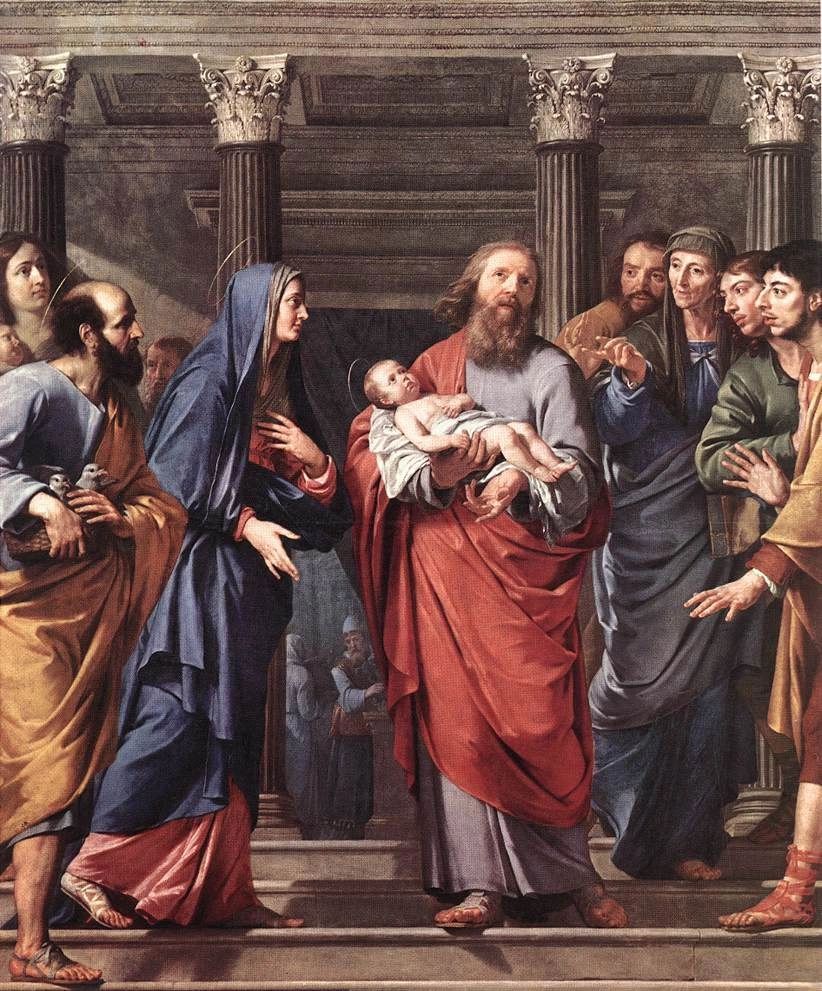
And you know, that’s going to be our focus on three Sundays before and one Sunday after the big day. You see, we’re going to be looking at the great songs of Christmas, but not just the ones that I remember on the Goodyear albums. Instead, we’re also going to consider those great songs there in the Gospel of Luke, songs that surrounded the birth of Jesus Christ, and I’m talking about the song of Mary after the announcement and the song of the heavenly host after the birth and the song of Simeon after Mary and Joseph presented the baby Jesus in Jerusalem. Those are some of the songs that we’ll be talking about during this Christmas season.
And this morning, we’ll start with the one offered by Zechariah right after the birth of his son, John the Baptist, a song that expressed his praise and his thanks to God. And to do it, we’ll look at three things. First, we’ll focus on the context of the song and in particular, what happened right before it was offered. And then, second, we’ll consider the song itself. And then, third, we’ll take these words of praise offered by Zechariah and talk about how they might be meaningful for us, right here and right now.
But before we get there, I think it’s important for us to know a little bit about the context. In other words, what caused Zechariah to offer up these words to God? And I’ll tell you, in a nutshell, this whole business starts with an angel making an announcement to Zechariah. You see, Zechariah was a priest who was married to Elizabeth. But because Elizabeth was barren, they had no children. And since they were both getting up in years, that didn’t seem likely to change. Now, that’s a little bit of exposition.
And you know, I think this is really important to remember, because it actually makes the announcement pretty amazing and, on the surface, ridiculous. You see, while he was in the Temple, doing his thing, the angel said to Zechariah, “Don’t be afraid, Zechariah! God has heard your prayers. Your wife Elizabeth will have a son, and you must name him John.” [Luke 1:13b, CEV] Naturally, given the situation, Zechariah had one enormous question, and so he asked the angel, “How will I know this is going to happen? My wife and I are both very old.” [Luke 1:18b, CEV] To which the angel said, “I am Gabriel, God’s servant, and I was sent to tell you this good news. You have not believed what I have said. So you will not be able to say a thing until all this happens. But everything will take place when it is supposed to.” [Luke 1:19b-20, CEV] Now that’s what happened. And guys, just file this away; if an angel tells you that your wife is going to have a baby, don’t ask “how,” just go with it.
Anyway, the angel was right. Elizabeth became pregnant. And since Zechariah was absolutely silent, which must have been horrible for poor Elizabeth to have a silent husband; he said absolutely nothing until after his son had been born. And then, on a writing tablet, Zechariah wrote, “His name is John.” [Luke 1:63b, CEV] And according to Luke, not only was everyone amazed, “at once, Zechariah started speaking and praising God.” [Luke 1:64, CEV] Now, that’s the context for the “song” Zechariah would offer.
Because once he’d gotten his voice back, realizing that what the Angel Gabriel had told him was spot on, again according to the Evangelist, “The Holy Spirit came upon Zechariah, and he began to speak:” [Luke 1:67, CEV] And I’ll tell you, when we look at what he said, you know, what he sang, I think we can divide his song into three parts.
You see, first, Zechariah sang about the past, and in particular, about what God had done for his people throughout their history. I mean, just listen to what he said:
Praise the Lord,
the God of Israel!
He has come
to save his people.
Our God has given us
a mighty Savior
from the family
of David his servant.
Long ago the Lord promised
by the words
of his holy prophets
to save us from our enemies
and from everyone
who hates us.
God said he would be kind
to our people and keep
his sacred promise.
He told our ancestor Abraham
that he would rescue us
from our enemies.
Then we could serve him
without fear,
by being holy and good
as long as we live. [Luke 1:68-75, CEV]
Now that’s how the song started, with him praising and thanking the Lord for all he’d done for Israel in the past. You see, first, for Zechariah, regardless of what was going on, God had kept his promises.
And then, second, he also sang about the present, you know, the stuff that God was doing or about to do right now. You see, after praising and thanking God for what he’d already done, this was what Zechariah said:
You, my son, will be called
the prophet of God Most High.
You will go ahead of the Lord
to get everything ready
for him.
You will tell his people
that they can be saved
when their sins
are forgiven. [Luke 1:76-77, CEV]
In other words, God was just about to do something amazing through this miracle child whom Zechariah had just named John. You see, John was going to be the one who would get folks ready for the coming of the Lord, the coming of the messiah, the coming of the Christ. And he was going to be the one who would announce that forgiveness and salvation were going to be possible. Now, second, this was what God was about to do.
And then, third, Zechariah finished up his song with a little bit about the future, in other words, about what folks could expect because God had kept his promises and was about to do a new thing. I mean, just listen to what Zechariah sang at the end:
God’s love and kindness
will shine upon us
like the sun that rises
in the sky.
On us who live
in the dark shadow
of death
this light will shine
to guide us
into a life of peace. [Luke 1:78-79, CEV]
You see, because of what he’d done in the past and was about to do in the present, Zechariah believed that God would continue to be active into the future and that, even when things might appear dark and even when death was casting its shadow over his people, the sun would still rise and the light would still shine and God would still guide his people toward a life of peace. You see, because he trusted in his love and kindness, according to Zechariah, this would come in the future. Now, as I read it, that’s what this song is about.
And so, what does all this mean? What does it mean to say that God was involved in the past and is engaged in the present and will guide us into the future? I mean, how can the one about whom Zechariah sang be meaningful to us as we get ready to celebrate the birth of the one John the Baptist announced, our savior, Jesus Christ? Now I think those are some good questions. And for me, based on these words from Zechariah, I think this is a reminder to us that, along with everything else, Christmas is really about praise. And I say that for three reasons.
You see, thanks to Zechariah’s song, at Christmas, we can find peace. Why? Because whether we believe it or not, God remembers his promises. Of course, sometimes, from our perspective, that doesn’t seem to be the case. I mean, whether it involves physical sickness or emotional distress, problems at our work or within our families, active fear or passive despair, we might have a hard time believing that we’re anything but abandoned and alone. But I’ll tell you, because of that, we need to remember what Zechariah said, that God really does remember the promises that he made to his people in the past, the promises he made to us. and that God keeps his word. And you know, maybe if we intentionally remember this, maybe we just might find ourselves sort of slipping into the perspective that Peter described in his second letter:
We have everything we need to live a life that pleases God. It was all given to us by God’s own power, when we learned he had invited us to share in his wonderful goodness. God made great and marvelous promises, so his nature would become part of us. Then we could escape our evil desires and the corrupt influences of this world. [2 Peter 1:3-4, CEV]
You see, God remembers his promises; therefore, we can find peace. And in my opinion, that’s the first reason we can offer him praise this Christmas.
But I’ll tell you, that’s not all, because I think we can also find comfort during this Christmas season, comfort knowing that, whether we see it or not, God is active and involved in our world and in our lives. Of course, like I just said, I recognize that sometimes it may feel as though life is dealing from the bottom of the deck, you know, that the game is rigged and no matter what we say or do, man, we’re going lose. In other words, sometimes it may seem like what we’re up against is so gigantic and our slingshot is so tiny. But you know, at those times, we just might want to remember that the same God who worked through John the Baptist to announce forgiveness and salvation to his people, I’m telling you, that same God is alive and active right this minute. Trust me, no matter how awful things appear to be, God hasn’t given up on his creation. And no matter how badly we screw up, God hasn’t given up on us either. And when we remember it, I think we can experience at least a little bit of what Moses wanted his people to feel as they were about to enter their Promised Land:
Be brave and strong! Don’t be afraid of the nations on the other side of the Jordan. The Lord your God will always be at your side, and he will never abandon you. [Deuteronomy 31:6, CEV]
You see, whether we see it or not, God is active right here and now. And because of that, I think we can find comfort. And for me, that’s the second reason we can offer him praise at Christmas.
And finally, along with peace and comfort, I believe we can also find confidence, as we approach our celebration of Jesus’s birth, remembering that, according to Zechariah, God is also leading us into the future, and he’s going to do it whether we want him to or not. You see, not only does he keep the promises he made in the past and is constantly working behind the scenes in the present, God is intentionally guiding us toward our ultimate destinies. And since we can trust that, using the words of Zechariah himself, “God’s love and kindness will shine upon us” [Luke 1:78a, CEV], I believe we can look forward with both hope and patience, just like James challenged the readers of his letter to do when he wrote this:
My friends, be patient until the Lord returns. Think of farmers who wait patiently for the autumn and spring rains to make their valuable crops grow.Be patient like those farmers and don’t give up. The Lord will soon be here! Don’t grumble about each other or you will be judged, and the judge is right outside the door. [James 5:7-9, CEV]
I’m telling you, in spite of what we might think or feel, our God of kindness and love is leading us into the future; therefore, we can find confidence. And again for me, that’s the third reason we can offer God praise at Christmas.
And I’ll tell you, praise, man, that was something I was doing yesterday, about one o’clock in the afternoon. You see, for the first time this season, I put on some of the Christmas music that I’ve saved on my computer. And I can tell you, it’s the good stuff, songs by Nate King Cole and Bing Crosby and Perry Como and some other dead people. And I kid you not, the second album that started playing was the Great Songs of Christmas, released by Goodyear Tire Company in 1965. And so, as I listened to Maurice Chevalier making his appeal to “Jolly Old Saint Nicholas” and Steve Lawrence and Eydie Gorme describing a “Sleigh Ride” and Doris Day counting down the “Twelve Days of Christmas,” man, I was right back in Norfolk, Virginia hanging the lights and putting up the tree and setting out the decorations. It was wonderful.
But I’ll tell you, as we leave here this morning, we can take with us a song that’s actually better and more meaningful than anything that Andy Williams or Judy Garland ever sang. I mean, we can remember a song that enables us to find peace and comfort and confidence because it’s about the one who remembers the promises he made in the past and who is active and involved in the present and who is guiding us into the future. In other words, we can take with us the song of Zechariah, a wonderful song of praise.
Some of our best memories of Christmas involve singing some of our favorite songs and carols. Whether they’re secular or sacred, they remind us of the reason for the season and the sheer joy that’s possible during this very special time of year. And so, with that in mind, we’re going to spend some time talking about the "Great Songs of Christmas” but not necessarily the ones we associate with this holiday. Instead, we’ll look at some of the advent songs from the Bible, passages that had meaning then and can have meaning right now. During four weeks, we’ll consider the following:
December 1 - The Song of Zechariah: A Song of Praise
December 8 - The Song of Mary: A Song of Trust
December 22 - The Song of the Angels: A Song of Joy




.jpg)
.jpg)
.jpg)
.jpg)
.jpg)
.jpg)
.jpg)
.jpg)