Showing posts with label Magi. Show all posts

Wednesday, January 10, 2024

The Sligo Presbyterian Church Celebration Service - Sunday, January 7, 2024

During the Sligo Presbyterian Church worship service on Sunday, we focused on the story of the Magi and considered how their journey might influence how we enter this new year. A video of the service, a recording of the sermon and the service bulletin is below. You can stream the service by going to the Sligo Presbyterian Church YouTube Channel on Sundays at 10:00 a.m. (EST). 


Sunday's Message - On a Journey with the Magi

During the Sligo Presbyterian Church worship service on Sunday, we focused on the story of the Magi and considered how their journey might influence how we enter this new year. A recording and text of the sermon is below. You can stream the service by going to the Sligo Presbyterian Church YouTube Channel on Sundays at 10:00 a.m. (EST). 

Let me ask y’all a couple questions, and feel free to be as honest or dishonest as you want. Question number one: How many of y’all resolved to make some major life-style changes in 2024? OK, question number two: How many of y’all have actually started to make those changes in the last six days? Of course, I realize those questions really aren’t fair. I mean, as to the second one, we’ve been in a new year less than a week. And as to the first one, well, it’s none of my business. That’s really something between you and your God, or maybe more importantly, you and your spouse.

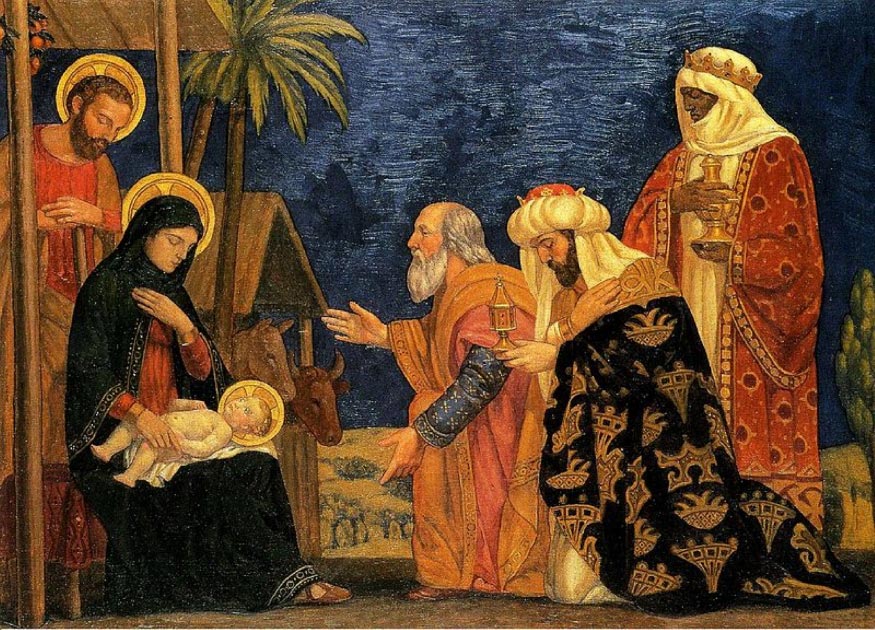
Still, whenever we enter something new or different, it gives us the chance to make some adjustments to our living. In other words, whether we’ve entering a new year or maybe moving to a different place, we have the opportunity to change, don’t we? Of course, some of these changes may be big and dramatic, you know, like to stop smoking or to lose weight or to be more kind and considerate to others; while others may be so personal that there’s no way other folks could understand the reasons. For example, way back in the 70s, I remember a friend of mine telling me how, when his family moved from North Carolina to Virginia, his seven-year-old son said that he wanted to be called something else. You see, the boy’s name was “Edward James” and for seven years they called him Eddie. But since he was living in a new place where, unlike the song from “Cheers,” nobody knew his name, he wanted to be called “James.” Now, I don’t know if I ever really understood why, but that’s exactly what his parents did. And last week, I saw a picture on Facebook of my friend, who’s now in his eighties, with some of his kids and adult grandchildren. And there he was, standing beside his son whom he identified in the little memo underneath as James. Now that’s what he did. And even though I doubt that anybody here is planning on trying out a different name anytime soon, entering the new year certainly offers us the chance to make some changes to the way we live.

And I’ll tell you, that’s going to be our focus this morning. You see, we’re going to talk about some adjustments we might want to make as we move into 2024. And since yesterday was what’s called Epiphany, the day set aside to remember the Magi or the Wise Men coming to Jesus, we’re going to use them as sort of a guide into the new year. You see, we’re going to focus on four qualities that I think they showed as they made their journey from the east to Bethlehem, qualities that I believe we can incorporate into our own lives and that just might help us be more effective and more content as we go about our daily living.

Of course, to do that, we need to hear the story. And remember, we’re focusing on what the magi did and not all the other stuff in the passage. Now, this was what the Evangelist Matthew wrote:

When Jesus was born in the village of Bethlehem in Judea, Herod was king. During this time some wise men from the east came to Jerusalem and said, “Where is the child born to be king of the Jews? We saw his star in the east and have come to worship him.”

When King Herod heard about this, he was worried, and so was everyone else in Jerusalem. Herod brought together the chief priests and the teachers of the Law of Moses and asked them, “Where will the Messiah be born?”

They told him, “He will be born in Bethlehem, just as the prophet wrote,

‘Bethlehem in the land

    of Judea,

you are very important

    among the towns of Judea.

From your town

    will come a leader,

who will be like a shepherd

    for my people Israel.’”

Herod secretly called in the wise men and asked them when they had first seen the star. He told them, “Go to Bethlehem and search carefully for the child. As soon as you find him, let me know. I also want to go and worship him.”

The wise men listened to what the king said and then left. And the star they had seen in the east went on ahead of them until it stopped over the place where the child was. They were thrilled and excited to see the star.

When the men went into the house and saw the child with Mary, his mother, they knelt down and worshiped him. They took out their gifts of gold, frankincense, and myrrh and gave them to him. Later they were warned in a dream not to return to Herod, and they went back home by another road. [Matthew 2:1-12, CEV]

Now, that was what Matthew wrote, and remember, we’re looking at just the Magi, the Wise Men, not Herod and his cronies. 

And I’ll tell you, when we concentrate on who they were and what they did, I believe they demonstrated four qualities that we can claim. For example, first, I think they were really focused. You see, as I read the story, these “wise men from the east” knew exactly where they were going; they were going to see “the child born to be king of the Jews.” And you know, they also knew exactly how they were going to get there; man, they would follow a star. These guys were focused, weren’t they?

And you know, we can be too. I mean, as we enter this new year, like them, we can also be clear about where we’re going. And we can be confident about how we’re going get there. Now that’s focus. And as Christians, man, we’ve really got a leg up on others, because we’ve got a book right here that’s just full of guidance and advice. For example, if you’re talking about our destination, just listen to what the Apostle Paul wrote to the Philippians:

I have not yet reached my goal, and I am not perfect. But Christ has taken hold of me. So I keep on running and struggling to take hold of the prize. My friends, I don’t feel I have already arrived. But I forget what is behind, and I struggle for what is ahead. I run toward the goal, so I can win the prize of being called to heaven. This is the prize God offers because of what Christ Jesus has done. [Philippians 3:12-14, CEV]

And as to the way we can get there, well, here’s some advice Jesus Christ gave his disciples:

But more than anything else, put God’s work first and do what he wants. Then the other things will be yours as well. [Matthew 6:33, CEV]

Of course, these are just a couple of examples; there are a whole lot more. The point is this: we can know where we’re going and how to get there, can’t we? Therefore, as we enter this new year, we too can be focused. And I think that’s the first thing we can see in the Magi. But that’s not all.

Because second, when you think about how the Wise Men went about their journey to the king, they were also open. I mean, even though they knew where they wanted to go and the general route they needed to take to get there, they did something truly remarkable, especially for men who considered themselves to be wise. Man, they stopped for directions, for crying out loud. Miracles really are possible. But not only that, they actually listened to what Herod said and followed his advice. Why? Because they were open.

And I’ll tell you, that can also apply to us. I mean, as we move into this new year, we can sort of put aside the assumption that we already know it all, and we can choose to be a little more humble as we look at ourselves and approach others. And if we do, we’ll be in a much better position, and I’m talking about having the right frame of mind, to listen to what others have to say and then, when what they’re saying makes sense, to take their advice. And you know, it’s interesting, when we do that, we’ll be following the direction offered by the writer of the Proverbs in these three little aphorisms:

If you have good sense,

    you will listen and obey;

if all you do is talk foolishly,

    you will destroy yourself. [Proverbs 10:8, CEV]

Children with good sense

    accept correction

    from their parents,

but stubborn children

    ignore it completely. [Proverbs 13:1, CEV]

Fools think they know

    what is best,

but a sensible person

    listens to advice. [Proverbs 12:15, CEV]

On occasion, I’ve said about myself, “Jackie Rudiger didn’t raise a fool.” Well, as I enter a new year, I have a chance to prove it, by following the example left by the Magi and by becoming more open. And for me, that’s the second trait they showed on their journey.

And third, along with being focused and opened, these Wise Men were also prepared. I mean, after they arrived at their destination, they weren’t like me on too many Christmases and too many birthdays and especially too many anniversaries. Man, they weren’t scrambling around trying to buy something at the last minute. Instead, according to Matthew, “when the men went into the house and saw the child with Mary, his mother, they knelt down and worshiped him. They took out their gifts of gold, frankincense, and myrrh and gave them to him.” [Matthew 2:11, CEV] In other words, they didn’t have to give Jesus a can of motor oil or a bag of chips or anything else you can get at the UK. Why; because the Magi were prepared. 

And I’ll tell you, we can be too. Although we might not know everything that’s there in front of us, we can have a pretty good idea about what we’re going to need to get to where we want to go, and so being prepared is not only possible but makes a lot of sense. But not only that, let’s face it, preparation is really part and parcel about what it means to be a Christian, isn’t it? In other words, being prepared, man, that’s a big deal for believers. I mean, just listen to what the Apostle Paul wrote to the Romans:

You know what sort of times we live in, and so you should live properly. It is time to wake up. You know that the day when we will be saved is nearer now than when we first put our faith in the Lord. Night is almost over, and day will soon appear. We must stop behaving as people do in the dark and be ready to live in the light. So behave properly, as people do in the day. Don’t go to wild parties or get drunk or be vulgar or indecent. Don’t quarrel or be jealous. Let the Lord Jesus Christ be as near to you as the clothes you wear. Then you won’t try to satisfy your selfish desires. [Romans 13:11-14, CEV]

Now, that was what he said to the Romans. And to the Corinthians, he wrote this:

Keep alert. Be firm in your faith. Stay brave and strong. Show love in everything you do. [1 Corinthians 16:13-14, CEV]

You see, the demands of our destination shouldn’t be a surprise. And for that reason, as we move into the new year, we can be prepared just like the Magi, the third quality they showed on their journey.

And finally, fourth, I think it’s pretty clear that these Wise Men were also flexible. I mean, as they returned home, they weren’t bound to a certain schedule or a fixed route. Remember, according to Matthew, “Later they were warned in a dream not to return to Herod, and they went back home by another road.” [Matthew 2:12, CEV] Now, in an age before the GPS, that took a lot of courage and confidence. You see, because the situation changed, they were able to change themselves. Why; because they really were flexible. 

And although flexibility isn’t a trait that a lot of Christians seem to value, I think it just makes sense to be able and willing to change when situations dictate. As a matter of fact, I think it can also show real courage and faith. I mean, although it’s always more comfortable to pretend that things are just the way they’ve always been, only people with inner strength and confidence will step away from their comfort zones. And I also believe it takes genuine faith to trust that not only will God be with us even if we take the less traveled route, he might actually be moving us in that very direction. In other words, a change in orientation might actually be good, something that I think Paul wanted the Romans to understand when he wrote,

Dear friends, God is good. So I beg you to offer your bodies to him as a living sacrifice, pure and pleasing. That’s the most sensible way to serve God. Don’t be like the people of this world, but let God change the way you think. Then you will know how to do everything that is good and pleasing to him. [Romans 12:1-2, CEV]

And in his letter to the Ephesians, he wrote,

As a prisoner of the Lord, I beg you to live in a way that is worthy of the people God has chosen to be his own. Always be humble and gentle. Patiently put up with each other and love each other. Try your best to let God’s Spirit keep your hearts united. Do this by living at peace. [Ephesians 4:1-3, CEV]

And so as we move forward, we can decide to be sensitive to the options that lie in front of us and to be willing to change course, if that’s what we need to do. In other words, we can show the same kind of flexibility shown by the Magi when they were about to head home. And for me, that’s the fourth quality we can adopt.

And I think remembering all this is important, especially as we enter a new year. You see, right now, we have the opportunity to chart our course into 2024. And even though I doubt that any of us will be changing our names, we can decide that we’re going to claim the example left by the Wise Men. You see, like them, we can choose to be focused and open, prepared and flexible. And I’ll tell you, if we do, if we claim their example, our journey into the new year just might be as successful as their journey to Bethlehem.

Friday, January 5, 2024

The Bulletin for the SPC Worship Service - Sunday, January 7, 2024

During the Sligo Presbyterian Church worship service on Sunday, we’ll focus on the story of the Magi and consider how their journey might influence how we enter this new year. The bulletin is below. You can stream the service by going to the Sligo Presbyterian Church YouTube Channel on Sundays at 10:00 a.m. (EST)


Thursday, December 14, 2023

Bible Stories for Kids - The Wise Men Come to Jesus

On Thursdays, Pastor Rudiger reads a story to the children who attend the Dancer’s Studio Performing Arts Christian Preschool in Clarion, Pennsylvania. On December 14, he shared with the children the story of the Wise Men coming to Jesus.  Below is a recording of their time together.

Tuesday, January 3, 2023

The Sligo Presbyterian Church Celebration Service - Sunday, January 1, 2023

As we move through Advent, we’re looking at the characters of Christmas. During this five-week worship series, we'll focus on some of the main characters of the Christmas story.
In the last service in this series, we focused on the Wise Men. A video of the service, a recording of the message and a copy of the bulletin are below.


Sunday's Message: The Wise Men

As we move through Advent, we’re looking at the characters of Christmas. During this five-week worship series, we'll focus on some of the main characters of the Christmas story.
In the last message, we focused on the Wise Men. A copy and recording of the message is below.

*******

Well, Happy New Year! Of course, this isn’t the first time I’ve said that today. I mean, remember that ball in Times Square dropped at midnight; therefore I’ve all had a little over ten hours to “Happy New Year” people all over the place, right? But to be completely honest with y’all, I can only say that I assume that it dropped, because I was long gone when the clock struck twelve. And when I left for the church this morning, Debbie was still asleep, and since she was up at midnight ringing in the New Year, of course with Coco Chanel, I didn’t want to wake her up. And so, my first “Happy New Year” to her was about a half-hour ago. But still, it’s the thought that counts, right? And I did say it to Shelly and Ed and Jordan and some of y’all when you got here this morning. And so, just to make sure I haven’t left anyone out, let me say, “Happy New Year.” And I’ll tell you, from what I’ve already seen in 2023, I have great hope. I mean, remember how cold it was last Saturday and Sunday? Well, it’s supposed to be in the low 60s on Tuesday, which must mean that Winter is almost over and Spring is on the way, right? Please, tell me I’m right.

And you know, it’s kind of interesting, on this day when we’re entering a new year, we’re also tying up a sermon series we started back at the end of November, one focusing on some of the characters we associate with the story of Christmas either from the Gospel of Luke or the Gospel of Matthew. Now we started by looking at Zechariah, you know, the father of John the Baptist, and talked about how he ended up showing faith despite the doubt he initially felt. The next week we looked at Mary, the mother of Christ, and talked about how she was willing to accept the mission God had given her with humility and enthusiasm. And then we looked at Joseph, Jesus’s adopted father, and talked about how he put aside some of the values and principles he assumed that God wanted him to follow in order to do what God had actually called him to do. And finally, last week, on my sixth Sunday Christmas, we looked at the shepherds, a group of regular working men, who listened to what an angel had to say and who left what they were doing, celebrated with Mary and Joseph and then returned to their world praising God. Now, that’s what we’ve already done.

And this morning, we’re going to put a bow on this by using a passage from the Gospel of Matthew to consider the Wise Men, something that just seems right, especially since Friday is what’s called the Epiphany of the Lord, in other words, the day we remember the coming of “we three kings of orient are.” And sort of like we saw last week, these guys are really unique when compared to Zechariah and Mary, Joseph and the shepherds. You see, unlike everyone else we’ve been talking about, the Wise Men were most definitely not Jewish: no way, no how. In fact, as we’re going to see, there’s really no indication that they returned to the orient spiritually much different than they were when they left. In other words, according to what Matthew wrote, they didn’t convert either to Judaism or Christianity. And I’ll tell you, that one simple fact will shape the questions we’re going to consider this morning. I mean, although we’re still going to answer the questions, who were the Wise Men and what happened to them, since I don’t think their personal faith was really involved in the story, our third question will be this: how did the Wise Men serve God? And you know, since their situation is a little different from our own, I think we’re going to approach them from a slightly different perspective. You see, we’re going to use our time discussing how God might do great things through men and women who are not believers, you know, who are not like us.

Of course, doing that kind of thing is really impossible until we answer question number one: who were the Wise Men? In other words, who were these guys who, with their camels, kind of dominate every nativity set and who sure seem to play an important role in the birth of Jesus Christ? Well, this was what the Evangelist Matthew wrote:

When Jesus was born in the village of Bethlehem in Judea, Herod was king. During this time some wise men from the east came to Jerusalem [Matthew 2:1, CEV]

Now that’s what Matthew wrote. 

And I think it’s important to note that the Greek word translated here as “wise men” is μάγοι, the root for the English words “magic” and “magician.” And I’ll tell you, that’s kind of how the μάγοι were viewed, at least by regular folks in the first century. I mean, they were scientists who knew some stuff about the world that seemed mysterious to most people. And they were physicians who knew how to deal with diseases that most men and women couldn’t explain much less control. But most important of all, they were astrologers. In other words, they knew all about the stars, but more important than that, they knew what the stars and their alignment meant. And I’ll tell you, this was really important, because in a world where people relied on signs to determine what they should and shouldn’t do, man, this was some powerful knowledge. They were wise men. And according to Matthew, they were from the east, and although there’s a lot of space east of Palestine, they were probably priests from either Persia or Babylon. And that’s who the μάγοι were. Of course, that also meant that they weren’t Jews. As a matter of fact, the only other place in the New Testament when we run into μάγοι is in this passage from the Book of Acts:

Barnabas and Saul went all the way to the city of Paphos on the other end of the island, where they met a Jewish man named Bar-Jesus. He practiced witchcraft and was a false prophet. He also worked for Sergius Paulus, who was very smart and was the governor of the island. Sergius Paulus wanted to hear God's message, and he sent for Barnabas and Saul. But Bar-Jesus, whose other name was Elymas, was against them. He even tried to keep the governor from having faith in the Lord. [Acts 13:6-8, CEV]

You see, Bar-Jesus, Elymas was called a μάγον, just like these guys from the east who will play an important role in the coming of Christ.

And I’ll tell you, there’s a part of me who kind of wishes I didn’t know all this about the Wise Men. You see, I think I’d have been a lot happier seeing them as an Arab, a black guy and a Scandinavian, each wearing a different kind of crown, standing or kneeling before baby Jesus. I mean, seeing them as being physically different is one thing; but according to the word Matthew used, what these “Wise Men” believed was radically different from anything Zechariah or Mary, Joseph or the shepherds had been taught. My gosh, now-a-days, it would be like saying a Muslim Imam, a Buddhist priest and an atheist walk to the manger, and that’s no joke. No, in terms of their backgrounds and their beliefs, the μάγοι were so unlike us that, frankly, it makes me uncomfortable, but that’s exactly who the Wise Men were; the answer to our first question.

And so that leads to question number two: What happened to the Wise Men? In other words, what happened to these guys from the east whom respectable Jewish men and women associated with magicians and sorcerers and false prophets? Well, this was what Matthew wrote:

When Jesus was born in the village of Bethlehem in Judea, Herod was king. During this time some wise men from the east came to Jerusalem and said, “Where is the child born to be king of the Jews? We saw his star in the east and have come to worship him.”

When King Herod heard about this, he was worried, and so was everyone else in Jerusalem. Herod brought together the chief priests and the teachers of the Law of Moses and asked them, “Where will the Messiah be born?”

They told him, “He will be born in Bethlehem, just as the prophet wrote,

‘Bethlehem in the land
    of Judea,
you are very important
    among the towns of Judea.
From your town
    will come a leader,
who will be like a shepherd
    for my people Israel.’”

Herod secretly called in the wise men and asked them when they had first seen the star. He told them, “Go to Bethlehem and search carefully for the child. As soon as you find him, let me know. I also want to go and worship him.”

The wise men listened to what the king said and then left. And the star they had seen in the east went on ahead of them until it stopped over the place where the child was. They were thrilled and excited to see the star. [Matthew 2:1-10, CEV]

Now according to Matthew, that’s what happened. 

And you know, I really find this amazing. I mean, for reasons I will never understand, God chose to lead a group of pagan astrologers to his son, the one whom Joseph had been told to name “Jesus,” because he was going to save his people from their sin and who would be for humanity Immanuel, bringing the very presence of God into our world. You see, he didn’t choose Herod, the King of Judea, and he didn’t choose the chief priests and he didn’t choose the teachers of the Law, and he didn’t choose anyone from Jerusalem. As a matter of fact, he didn’t choose a Jew at all. Instead, he chose to lead a bunch of foreigners, who came from a foreign land and who spoke a foreign language and who worshiped foreign gods. These were the ones God led to his son, the messiah, the King of Jews. And he did it in a way that those foreign μάγοι, these astrologers would understand; he did it through a star in the heavens. You see, that’s what God did. And I’ll tell you, it worked. You see, those Wise Men followed that star. And after getting a little additional information, they found the child, just as God intended.

And I’ll tell you, I think that’s something really important for us to recognize. You see, I think it’s easy to believe that God is only working through Christians, you know, followers of Jesus Christ, men and women who share our backgrounds and beliefs. Man, that’s what we’re told by people we respect. And although I think we all recognize that there are good people outside our little group, I believe it’s tempting to assume that they’re probably the exception to the rule and that, for the most part, those who come from these foreign lands and who speak in these foreign languages and who worship these foreign gods are impediments to God’s work and his will. Therefore, the possibility that they’re actually being led by God, and I’m talking about the Father and the Son and the Holy Spirit, man, that’s highly unlikely, bordering on impossible. And because of these assumptions, it becomes easy to overlook not only what they’re doing but also the ridiculous possibility that God, the one we worship, is calling them and leading them and empowering them to do it. That kind of thing just doesn’t happen, right? And so we focus on ourselves and ignore them, completely forgetting that God can guide and direct those whom we consider on the outside in order to do great things for the entire world. And I’ll tell you, we should know that’s possible, because that’s exactly what happened to the Wise Men, the answer to our second question.

And of course, that leaves us with question number three, one that’s worded a little different from the third question we asked when we were talking about Zechariah and Mary, Joseph and the shepherds. You see, since there’s really no indication in the story that the Wise Men either had or showed what we’d consider faith, our third question is simply this: How did these Wise Men, these μάγοι, these foreign astrologers serve God? Well, just listen to what Matthew wrote:

When the men went into the house and saw the child with Mary, his mother, they knelt down and worshiped him. They took out their gifts of gold, frankincense, and myrrh and gave them to him. Later they were warned in a dream not to return to Herod, and they went back home by another road. [Matthew 2:11-12, CEV]

Now that’s what Matthew wrote, and I want y’all to think about the three things those Wise Men did. I mean, first, they worshiped. But before anyone assumes that this must show faith, the Greek word used here refers to kneeling in respect, you know, sort of like a good subject would do to his king or a good husband should do to his wife. You see, it’s more a sign of humble honor than religious devotion. And so, they offered the one they saw as the new King of the Jews the respect he deserved. But that’s not all they offered, because, second, they offered Jesus gifts that reflected who he was and why he would be important: gold, the metal of kings, and frankincense, a resin that was used as incense during religious worship, and myrrh, a really strong smelling spice that was utilized in embalming. These were the gifts they brought. And third, when warned by God in a dream not to return to Herod, they did what they were told to do, giving Joseph and Mary time to pack up and to head to Egypt before Herod could get his hands on their son. You see, this was how those Wise Men from the east served the God whom they really didn’t know. 

And I’ll tell you something, I believe the same is true today. In fact, I think it’s probably happening all around us and often we either overlook it or attribute it to something or someone else. God’s work is being done by people who are labeled foreign and strange. And I’ll tell you, in my opinion, it’s good that this kind of thing is happening all the time, because let’s get real, in our world, there’s a whole lot more people like them than like us. Now that’s just the way it is. You see, whether we see it or not, whether we like it or not, they’re doing great things for a God they may not even know. And imagine, imagine if we decided to view them like I think Matthew wants us to view the μάγοι, as people who are very different from us, and yet who are being led right this minute by the one we call savior and Lord. And as such, they end up serving God in some amazing ways. Of course, that’s certainly not true of everybody and let’s get real, different doesn’t mean better. Still, if we’re allow ourselves to trust that all things really are possible for God, I think we’ll be able to recognize that there just may be all kinds of μάγοι out there, men and women who’ll hear Jesus say, 

“My father has blessed you! Come and receive the kingdom that was prepared for you before the world was created. When I was hungry, you gave me something to eat, and when I was thirsty, you gave me something to drink. When I was a stranger, you welcomed me, and when I was naked, you gave me clothes to wear. When I was sick, you took care of me, and when I was in jail, you visited me.” [Matthew 25:34b-36, CEV]

You see, they’re doing God’s work. 

And us, well, we can decide to acknowledge them and to support them and to help them do what they were called to do, because that’s exactly how the Wise Men served God; the answer to our third and final question.

And I’ll tell you, this is something we can certainly choose to do as we enter this new year, with all the new opportunities and possibilities that are right now before us. You see, as we move forward, we can recognize that we can still trust God even though, from time-to-time, we might have some doubts. And we can claim what we’ve been called to do with humility and enthusiasm. In fact, we can do that, even if it challenges us to move beyond some of those beliefs and opinions that might prevent us from being the men and women we were created to be. And then we can, when we hear the voice of God, leave behind our everyday lives and celebrate with our Savior and then return as changed people. And finally, as we look out into our world, we can choose to see men and women, who are very different from us, being guided by the same Lord and Savior to accomplish great things. Now, if we want, this can become our vision for a new year, all because of these five characters of Christmas.

Thursday, January 13, 2022

Sunday's Message - The Gift of the Magi

During our worship service of January 9, we looked at the coming of the Wise Men. The title of the message was "The Gift of the Magi." Below is the sermon and the passage on which the message was based.

You can stream all our services live by going to the Sligo Presbyterian Church YouTube channel on any Sunday, beginning at 10:00 a.m. If you miss a message or service, you can find a copy and podcast on the Sligo Presbyterian Church: Our Congregation and Community blog (https://thenettransform.blogspot.com/). 

Matthew 2:1-12 [Contemporary English Version]

When Jesus was born in the village of Bethlehem in Judea, Herod was king. During this time some wise men from the east came to Jerusalem and said, “Where is the child born to be king of the Jews? We saw his star in the east and have come to worship him.”

When King Herod heard about this, he was worried, and so was everyone else in Jerusalem. Herod brought together the chief priests and the teachers of the Law of Moses and asked them, “Where will the Messiah be born?”

They told him, “He will be born in Bethlehem, just as the prophet wrote,

’Bethlehem in the land

    of Judea,

you are very important

    among the towns of Judea.

From your town

    will come a leader,

who will be like a shepherd

    for my people Israel.’”

Herod secretly called in the wise men and asked them when they had first seen the star. He told them, “Go to Bethlehem and search carefully for the child. As soon as you find him, let me know. I want to go and worship him too.”

The wise men listened to what the king said and then left. And the star they had seen in the east went on ahead of them until it stopped over the place where the child was. They were thrilled and excited to see the star.

When the men went into the house and saw the child with Mary, his mother, they knelt down and worshiped him. They took out their gifts of gold, frankincense, and myrrh and gave them to him. Later they were warned in a dream not to return to Herod, and they went back home by another road.

The Gift of the Magi

Have y’all every heard the story, “The Gift of the Magi”? Well, it was written by an American author named O. Henry and was published in The New York Sunday World on December 10, 1905. Now if you’ve never read it, it’s really pretty good, and trust me, it’s not long. You see, about this young married couple, Della and Jim Young. And using the words of the writer, 

Now, there were two possessions of the James Dillingham Youngs in which they both took a mighty pride. One was Jim’s gold watch that had been his father’s and his grandfather’s. The other was Della’s hair. Had the queen of Sheba lived in the flat across the airshaft, Della would have let her hair hang out the window some day to dry just to depreciate Her Majesty’s jewels and gifts. Had King Solomon been the janitor, with all his treasures piled up in the basement, Jim would have pulled out his watch every time he passed, just to see him pluck at his beard from envy.

Anyway, on Christmas Eve, Della discovers that she has only $1.87 to buy a present for her husband. And so, to raise a little more money, she goes to a hairdresser in the neighborhood who purchases Della’s long hair for $20. Of course, now she has the money to buy her husband the perfect gift, a platinum watch chain. Well, when Jim comes home from work that evening, Della admits to him that she sold her hair to buy him a Christmas gift. And then Jim gives Della her present–

a set of ornamental combs, which she will be unable to use until her hair grows back out. And when Della gives Jim her gift to him, he tells her that he sold the watch to buy the combs. You see, for those two people, what they gave represented a lot more than the gifts themselves. Now in a nutshell, that’s O. Henry’s “The Gift of the Magi.”

And I’ll tell you, I think this story has a lot to do with what we’re going to consider this morning. I mean, we’ve been talking about the coming of the Wise Men, you know, the Magi and the three gifts they brought. And you know, when we focus on those gifts, in other words, when we think about what was represented by the gold and the frankincense and the myrrh, I believe they point to three aspects of God that we can see in Jesus Christ and that we can remember as we do the best we can, playing the hand we’ve been dealt. 

For example, first, I think the gold brought by the Magi, man, that points to God’s authority. In other words, it reminds us that God has genuine power and control, something that we can certainly see in the person of Jesus Christ. Of course, it doesn’t take a Brainiac to see the relationship between gold and authority. I mean, Au has always been associated with kings and rulers. For example, just listen to how hanging out with King Solomon was like:

Solomon received about twenty-five tons of gold a year. The merchants and traders, as well as the kings of Arabia and rulers from Israel, also gave him gold.

Solomon made two hundred gold shields and used about seven and a half pounds of gold for each one. He also made three hundred smaller gold shields, using almost four pounds for each one, and he put the shields in his palace in Forest Hall.

His throne was made of ivory and covered with pure gold.

Since silver was almost worthless in those days, everything was made of gold, even the cups and dishes used in Forest Hall. [1 King 10:16-18, 21, CEV]

Let’s just say that authority and gold went together like pork and beans. And who was the one who came with great authority: Jesus Christ, right? My goodness, not only were the crowds surprised that “he taught them like someone with authority, and not like their teachers of the Law of Moses” [Matthew 7:29, CEV], but in the very last conversation he had with his disciples, “Jesus came to them and said: I have been given all authority in heaven and on earth!” [Matthew 28:18, CEV] I’ll tell you, given who he was, gold was a perfect gift for Jesus.

And I’ll tell you something else, I think that’s something we need to remember, particularly when our lives have become a little more chaotic and confused than we’d want them to be. I mean, we need to remember Jesus still has the authority to still the storms and to walk on water. And he still has the authority to heal the sick and to cast out the demons. And brothers and sisters, he still has the authority to lead us through whatever it is that we’re facing. And even thought we all know that he’s probably not going to make all the problems and all the pain just miraculously go away, we can be confident that the day is coming when his kingdom will be on earth just like it is in heaven. You see, when thinking about the gifts of the magi, gold reminds us of God’s authority, and that’s first gift.

And second, I think the frankincense reminds us of God’s presence, you know, that regardless of where we go or what we do, God is always close. And I believe that’s something this aromatic resin represents, and I’m talking about the divine presence. In fact, frankincense was one of the spices that went into the sacred incense that was offered before the Ark of the Covenant. Just listen to this from the Book of Exodus:

Mix equal amounts of the costly spices stacte, onycha, galbanum, and pure frankincense, then add salt to make the mixture pure and holy. Pound some of it into powder and sprinkle it in front of the sacred chest, where I meet with you. Be sure to treat this incense as something very holy. It is truly holy because it is dedicated to me, so don’t ever make any for yourselves. If you ever make any of it to use as perfume, you will no longer belong to my people. [Exodus 30:34-38, CEV]

Now that’s what it says. And you know, just like it was with gold, frankincense is also an appropriate gift for Jesus, because it’s through him that we encounter God. In other words, just like the incense reminded people that God was near, that’s exactly what Jesus does for us. And I’ll tell you, I believe that’s why the Evangelist Matthew wrote this before Jesus was even born: So the Lord’s promise came true, just as the prophet had said, “A virgin will have a baby boy, and he will be called Immanuel,” which means “God is with us.” [Matthew 1:22-23, CEV] And I’ll tell you something else, I think that’s why, again according to Matthew, after giving them their great commission, these were Jesus’s last words to his disciples: I will be with you always, even until the end of the world. [Matthew 28:20b, CEV] You see, through Jesus Christ, God is always with us.

And you know, I think that’s something else we need to remember, particularly when we feel isolated and alone. I mean, when we feel as thought we’ve sort of disappeared and that we’ve been left to face the worse the world can throw at us all by ourselves, we can remember that Jesus was talking to us when he said, “If you are tired from carrying heavy burdens, come to me and I will give you rest. Take the yoke I give you. Put it on your shoulders and learn from me. I am gentle and humble, and you will find rest. This yoke is easy to bear, and this burden is light.” [Matthew 11:28-30, CEV] You see, God is present with us, something that becomes real when we remember that the Magi brought frankincense. And that’s the second gift.

And what about gift number three? Well, I think the myrrh reminds us of God’s love, and I’m talking about a love that’s both sacrificial and undeserved. As a matter of fact, I believe it’s a lot like the kind of love we saw in the O. Henry’s story. And as it relates to God, I think it’s tied up with the spice myrrh. You see, along with it being used to make incense, you know, like frankincense, myrrh also appeared during the story of the crucifixion, when “...they offered [Jesus] wine mixed with myrrh; but he did not take it.” [Mark 15:23, NRSV] And it was also associated with his burial. According to the Evangelist John, 

Nicodemus also came with about seventy-five pounds of spices made from myrrh and aloes. This was the same Nicodemus who had visited Jesus one night. The two men wrapped the body in a linen cloth, together with the spices, which was how the Jewish people buried their dead. In the place where Jesus had been nailed to a cross, there was a garden with a tomb that had never been used. The tomb was nearby, and since it was the time to prepare for the Sabbath, they were in a hurry to put Jesus’ body there. [John 19:39-42, CEV]

And so the spice myrrh was tied with both the cross and the grave. But what does this have to with love? Just listen to what Jesus said to Nicodemus a little earlier in the Gospel of John:

And the Son of Man must be lifted up, just as that metal snake was lifted up by Moses in the desert. Then everyone who has faith in the Son of Man will have eternal life.

God loved the people of this world so much that he gave his only Son, so that everyone who has faith in him will have eternal life and never really die. God did not send his Son into the world to condemn its people. He sent him to save them! [John 3:14-17, CEV]

I guess you could say that the cross is the ultimate sign of divine love.

And I’ll tell you, I believe that’s something we also need to remember whenever we confront the future and feel fear rather than hope. You know, when I look at what’s happening within our world but also our country, I’m reminded of that poem by Robert Frost:

Some say the world will end in fire,

Some say in ice.

From what I’ve tasted of desire

I hold with those who favor fire.

But if it had to perish twice,

I think I know enough of hate

To say that for destruction ice

Is also great

And would suffice. [Fire & Ice, 1920]

Never have these words seemed so true. And yet, the cross and the tomb reminds us that neither fire nor ice, desire nor hatred will have the last word. The future is in the hands of God, and God loves us, something that we can trust when we remember that the Magi also brought myrrh. And that’s the third gift. 

You see, when those Wise Men came to Jesus, they offered something more than tokens of their respect and devotion. With the gold, they offered a reminder of God’s authority, and with the frankincense, a reminder of his presence and with the myrrh, a reminder of his love. And I’ll tell you, that deeper meaning, well, maybe that’s just a part of these special kinds of gifts. For example, just listen to how O. Henry ended his story, “The Gift of the Magi”:

The magi, as you know, were wise men–wonderfully wise men–who brought gifts to the Babe in the manger. They invented the art of giving Christmas presents. Being wise, their gifts were no doubt wise ones, possibly bearing the privilege of exchange in case of duplication. And here I have lamely related to you the uneventful chronicle of two foolish children in a flat who most unwisely sacrificed for each other the greatest treasures of their house. But in a last word to the wise of these days let it be said that of all who give gifts these two were the wisest. O all who give and receive gifts, such as they are wisest. Everywhere they are wisest. They are the magi.

The Program and Bulletin for the SPC Worship Service - Sunday, September 20, 2026

The bulletin will be included tomorrow.  Jesus reframes the ten commandments from a list of external rules into matters of the heart. He tau...