In this blog, we'll focus on the working being done at Sligo Presbyterian Church, Sligo, Pennsylvania. We'll also look at what's happening in Sligo, Rimersburg, Clarion, and all the other communities served by our congregation.
During our service on Sunday, June 8, we celebrated the coming of the Holy Spirit on Pentecost, and we recognized the graduates associated with Sligo Presbyterian Church. Below is the podcast and text of the sermon. You can stream the service by going to the Sligo Presbyterian Church YouTube Channel on Sundays at 10:00 a.m. (EDT). You can hear a podcast of the service at the Sligo Presbyterian Church YouTube Channel or the Sligo Presbyterian Spotify Page.
You know, today is really a special day. I mean, on one hand, we’re celebrating Pentecost, the coming of the Holy Spirit, the Sunday that really brings to a close the season of Easter, that time of year when we focus on why the resurrection of Jesus is or at least should be important and that reminds us that, right now, we’re living on the far side of both the cross and empty tomb. Now that’s one reason today is important.
On the other hand, this morning we’re also recognizing some of the graduates who have a connection to our congregation. And I’ll tell you, whether it’s from high school or college or a special vocational program, graduations are really a big deal. You see, for me, they represent the turning of a page, the start of a new chapter, and the beginning of something else. And trust me, I’ve graduated enough to know. And you know, it’s interesting; every time I’ve graduated, the next day, well, it just seemed weird.
Of course, why wouldn’t it? Before graduation, life is pretty predictable, isn’t it? I mean, there are some pretty clear goals that don’t really change a lot, you know, that sort of move us into the future without a lot of thought. My goodness, whether it’s high school or college, vocational education or basic training, our goal is to graduate, right; you know, to get the heck out of Dodge. Sure it is. And I’ll tell you, as we’re moving toward that goal, there are some very definite expectations that people have of us and we have of ourselves. In other words, regardless of what we’re doing, the folks who care about us the most want us to work hard and to stay focused and to do what’s necessary to finish the program. And it really doesn’t matter whether that takes thirteen years or a couple of months. And you know, given all that, I think there’s also some genuine comfort, you know, in our pre-graduation lives. I mean, before the “Pomp and Circumstance,” when we wake up in the morning, we pretty much know what we’ll be doing during the day, don’t we? In one way or the other, we’ll be moving toward that goal and satisfying those expectations. And you know, in that way, life is predictable. It may not be what we want, but it’s predictable.
But after graduation, everything changes, doesn’t it? Man, the predictability goes right out the window, along with those very clear goals and those very definite expectations and that genuine sense of comfort. All of a sudden, the page is turned and the chapter is finished and an awful lot of what we’ve known is at an end and something else, something unknown, something brand new stuff is about to begin. And you know, that can leave us feeling excited and scared but often just numb. I’ll tell you, based on what I’ve experienced in my own life, that’s what graduations can do.
And you know, in a real way, that same sort of thing may have been going on with the disciples on Pentecost. I mean, before that day, their lives were fairly predictable. Good night, they were disciples for crying out loud; therefore, their goal was to follow Jesus as he made his way from Galilee to Jerusalem. And as disciples, they were expected to listen to what he taught and to do what he commanded. And as to being comfortable, well, even though they were on their own for the three days between the crucifixion and the resurrection, during the rest of the time Jesus was around, they didn’t need to think about what they needed to do or to be. Their job was to follow and to listen and to do. And even after Jesus ascended, they were still kind of treading water and going about their business.
But I’ll tell you, on one particular day, man, that all changed. Just listen to what the Evangelist Luke wrote:
On the day of Pentecost all the Lord’s followers were together in one place. Suddenly there was a noise from heaven like the sound of a mighty wind! It filled the house where they were meeting. Then they saw what looked like fiery tongues moving in all directions, and a tongue came and settled on each person there. The Holy Spirit took control of everyone, and they began speaking whatever languages the Spirit let them speak.
Many religious Jews from every country in the world were living in Jerusalem. And when they heard this noise, a crowd gathered. But they were surprised, because they were hearing everything in their own languages. They were excited and amazed, and said:
Don’t all these who are speaking come from Galilee? Then why do we hear them speaking our very own languages? Some of us are from Parthia, Media, and Elam. Others are from Mesopotamia, Judea, Cappadocia, Pontus, Asia, Phrygia, Pamphylia, Egypt, parts of Libya near Cyrene, Rome, Crete, and Arabia. Some of us were born Jews, and others of us have chosen to be Jews. Yet we all hear them using our own languages to tell the wonderful things God has done.
Everyone was excited and confused. Some of them even kept asking each other, “What does all this mean?”
Others made fun of the Lord’s followers and said, “They are drunk.” [Acts 2:1-13]
Now that’s what happened.
And you know, at that moment, everything changed, didn’t it? Everything changed for those disciples. I mean, not only was Jesus gone but they were now in the same position as everyone who graduates, and I’m talking about turning a page and starting a new chapter and ending something while at the same time beginning something else. In other words, they were moving beyond the predictable, with its goals and expectations and comfort, and moving into something new, something that was both exciting and scary. Who knows, they may have even felt a little bit numb.
But I’ll tell you, what we can’t say is that they were passive and silent and still. No sir, as a matter of fact, they were anything but, not as they claimed this new power, power that would enable them to do the one thing Jesus Christ commanded them to do in the time between the resurrection and ascension, namely to “...tell everyone about [Jesus] in Jerusalem, in all Judea, in Samaria, and everywhere in the world.” [Acts 1:8b, CEV] No, instead of being passive, man, they were active, getting up and moving forward into their world. And instead of being silent, they spoke out and spoke up, proclaiming the gospel of Jesus Christ to anyone who’d listen. And instead of being still, they demonstrated by their living the grace of the Son and the love of the Father and the fellowship of the Holy Spirit and they did it within a world that was judgmental and hateful and divided. You see, if Pentecost was like graduation day for those disciples, they moved bravely and boldly into the world around them.
And I’ll tell you something, so can we. So can we as we hear the story of Pentecost this morning. Brothers and sisters, so can we as we decide what we’re going to do with what we’ve received. You see, this morning, whether we’ve heard about the mighty wind and the fiery tongues for the first or the eighty-first time, right here and right now, everything has changed, because the same Spirit that descended on Jesus when he was baptized and that rested on those disciples at Pentecost, take it to the bank, that same Spirit is on us, which means the old predictability is over. The old goals and expectations and sense of comfort have changed. In other words, as we look at our lives, man, the page has been turned and we’re starting a new chapter and we’re on the threshold of something else, something exciting and scary, and something that we can claim and live. Now that’s where we stand.
And so, let’s follow the example of those disciples who experienced the exact same thing we’re experiencing right now. I mean, like them, let’s be active, not content to hide behind thick walls and stained glass, but rather, be ready and willing and able to get off our pews and move forward into our world, and I’m talking about our communities as inspired followers of Jesus Christ. We can be active. And since we’re out there, following the examples of Christ and the disciples, let’s speak out when we’re face to face with hypocrisy and arrogance and hatred and when we hear lies being presented as truth and needs being confused with wants and when we’re ready to affirm that “the Scriptures say, ‘Love the Lord your God with all your heart, soul, strength, and mind.’ They also say, ‘Love your neighbors as much as you love yourself,’” [Luke 10:27b, CEV] only to hear someone in the back of the room say, “But ‘who are my neighbors?’” [Luke 10:29b, CEV] And let’s also speak up: speak up for honesty and humility and mercy and speak up for what’s right even if it’s not popular and for what’s generous even if it’s not profitable and speak up in gratitude for the one whom we trust and in service to the ones whom our world often ignores. Man, we can speak out and speak up. And let’s decide, right here and now, to demonstrate by our living what is means to be guided by grace and what it means to show love and what it means to value fellowship and to demonstrate this within a world that seems every bit as judgmental and hateful and divided today as it did two thousand years ago. We can demonstrate our faith. You see, let’s view today, Pentecost 2025, as our graduation day and then move into our world both bravely and boldly.
Of course, I recognize that, right after receiving a diploma, most graduates may not feel ready to be all that brave and bold. For example, last Sunday, after the service, I asked Clara how she felt on the morning after her graduation. And you know what, she didn’t say excited and she didn’t say scared and she didn’t say numb. She said, “Tired.” Well, I’ll tell you, I think feeling that way, man, it’s appropriate. I mean, after working so hard and so long, it just makes sense to pause for just a little while before moving on to the next page and a new chapter and, of course, something else. And even though Luke doesn’t mention anything like that happening to the disciples after the coming of the Holy Spirit, I think we might feel the same sort of thing as we move into the world with our spiritual diplomas. In other words, if we’re honest with ourselves, we might feel a little tired too. But you know, after we’ve rested for just a little bit, let’s make the decision to claim the power that’s already resting upon us, and I’m talking about that inspiration we already have. And then, let’s become active. And let’s speak out and speak up. And then let’s demonstrate exactly what it means to follow Jesus Christ. In other words, let’s view Pentecost 2025 as our graduation day.
Easter is the most important day in the year, because we celebrate the most important event in human history, the resurrection of Jesus Christ. During this sermon series, we’ll consider five ways the resurrection can impact our lives. They include the following:
On Sunday, June 1, we'll focus on how we can live with courage. Faith in the resurrection empowers individuals to live with courage, knowing that death has been defeated and that our eternal destinies are in God’s hands.Below is the podcast and text of the sermon. You can stream the service by going to the Sligo Presbyterian Church YouTube Channel on Sundays at 10:00 a.m. (EDT). You can hear a podcast of the service at the Sligo Presbyterian Church YouTube Channel or the Sligo Presbyterian Spotify Page.
Well, like it or not, this morning, we’re going to turn the page, a phrase I’ve used a lot over the last few weeks. You see, since next week is Pentecost, we’re tying up a series we started on April 27 entitled After Easter: Living in a New Reality. And during that time, we’ve talked about how, thanks to the resurrection, we can live with hope, because the resurrection assures us that death is not the end but a passage to a new life in God’s presence. And we’ve talked about how we can live with clarity, because our faith in the resurrection forces us to recognize that we’ll encounter many people who don’t share our perspectives or opinions. And we’ve talked about how we can live with purpose, because the resurrection provides us with the motivation to live for Christ, claiming his command and sharing with others the reasons we have to trust in him. And then last week, we talked about how we can live with understanding, because the resurrection enables us to comprehend the significance of Christ’s coming and our role in continuing his ministry. Now, that’s what we’ve already covered. And today, we’re going to consider how we can also live with courage, because faith in the resurrection can empower us to live courageously, knowing that death has been defeated and that our eternal destinies are in God’s hands.
And you know, I think it’s interesting that we’re talking about courage this morning, because just this last Monday, we celebrated a day that I think offers a pretty good definition of what courage is all about, and of course, I’m talking about Memorial Day. I mean, even though its importance has sort of gotten muddy, with a lot of other stuff being tacked on, this day has really been set aside to remember all those brave men and women who were able to get past their fear and who stood firm in the face of danger and who, as a result, died for a cause far greater than themselves. And because of that, man, they need to be remembered. It’s like the American minister Minot Judson Savage wrote almost one hundred and fifty years ago:
The brave die never, though they sleep in dust: their courage nerves a thousand living men. [Minot Judson Savage]
Now this was what he said. And I’ll tell you, that’s why, in my opinion, we should never forget who these brave men and women were and what they did. You see, their example can give us courage.
And you know, I think we can say the exact same thing about the resurrection of Jesus Christ. You see, I believe it can nerve us as we face a world in which the label Christian is claimed by an awful lot but actually shown by only a few. And it can strengthen us as we try, as best we can, to speak out and to stand firm and to move forward, but not because it will be easy or will make us popular or will earn us a lot of money. No, we can speak and stand and move, because we know it’s the right thing to do. And it can sustain us when those who don’t like what we say and value and do try their hardest to get us to shut up and to sit down and to go back. You see, during this message, the last one in this series, we’re going to use what the Apostle Paul wrote in his first Corinthian letter to consider how faith in the resurrection can empower us to live with courage. And I’ll tell you, based on what he said in the fifteenth chapter, I think it comes down to three things related to the resurrection we can decide to trust.
For example, first, I believe we can live with courage when we decide to trust that Jesus really was raised, raised from the dead. And I’ll tell you, this being a source of courage, well, I think it just makes sense. I mean, when we trust that this really happened, it naturally follows that God is greater, is more powerful than death itself. And knowing that, man, it’s got to boost our courage. And you know, I think that’s exactly what Paul was getting at when he wrote this to Corinthians:
If we preach that Christ was raised from death, how can some of you say the dead will not be raised to life? If they won’t be raised to life, Christ himself wasn’t raised to life. And if Christ wasn’t raised to life, our message is worthless, and so is your faith. If the dead won’t be raised to life, we have told lies about God by saying he raised Christ to life, when he really did not.
So if the dead won’t be raised to life, Christ wasn’t raised to life. Unless Christ was raised to life, your faith is useless, and you are still living in your sins. And those people who died after putting their faith in him are completely lost. If our hope in Christ is good only for this life, we are worse off than anyone else.
But Christ has been raised to life! [1 Corinthians 15:12-20, CEV]
Now, that was what Paul wrote and just think about what it means for us. You see, ever since Adam returned to the dust from which he came, death has always been beyond our control. I mean, even though we might delay it or maybe even cheat it, outside of Enoch and Elijah, in the end, nobody escapes it, and brothers and sisters, when you’re dead, man, you’re not coming back. That’s what it means to die. But that changed when those women peered into an empty tomb. And that changed when Jesus appeared to those two followers on the road to Emmaus. And that changed when, on a mountain in Galilee, he told his disciples exactly what he wanted them to do. You see, the resurrection demonstrated that God is stronger than death.
And I’ll tell you, because of that, man, we can be fearless. We can be fearless, as we speak up for principles that no longer seem all that popular now-a-days, you know, like justice and compassion and humility, and as we speak up for people who are often silenced and ignored. You see, we can be fearless, when we trust that we’re loved by the one who’s greater than what I think you could call the ultimate unknown, death itself. And we can be fearless, because we believe that Paul knew exactly what he was talking about when he said to the Romans, “If God is on our side, can anyone be against us?” [Roman 8:31b, CEV] Man, in the face of the worst that the world can throw against us, we can be fearless. And you know what, I think Jesus Christ himself knew it, and that’s why he said this to his disciples:
Don’t be afraid of anyone! Everything that is hidden will be found out, and every secret will be known. Whatever I say to you in the dark, you must tell in the light. And you must announce from the housetops whatever I have whispered to you. Don’t be afraid of people. They can kill you, but they cannot harm your soul. Instead, you should fear God who can destroy both your body and your soul in hell. Aren’t two sparrows sold for only a penny? But your Father knows when any one of them falls to the ground. Even the hairs on your head are counted. So don’t be afraid! You are worth much more than many sparrows. [Matthew 10:26-31, CEV]
You see, I think we can live with courage when we trust that Jesus was raised. That’s one.
And second, I also believe we can become more courageous when we trust that we’ll be raised too. Now I know I’ve said it many times before, but I’m going to say it again: since the grave of Jesus was empty, we can believe that one day, ours will be to. And you know, in my book that’s another source of courage. I mean, it’s like what Paul wrote to the Corinthians a little bit later in the fifteenth chapter:
But Christ has been raised to life! And he makes us certain that others will also be raised to life. Just as we will die because of Adam, we will be raised to life because of Christ. Adam brought death to all of us, and Christ will bring life to all of us. But we must each wait our turn. Christ was the first to be raised to life, and his people will be raised to life when he returns. Then after Christ has destroyed all powers and forces, the end will come, and he will give the kingdom to God the Father. [1 Corinthians 15:20-24, CEV]
Now that’s what he wrote. In other words, the resurrection of Jesus was not only the end of something old, as old as death itself; it was also the beginning of something new, and I’m talking about life. Jesus was the beginning, but others will follow. He was the first fruit, and the rest of the harvest is coming. As he was raised by the power of God, so will we. This is something we can believe.
And when we do, man, it’s got to fill us with confidence, you know, the kind of confidence that will enable us to stand firm on the Word of God and to stand firm for the gospel of Jesus Christ and to stand firm in the fellowship of the Spirit. In fact, I think it’s the kind of confidence that just might enable us to do what Edward Boatner had in mind when he wrote,
Though the tempest rages, I shall not be moved On the Rock of Ages, I shall not be moved Just like a tree that’s planted by the waters I shall not be moved [I Shall Not be Moved, Edward Boatner]
As a matter of face, I think this just might be the same kind of confidence that Jesus challenged Martha to have when he talked with her after the death of her brother Lazarus:
Martha said to Jesus, “Lord, if you had been here, my brother would not have died. Yet even now I know that God will do anything you ask.”
Jesus told her, “Your brother will live again!”
Martha answered, “I know he will be raised to life on the last day, when all the dead are raised.”
Jesus then said, “I am the one who raises the dead to life! Everyone who has faith in me will live, even if they die. And everyone who lives because of faith in me will never really die. Do you believe this?”
“Yes, Lord!” she replied. “I believe you are the Christ, the Son of God. You are the one we hoped would come into the world.” [John 11:21-27, CEV]
You see, I think we can live with courage when we decide to trust that, just like Jesus, we’re also going to be raised. And that’s two.
And third, I believe we can live with courage when we trust that our ultimate destinies are in the hands of God; I’m telling you, whether we like it or not, we’re all in his powerful and merciful hands. It’s like what Paul wrote, again to the Corinthians:
Some of you have asked, “How will the dead be raised to life? What kind of bodies will they have?” Don’t be foolish. A seed must die before it can sprout from the ground. Wheat seeds and all other seeds look different from the sprouts that come up. This is because God gives everything the kind of body he wants it to have. People, animals, birds, and fish are each made of flesh, but none of them are alike. Everything in the heavens has a body, and so does everything on earth. But each one is very different from all the others. The sun isn’t like the moon, the moon isn’t like the stars, and each star is different.
That’s how it will be when our bodies are raised to life. These bodies will die, but the bodies that are raised will live forever. These ugly and weak bodies will become beautiful and strong. As surely as there are physical bodies, there are spiritual bodies. And our physical bodies will be changed into spiritual bodies. [1 Corinthians 15:35-44, CEV]
You see, for Paul, this is our future. And even though it may be difficult for us to understand right now, that’s alright. I mean, since we’re not the ones doing it, we really don’t need to understand when it’s going to happen or how it’s going to be done. The point is that, as sure as a seed grows into a plant, it’s going to happen and, as sure as the moon isn’t like either the sun or the other stars, it will be done. Why? Because it’s all in the hands of God.
And I’ll tell you, because we believe that the time is coming when we’ll see his will being done on earth as it is in heaven, man, we can be bold as we move forward: bold as we disciple all nations, bold as we teach folks about what Jesus actually taught and bold as we actively and intentionally invite them into the community of believers, confident that whether or not they come has more to do with Holy Spirit than either them or us. As a matter of fact, because we believe that we’re moving into a glorious future, we can reclaim the spirit and the perspective of the earliest church. I mean, just listen to how this fellowship was described:
After they had prayed, the meeting place shook. They were all filled with the Holy Spirit and bravely spoke God’s message.
The group of followers all felt the same way about everything. None of them claimed that their possessions were their own, and they shared everything they had with each other. In a powerful way the apostles told everyone that the Lord Jesus was now alive. God greatly blessed his followers, and no one went in need of anything. Everyone who owned land or houses would sell them and bring the money to the apostles. Then they would give the money to anyone in need. [Acts 4:31-35, CEV]
You see, I think we can also live with courage when we trust that our ultimate destinies are in the hands of God. And that’s three.
And you know, in this way, it really is like what we did on Memorial Day. You see, just like we can find our nerve by remembering those men and women who offered so much for so many, I think we can live with courage when we trust that Jesus was raised and when we trust that we’ll be raised too and we trust that our ultimate destinies are in the hands of God. And with this courage, I’m convinced that we’ll be able to speak up without fear and to stand firm with confidence and to move forward with boldness. And right along with living with hope and clarity, purpose and understanding, this can be our new reality, after Easter.
Easter is the most important day in the year, because we celebrate the most important event in human history, the resurrection of Jesus Christ. During this sermon series, we’ll consider five ways the resurrection can impact our lives. They include the following:
On Sunday, May 25, we focused on how we can live with understanding, because the resurrection enables us to understand the significance of Christ’s coming and our role in continuing his ministry. Below is the podcast and text of the sermon. You can stream the service by going to the Sligo Presbyterian Church YouTube Channel on Sundays at 10:00 a.m. (EDT). You can hear a podcast of the service at the Sligo Presbyterian Church YouTube Channel or the Sligo Presbyterian Spotify Page.
Well, we’re about to enter a new month. And for me, May has just flown by. I mean, I’m really not sure where it went. Good night nurse, it seems like just yesterday we were celebrating Easter and getting ready for Spring and now, Pentecost is in a couple of weeks and Summer will be here before you know it. Of course, part of the reason it seems like a blur, at least to me, may have something to do with all the stuff that’s been going on within the Rudiger family particularly over the last few weeks. My goodness, last Sunday, Maggie graduated from WVU, although I think she’ll probably be a Mountaineer for life. And just a couple of days ago, Debbie officially retired. Now that’s a lot of stuff in my book. And speaking for myself, my dog and of course, my turtles, I just hope things settle down a little bit.
And since we’ll be at Pentecost in a couple of weeks, well, that means we’re about to wrap up this sermon series we started last month, you know, the one entitled After Easter: Living a New Reality. Now in three of the last four Sundays, we’ve talked about how, in light of the resurrection, we can live with hope and with clarity and with purpose. And during the message today, we’ll consider how the resurrection might help us live with understanding, in other words, how it might enable us to understand the significance of Christ’s coming and our role in continuing his ministry.
And you know, I think it’s really interesting that we’ll be doing this on the day before what I believe is the most misunderstood national holiday we celebrate, and I’m talking about Memorial Day. You see, frankly, I think an awful lot of Americans are a little fuzzy about what this day means, and why it’s important, and how it should be remembered. I mean, even if they see it as more than just the unofficial beginning of Summer, you know, the time to dust off the grill and open up the pool, some very sincere folks seem to see it as another day to celebrate our independence, something we do on the Fourth of July, and those who served in the military, something we do on Veterans Day. And even though those two days are really important, Memorial Day, well, I think it’s supposed to mean something else. You see, this is the day we remember those who died in service, focusing on what they did and why it was important and of course, how we might respond. It’s like Richelle E. Goodrich wrote in her book, Slaying Dragons: Quotes, Poetry, & a Few Short Stories for Every Day of the Year:
On this day, take time to remember those who have fallen. But on every day after, do more; put the freedoms they died for to greater and nobler uses. [Richelle E. Goodrich, Slaying Dragons: Quotes, Poetry, & a Few Short Stories for Every Day of the Year]
Now that’s what she wrote, and I think she’s right. If we don’t understand what the day means, we’re sure not going to learn from it, much less apply its meaning to our lives.
And I think we can say the same thing with respect to the resurrection. In fact, this idea of understanding actually played an important role in an encounter Jesus had with two disciples immediately after “...Peter ran to the tomb. And when he stooped down and looked in, he saw only the burial clothes. Then he returned, wondering what had happened.” [Luke 24:12, CEV] Just listen to what the Evangelist Luke wrote:
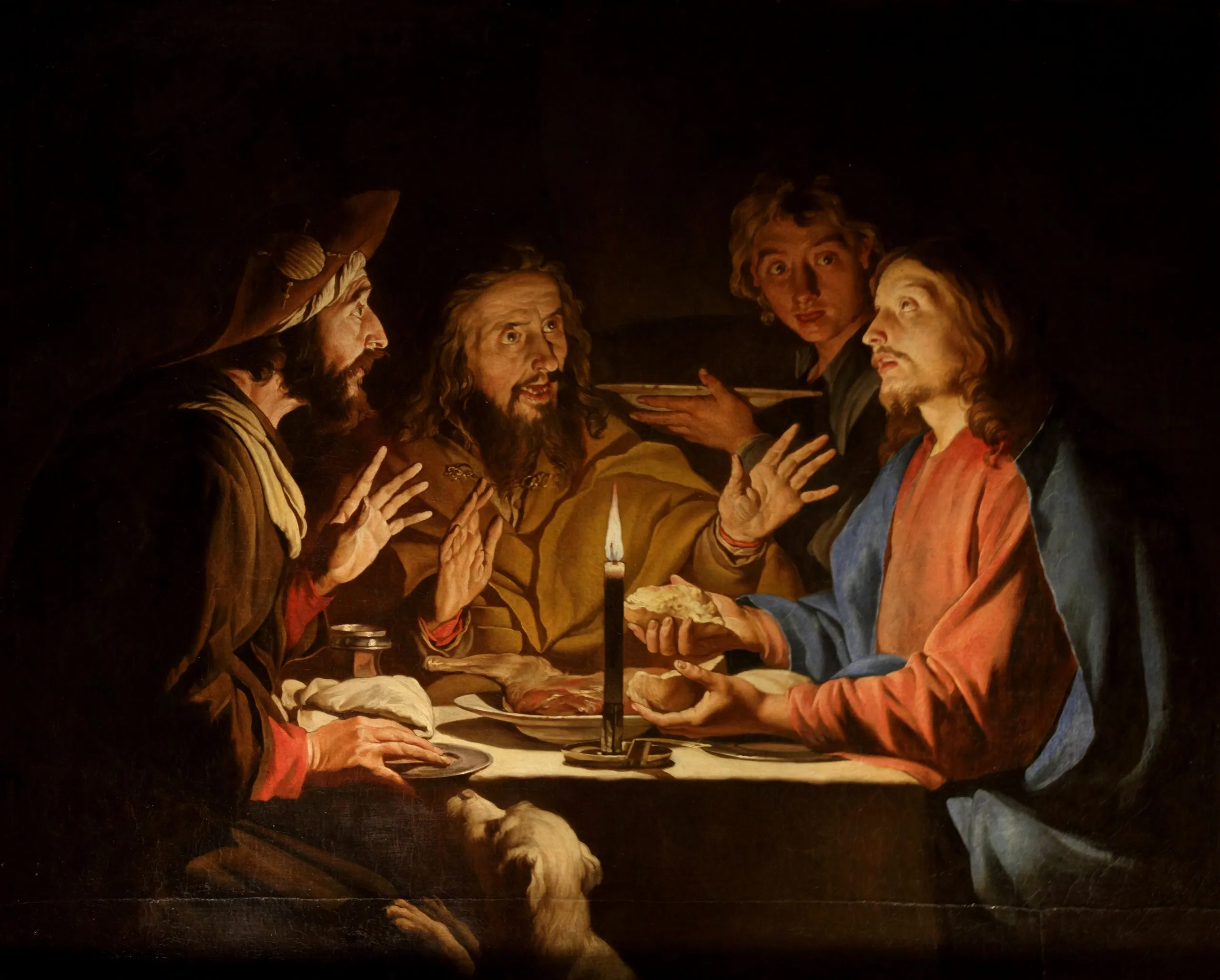
That same day two of Jesus’ disciples were going to the village of Emmaus, which was about eleven kilometers from Jerusalem. As they were talking and thinking about what had happened, Jesus came near and started walking along beside them. But they did not know who he was.
Jesus asked them, “What were you talking about as you walked along?”
The two of them stood there looking sad and gloomy. Then the one named Cleopas asked Jesus, “Are you the only person from Jerusalem who didn’t know what was happening there these last few days?”
“What do you mean?” Jesus asked.
They answered:
Those things that happened to Jesus from Nazareth. By what he did and said he showed that he was a powerful prophet, who pleased God and all the people. Then the chief priests and our leaders had him arrested and sentenced to die on a cross. We had hoped that he would be the one to set Israel free! But it has already been three days since all this happened.
Some women in our group surprised us. They had gone to the tomb early in the morning, but did not find the body of Jesus. They came back, saying they had seen a vision of angels who told them that he is alive. Some men from our group went to the tomb and found it just as the women had said. But they didn’t see Jesus either.
Then Jesus asked the two disciples, “Why can’t you understand? How can you be so slow to believe all that the prophets said? Didn’t you know that the Messiah would have to suffer before he was given his glory?” Jesus then explained everything written about himself in the Scriptures, beginning with the Law of Moses and the Books of the Prophets.
When the two of them came near the village where they were going, Jesus seemed to be going farther. They begged him, “Stay with us! It’s already late, and the sun is going down.” So Jesus went into the house to stay with them.
After Jesus sat down to eat, he took some bread. He blessed it and broke it. Then he gave it to them. At once they knew who he was, but he disappeared. They said to each other, “When he talked with us along the road and explained the Scriptures to us, didn’t it warm our hearts?” So they got up and returned to Jerusalem.
The two disciples found the eleven apostles and the others gathered together. And they learned from the group that the Lord was really alive and had appeared to Peter. Then the disciples from Emmaus told what happened on the road and how they knew he was the Lord when he broke the bread. [Luke 24:13-35, CEV]
Now that’s what happened, and just think about what’s going on here. You see, when the resurrected Christ disappeared after breaking the bread, those disciples understood. I think they understood what Jesus had done and why it was important and, based on what they did, how they could respond.
And you know, I think this same sort of thing applies to us. For example, in light of the resurrection, we can remember what Jesus did. Now that’s the first thing we can understand. I mean, we can remember how, throughout his life, Jesus showed love and compassion, especially for those who needed it most, and I’m talking about the sick and the hungry and the possessed, in other words, people who lacked the ability to take care of themselves, folks who were being crushed by problems and pain that they didn’t choose and couldn’t control and individuals who were often judged and dismissed, even condemned by those on the top. And we can remember how he died on a cross that he didn’t deserve to save the ones who drove the nails. And we can remember how, on the third day, he was raised from old death to new life, showing once and for all that the whistle had sounded and the game was over and death lost. Now this we can understand. As a matter of fact, we can actually do the same kind of thing Paul challenged the Corinthians to do when he wrote this:
My friends, I want you to remember the message I preached and that you believed and trusted. You will be saved by this message, if you hold firmly to it. But if you don’t, your faith was all for nothing.
I told you the most important part of the message exactly as it was told to me. This part is:
Christ died for our sins, as the Scriptures say. He was buried, and three days later he was raised to life, as the Scriptures say. Christ appeared to Peter, then to the twelve. [1 Corinthians 15:1-5, CEV]
You see, the same thing that happened to those two disciples on the Emmaus Road can happen to us. In light of the resurrection, first, we can understand what Jesus did.
But, of course, that’s not all, because, second, we can also recognize why it’s important, you know, why the life and the death and the resurrection can and should make a difference to us. For example, we can recognize that through his life, Jesus offers us an example we can follow. You see, we don’t have to buy what our world is selling, you know, that we’re supposed to divide into little groups and then to take care of our own, as though other folks don’t really matter. Instead we can follow his example by looking past the labels and the assumptions and by focusing our attention on those in need, even if the world is telling us that they’re not worth our time and they don’t deserve our help. You see, Jesus lived, offering us an example we can follow. And we can recognize that, through his death, Jesus offers us a freedom that we can claim, the idea that when he died on the cross so did we, with all our mistakes and all our faults and all our failures. And as a result, man, we’ve been set free, free from the guilt and the shame that can be like an anchor holding us back and free to become everything God created and called and empowered us to be. You see, Jesus died, offering us a freedom we can claim. And we can recognize that, through his resurrection, man, Jesus offers us a confidence that we can experience. You see, right here and right now, we can believe that death isn’t the end, but the beginning, and that just like his tomb was empty, the day is coming when ours will be too. But not just ours, all those whom God calls to be his own, I’m talking about all those whose names the shepherd already knows and all those who will, when the time comes, recognize his voice. I’m telling you, Jesus was raised, offering us a confidence we can experience. And you know, when we follow and when we claim and when we experience, I think we’ll understand what Paul was getting at when he wrote this to the Romans:
Don’t you know that all who share in Christ Jesus by being baptized also share in his death? When we were baptized, we died and were buried with Christ. We were baptized, so we would live a new life, as Christ was raised to life by the glory of God the Father.
If we shared in Jesus’ death by being baptized, we will be raised to life with him. We know that the persons we used to be were nailed to the cross with Jesus. This was done, so our sinful bodies would no longer be the slaves of sin. We know sin doesn’t have power over dead people.
As surely as we died with Christ, we believe we will also live with him. We know that death no longer has any power over Christ. He died and was raised to life, never again to die. When Christ died, he died for sin once and for all. But now he is alive, and he lives only for God. In the same way, you must think of yourselves as dead to the power of sin. But Christ Jesus has given life to you, and you live for God. [Romans 6:3-11, CEV]
You see, in light of the resurrection, second, we can understand why what Jesus did was important.
And third, like those two disciples who ran and told the others about the one whom they met on the Emmaus Road, we can decide how we might respond. You see, once we know what Jesus did and why it’s important, we can decide to follow his example by showing genuine love. In other words, we can intentionally do the kind of things he did and I think, deep down, we all know we probably should be doing as well, you know, like feeding the hungry and giving drink to the thirsty, welcoming the stranger and clothing the naked, caring for the sick and comforting the prisoner. And we can decide to claim the freedom we have by offering forgiveness, and I’m talking about forgiveness not just to others but also to ourselves. I mean, instead of holding onto either guilt or grudges, we can adopt the same view that God has of us as we look out and look within. And finally we can decide to share hope with everyone around us. You know, our time here is only temporary and our destinies are in the hands of God. And because of that, we can believe, we can trust that this destiny will be magnificent. Now this we can do. And I’ll tell you, when we decide to show love and to offer forgiveness and to share hope, I think we’ll be adopting the very perspective Paul challenged the Romans to have as they dealt with folks who may be very different from themselves. He wrote:
If our faith is strong, we should be patient with the Lord’s followers whose faith is weak. We should try to please them instead of ourselves. We should think of their good and try to help them by doing what pleases them. Even Christ did not try to please himself. But as the Scriptures say, “The people who insulted you also insulted me.” And the Scriptures were written to teach and encourage us by giving us hope. God is the one who makes us patient and cheerful. I pray that he will help you live at peace with each other, as you follow Christ. Then all of you together will praise God, the Father of our Lord Jesus Christ. [Romans 15:1-6, CEV]
You see, in light of the resurrection, third, we can understand how we might respond.
And you know, we can do the same kind of thing as we approach Memorial Day tomorrow. I mean, instead of seeing it as just one part of a three-day weekend or another occasion to celebrate something that already has its own day, maybe we can humbly focus on those who died in service to their country. You see, we can focus on what they did and why it’s important and how we might respond. This we can do.
And you know, we can do this same kind of thing as we consider the resurrection. In other words, we can join those two disciples who walked and talked with the resurrected Christ on the Emmaus Road. And like them, in light of the resurrection, we can remember what Jesus did. And we can recognize why it was important. And we can decide how we might respond. In other words, after Easter, we can choose to live with understanding.
Easter is the most important day in the year, because we celebrate the most important event in human history, the resurrection of Jesus Christ. During this sermon series, we’ll consider five ways the resurrection can impact our lives. They include the following:
On Sunday, May 11, we focused on how we can live with clarity, because the resurrection provides us with the motivation to live for Christ, claiming his command and sharing with others the reasons we have to trust in him. Below is the podcast and text of the sermon. You can stream the service by going to the Sligo Presbyterian Church YouTube Channel on Sundays at 10:00 a.m. (EDT). You can hear a podcast of the service at the Sligo Presbyterian Church YouTube Channel or the Sligo Presbyterian Spotify Page.
Well, as y’all know, today is Mother’s Day. And although I’d normally tell some kind of bad joke right about now, you know, something about how I avoided getting into trouble by buying Debbie a present even though she’s not my mother, I’m not going to do that this morning. Instead I’m going to thank Barb Lerch for a meme she posted on Facebook yesterday. It read,
Mother’s Day is coming. Share this candle for all mothers who are now in heaven. I miss you Mom. I love you. Thanks for the memories. Till we meet again.
Now that’s what it said. And I’ll tell you, when I saw it, man, it really touched me. You see, it reminded me of the very last thing Mom said to me when Debbie and I went down to see her just a few weeks before she passed. Now, Mom had cancer, and she knew she was going to die. And as we were taking things out to the car, she said, “See you later.” Of course, she knew exactly what she meant and so did I. She was saying, “Till we meet again.”
And you know, it’s really interesting. One of the things that I remember most vividly about Mom was how she really gave to me exactly what we’re talking about this morning. Now, as I hope y’all know, we’re in the middle of a sermon series we started on April 27 entitled After Easter: Living a New Reality. And during the first two weeks, we’ve focused on how, because of the resurrection, we can live with hope, confident as we face the future, and with clarity, fully aware that, if we live our faith, the world is probably not going to like us anymore than it liked Jesus. Now that’s what we’ve covered so far. And today we’re going to consider how we can live with purpose, clear about what we’ve been called to do.
And like I said, that’s what Mom did for me as I was growing up. You see, along with all the other stuff Mom did, you know, like washing our clothes and fixing our meals and making the best ginger bread I’ve ever had and probably will ever have, my mother gave me direction whenever I felt as though I’d lost my way. And she gave me focus whenever my mind wandered. And she gave me hope whenever I felt like the very best I could do was not going to be good enough. No, regardless of what was going on, Mom really gave my life a genuine sense of purpose. And even though I doubt that I realized it at the time, looking back, it was always there.
And you know, that’s exactly what we’re going to talk about this morning, you know, how, because of the resurrection, we as followers of Jesus Christ can also have some purpose as we go about living our lives. And to do that, we’re going to focus on another passage that’s between Jesus being raised and him ascending into heaven. As a matter of fact, it’s the very last passage in the Gospel of Matthew. Just listen to what the Evangelist wrote:
Jesus’ eleven disciples went to a mountain in Galilee, where Jesus had told them to meet him. They saw him and worshiped him, but some of them doubted.
Jesus came to them and said:
I have been given all authority in heaven and on earth! Go to the people of all nations and make them my disciples. Baptize them in the name of the Father, the Son, and the Holy Spirit, and teach them to do everything I have told you. I will be with you always, even until the end of the world. [Matthew 28:16-20, CEV]
Now, according to Matthew, that’s what happened, a passage that Christians have traditionally called the Great Commission. And in these last words Jesus offered those disciples, I think we can find a pretty clear purpose to our Christian living, and I’m talking about one that offers direction and focus and hope to men and women who have a tendency to get lost and confused and discouraged, especially as we try to figure out how to live the faith that we claim. Now, that’s the kind of purpose I think we can find in these last words Jesus spoke to his disciples according to the Evangelist Matthew.
For example, first, I think this passage shows us that Jesus gives direction. And I’ll tell you, when I say direction, I’m talking about something that’s really specific and very concrete. In other words, we know exactly where we’re supposed to be doing what we’ve been called to do. I mean, remember, before he said anything about the “what,” he was crystal clear about the “where.” Remember, he said, “Go to the people of all nations.” [Matthew 28:19a, CEV]
Now, frankly, I’m not sure he could have been clearer than that. I mean, he didn’t say, “Try your very best to escape from the world and its people.” And he didn’t say, “Build yourselves little sheltered communities where you can sort of hide out behind thick walls and stained glass.” And he sure didn’t say, “Make sure everybody on the other side of those walls and that glass knows that you’re more than happy to let them come into your communities just so long as they accept your assumptions and your opinions and your preferences. And if they don’t, you’re justified keeping them out.” Now, that’s not what Jesus said, and we know that. Instead, he told them and us to “go to the people of all nations,” [Matthew 28:19a, CEV] which may mean actually going out from this sheltered space into a world that, as we talked about last week, can be pretty scary. You see, he told them and us to “go to the people of all nations,” [Matthew 28:19a, CEV] which may mean using the time we have inside the walls and behind the windows to figure out how we might best reach out to all those who are wandering around on the outside, folks who are doing the best they can with what they’ve got but who might do a whole lot better if they knew about “the grace of the Lord Jesus Christ, and the love of God, and the communion of the Holy Ghost.” [2 Corinthians 13:14a, KJV] You see, on that mountain in Galilee, the resurrected Christ told them and us to “go to the people of all nations,” [Matthew 28:19a, CEV] which may mean that, instead of insisting that they learn our language, we learn theirs. And we learn why they make the assumptions they make and hold the opinions they hold. You see, in terms of direction, according to what he said, we might want to focus less of our attention in here and more of it out there. And you know, if we do, I think we just might be moving closer to what Jesus envisioned when he offered this prayer to God:
I am sending them into the world, just as you sent me. I have given myself completely for their sake, so they may belong completely to the truth.
I am not praying just for these followers. I am also praying for everyone else who will have faith because of what my followers will say about me. I want all of them to be one with each other, just as I am one with you and you are one with me. I also want them to be one with us. Then the people of this world will believe that you sent me. [John 17:18-21, CEV]
I’m telling you, thanks to what Jesus said after the resurrection, we have direction. Now that’s one.
And second, I think Jesus also gives us focus. I mean, thanks to what he said to those disciples, we’ve got a pretty good idea of what we’re expected to do when we “go to the people of all nations,” [Matthew 28:19a, CEV]. Remember he said, “Go to the people of all nations and make them my disciples. Baptize them in the name of the Father, the Son, and the Holy Spirit, and teach them to do everything I have told you.” [Matthew 28:19-20a, CEV]
In other words, when we’re out there, we’re called to make disciples, or more accurately, to disciple others. Now, I think that’s actually a much better translation of the Greek word. And you know, this business about discipling, man, that just makes sense. I mean, when you get right down to it, we don’t have the power to make people disciples; that’s their decision. But we can disciple them. In other words, we do have the power to help them become followers of Jesus Christ. And we can do that by baptizing them, you know, inviting them into our Christian fellowship, our family, and by giving them, using the words of Augustine of Hippo, that “outward and visible sign of an inward and invisible grace.” [Augustine, “De Catechizandis Rudibus” (On Teaching the Uninstructed)] Now this is something we can do. Just like we can also teach them everything Christ has taught us and we can do it through both what we say and how we live. For example, through our expectations and assumptions, we can teach them that “...unless you are willing to take up your cross and follow me, you are not fit to be my disciples.” [Matthew 10:38, CEV] And through our words and work, we can teach them that “whenever you did it for any of my people, no matter how unimportant they seemed, you did it for me.” [Matthew 25:40b, CEV] And through our actions and attitude, we can teach them to “love the Lord your God with all your heart, soul, and mind” [Matthew 22:37, CEV] and to “love others as much as you love yourself.” [Matthew 22:39b, CEV] You see, we have the power to include and to educate. And when we do, we’ll be sharing that same message the Apostle Paul shared with the Corinthians when he wrote this:
Anyone who belongs to Christ is a new person. The past is forgotten, and everything is new. God has done it all! He sent Christ to make peace between himself and us, and he has given us the work of making peace between himself and others.
What we mean is that God was in Christ, offering peace and forgiveness to the people of this world. And he has given us the work of sharing his message about peace. We were sent to speak for Christ, and God is begging you to listen to our message. We speak for Christ and sincerely ask you to make peace with God. Christ never sinned! But God treated him as a sinner, so Christ could make us acceptable to God. [2 Corinthians 5:17-21, CEV]
You know, thanks to what Jesus said after the resurrection, we not only have direction, we have focus. Now that’s two.
And third, Jesus also gives us reason to hope. You see, because of the resurrection, we can be confident that our lives have genuine meaning and importance. And we can be assured that, regardless of how strong the opposition appears to be, the ultimate victory has already been won. And I’ll tell you, we know that because, right at the beginning of his little speech, Jesus said, “I have been given all authority in heaven and on earth!” [Matthew 28:18b, CEV] and right at the end, he tied things up by saying, “I will be with you always, even until the end of the world.” [Matthew 28:20b, CEV]. Now that’s what he said.
And just think about what it means. Jesus Christ, the one whom we follow into the world and the one whose lessons we teach and example we claim, man, he already has all the authority. He already has all the power. He already has everything needed to assure that our prayers will be answered and that God’s Kingdom will be manifest on earth just like it is in heaven. I’m telling you, he is the man. But more than that, he’s also with us. Remember, before he was born, Jesus was called Emmanuel, which means “God with us.” Well I’m telling you right here and now, what was true then is true today. God is still with us, which means, we can have courage. We can have courage as we move into a world that values acquisition and gain rather than service and sacrifice. And we can have courage as we seek to include those whom the world often judges and ignores, and I’m talking about the hungry and the thirsty, the stranger and the naked, the sick and the prisoner. And we can have courage as we show, through the words we use and the works we do, that trust is more powerful than hesitation and doubt and that hope is more lasting than fear and despair and that love is more important than arrogance and hate. In other words, just knowing that, for us, God represents power and presence, man, that just might give us the ability to do what we’ve been called and equipped to do, something that was reflected in the last words Jesus shared with his apostles right before his ascension:
While the apostles were still with Jesus, they asked him, “Lord, are you now going to give Israel its own king again?”
Jesus said to them, “You don’t need to know the time of those events that only the Father controls. But the Holy Spirit will come upon you and give you power. Then you will tell everyone about me in Jerusalem, in all Judea, in Samaria, and everywhere in the world.” [Acts 1:6-8, CEV]
I’m telling you, thanks to what Jesus said after the resurrection, right along with direction and focus, man, we have hope. And that’s three.
And even though I certainly don’t want to compare her to Jesus Christ, I’ll tell you, looking back, that’s what my mother offered me as I was growing up. Of course, I didn’t appreciate it at the time. No, I just thought she was telling me what to do and how to do it, which was, to my underdeveloped brain, just plain ridiculous. But I know different now. And as a father who really wants to help his daughter figure things out after her graduation next Sunday, I really appreciate and miss my Mom.
But believe me, that’s not the way it is with Jesus Christ. You see, he gives us direction as we struggle with where we need to be as his followers. And he gives us focus as we try to figure out what to say and do as his disciples. And he gives us hope as we compare our call with our abilities. In other words, thanks to what Jesus told his disciples on that mountain in Galilee, after Easter, we can live with purpose.

.jpg)
.jpg)
.jpg)
.jpg)
.jpg)


.jpg)
.jpg)
.jpg)
.jpg)
.jpg)
.jpg)
.jpg)


.jpg)
.jpg)
.jpg)
.jpg)
.jpg)

.jpg)
.jpg)
.jpg)
.jpg)


