
- Living with Hope - April 27
- Living with Clarity - May 4
- Living with Purpose - May 11
- Living with Understanding - May 25
- Living with Courage - June 1
On Sunday, May 25, we focused on how we can live with understanding, because the resurrection enables us to understand the significance of Christ’s coming and our role in continuing his ministry. Below is the podcast and text of the sermon. You can stream the service by going to the Sligo Presbyterian Church YouTube Channel on Sundays at 10:00 a.m. (EDT). You can hear a podcast of the service at the Sligo Presbyterian Church YouTube Channel or the Sligo Presbyterian Spotify Page.
Well, we’re about to enter a new month. And for me, May has just flown by. I mean, I’m really not sure where it went. Good night nurse, it seems like just yesterday we were celebrating Easter and getting ready for Spring and now, Pentecost is in a couple of weeks and Summer will be here before you know it. Of course, part of the reason it seems like a blur, at least to me, may have something to do with all the stuff that’s been going on within the Rudiger family particularly over the last few weeks. My goodness, last Sunday, Maggie graduated from WVU, although I think she’ll probably be a Mountaineer for life. And just a couple of days ago, Debbie officially retired. Now that’s a lot of stuff in my book. And speaking for myself, my dog and of course, my turtles, I just hope things settle down a little bit.
And since we’ll be at Pentecost in a couple of weeks, well, that means we’re about to wrap up this sermon series we started last month, you know, the one entitled After Easter: Living a New Reality. Now in three of the last four Sundays, we’ve talked about how, in light of the resurrection, we can live with hope and with clarity and with purpose. And during the message today, we’ll consider how the resurrection might help us live with understanding, in other words, how it might enable us to understand the significance of Christ’s coming and our role in continuing his ministry.

On this day, take time to remember those who have fallen. But on every day after, do more; put the freedoms they died for to greater and nobler uses. [Richelle E. Goodrich, Slaying Dragons: Quotes, Poetry, & a Few Short Stories for Every Day of the Year]
Now that’s what she wrote, and I think she’s right. If we don’t understand what the day means, we’re sure not going to learn from it, much less apply its meaning to our lives.
And I think we can say the same thing with respect to the resurrection. In fact, this idea of understanding actually played an important role in an encounter Jesus had with two disciples immediately after “...Peter ran to the tomb. And when he stooped down and looked in, he saw only the burial clothes. Then he returned, wondering what had happened.” [Luke 24:12, CEV] Just listen to what the Evangelist Luke wrote:
That same day two of Jesus’ disciples were going to the village of Emmaus, which was about eleven kilometers from Jerusalem. As they were talking and thinking about what had happened, Jesus came near and started walking along beside them. But they did not know who he was.Jesus asked them, “What were you talking about as you walked along?”
The two of them stood there looking sad and gloomy. Then the one named Cleopas asked Jesus, “Are you the only person from Jerusalem who didn’t know what was happening there these last few days?”
“What do you mean?” Jesus asked.
They answered:
Those things that happened to Jesus from Nazareth. By what he did and said he showed that he was a powerful prophet, who pleased God and all the people. Then the chief priests and our leaders had him arrested and sentenced to die on a cross. We had hoped that he would be the one to set Israel free! But it has already been three days since all this happened.
Some women in our group surprised us. They had gone to the tomb early in the morning, but did not find the body of Jesus. They came back, saying they had seen a vision of angels who told them that he is alive. Some men from our group went to the tomb and found it just as the women had said. But they didn’t see Jesus either.
Then Jesus asked the two disciples, “Why can’t you understand? How can you be so slow to believe all that the prophets said? Didn’t you know that the Messiah would have to suffer before he was given his glory?” Jesus then explained everything written about himself in the Scriptures, beginning with the Law of Moses and the Books of the Prophets.
When the two of them came near the village where they were going, Jesus seemed to be going farther. They begged him, “Stay with us! It’s already late, and the sun is going down.” So Jesus went into the house to stay with them.After Jesus sat down to eat, he took some bread. He blessed it and broke it. Then he gave it to them. At once they knew who he was, but he disappeared. They said to each other, “When he talked with us along the road and explained the Scriptures to us, didn’t it warm our hearts?” So they got up and returned to Jerusalem.
The two disciples found the eleven apostles and the others gathered together. And they learned from the group that the Lord was really alive and had appeared to Peter. Then the disciples from Emmaus told what happened on the road and how they knew he was the Lord when he broke the bread. [Luke 24:13-35, CEV]

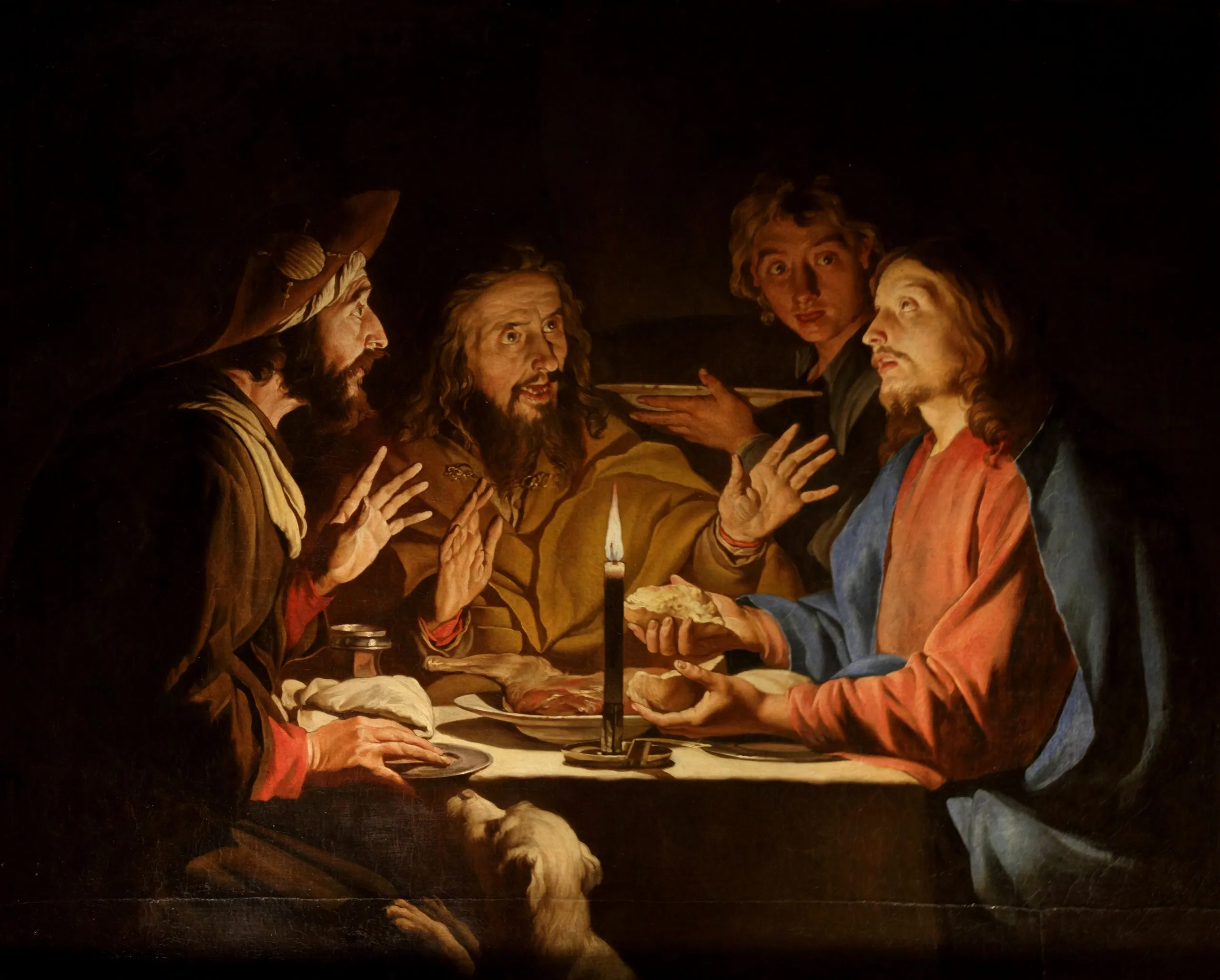
Now that’s what happened, and just think about what’s going on here. You see, when the resurrected Christ disappeared after breaking the bread, those disciples understood. I think they understood what Jesus had done and why it was important and, based on what they did, how they could respond.
.jpg)
My friends, I want you to remember the message I preached and that you believed and trusted. You will be saved by this message, if you hold firmly to it. But if you don’t, your faith was all for nothing.
I told you the most important part of the message exactly as it was told to me. This part is:
Christ died for our sins,
as the Scriptures say.
He was buried,
and three days later
he was raised to life,
as the Scriptures say.
Christ appeared to Peter,
then to the twelve. [1 Corinthians 15:1-5, CEV]
You see, the same thing that happened to those two disciples on the Emmaus Road can happen to us. In light of the resurrection, first, we can understand what Jesus did.
.jpg)
Don’t you know that all who share in Christ Jesus by being baptized also share in his death? When we were baptized, we died and were buried with Christ. We were baptized, so we would live a new life, as Christ was raised to life by the glory of God the Father.
If we shared in Jesus’ death by being baptized, we will be raised to life with him. We know that the persons we used to be were nailed to the cross with Jesus. This was done, so our sinful bodies would no longer be the slaves of sin. We know sin doesn’t have power over dead people.
As surely as we died with Christ, we believe we will also live with him. We know that death no longer has any power over Christ. He died and was raised to life, never again to die. When Christ died, he died for sin once and for all. But now he is alive, and he lives only for God. In the same way, you must think of yourselves as dead to the power of sin. But Christ Jesus has given life to you, and you live for God. [Romans 6:3-11, CEV]
You see, in light of the resurrection, second, we can understand why what Jesus did was important.
.jpg)
If our faith is strong, we should be patient with the Lord’s followers whose faith is weak. We should try to please them instead of ourselves. We should think of their good and try to help them by doing what pleases them. Even Christ did not try to please himself. But as the Scriptures say, “The people who insulted you also insulted me.” And the Scriptures were written to teach and encourage us by giving us hope. God is the one who makes us patient and cheerful. I pray that he will help you live at peace with each other, as you follow Christ. Then all of you together will praise God, the Father of our Lord Jesus Christ. [Romans 15:1-6, CEV]
You see, in light of the resurrection, third, we can understand how we might respond.
.jpg)
And you know, we can do this same kind of thing as we consider the resurrection. In other words, we can join those two disciples who walked and talked with the resurrected Christ on the Emmaus Road. And like them, in light of the resurrection, we can remember what Jesus did. And we can recognize why it was important. And we can decide how we might respond. In other words, after Easter, we can choose to live with understanding.


No comments:
Post a Comment