In this blog, we'll focus on the working being done at Sligo Presbyterian Church, Sligo, Pennsylvania. We'll also look at what's happening in Sligo, Rimersburg, Clarion, and all the other communities served by our congregation.
Although the life and work of Jesus Christ is the focus of the gospels, other characters play a role in his story. During fifteen sessions, we’re looking at the following individuals and groups who encountered Jesus as he moved from birth to the cross. During the series, we'll look at the following persons:
Session 11 - The Scribes, Pharisees and Teachers of the Law
Session 12 - The Herods
Session 13 - Pilate and the Other Romans
Session 14 - The Crowds
Session 15 - The Rich Young Ruler and His Friends
In our eleventh session, we looked at the scribes, Pharisees and teachers of the law. A recording of our discussion and some of the material and passages we discussed are below.
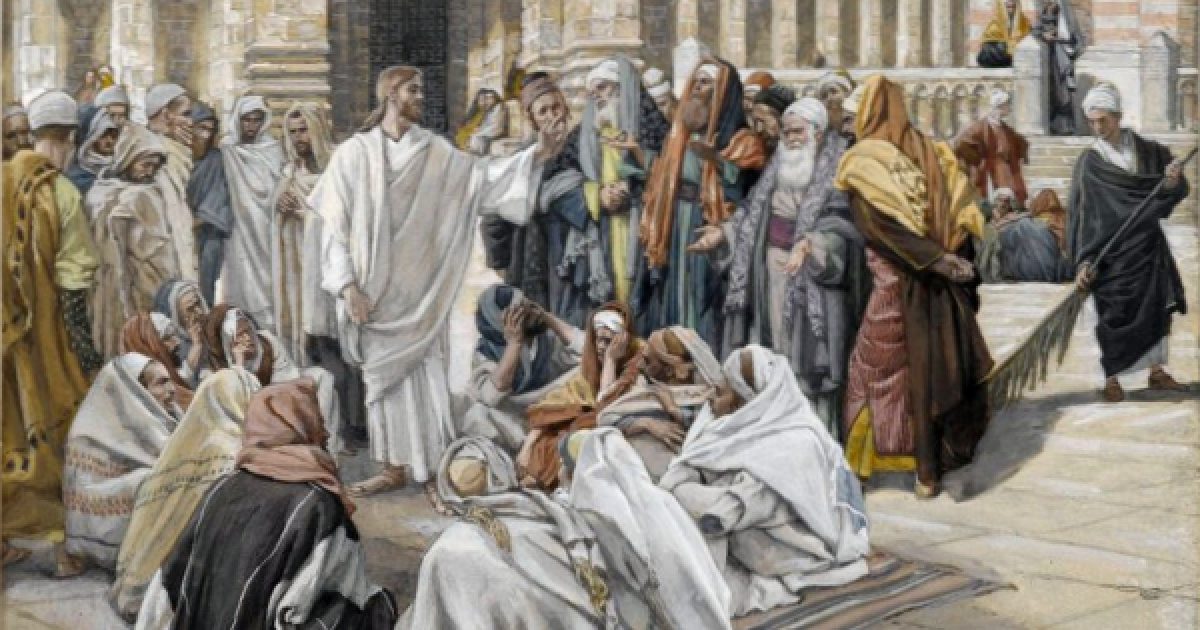
The Scribes, Pharisees and Teachers of the Law Interpreted the Law
Matthew 23:1-36: Then Jesus said to the crowds and to his disciples, “The scribes and the Pharisees sit on Moses’s seat; therefore, do whatever they teach you and follow it, but do not do as they do, for they do not practice what they teach. They tie up heavy burdens, hard to bear, and lay them on the shoulders of others, but they themselves are unwilling to lift a finger to move them. They do all their deeds to be seen by others, for they make their phylacteries broad and their fringes long. They love to have the place of honor at banquets and the best seats in the synagogues and to be greeted with respect in the marketplaces and to have people call them rabbi. But you are not to be called rabbi, for you have one teacher, and you are all brothers and sisters. And call no one your father on earth, for you have one Father, the one in heaven. Nor are you to be called instructors, for you have one instructor, the Messiah. The greatest among you will be your servant. All who exalt themselves will be humbled, and all who humble themselves will be exalted.
“But woe to you, scribes and Pharisees, hypocrites! For you lock people out of the kingdom of heaven. For you do not go in yourselves, and when others are going in you stop them. Woe to you, scribes and Pharisees, hypocrites! For you cross sea and land to make a single convert, and you make the new convert twice as much a child of hell as yourselves.
“Woe to you, blind guides who say, ‘Whoever swears by the sanctuary is bound by nothing, but whoever swears by the gold of the sanctuary is bound by the oath.’ You blind fools! For which is greater, the gold or the sanctuary that has made the gold sacred? And you say, ‘Whoever swears by the altar is bound by nothing, but whoever swears by the gift that is on the altar is bound by the oath.’ How blind you are! For which is greater, the gift or the altar that makes the gift sacred? So whoever swears by the altar swears by it and by everything on it, and whoever swears by the sanctuary swears by it and by the one who dwells in it, and whoever swears by heaven swears by the throne of God and by the one who is seated upon it.
“Woe to you, scribes and Pharisees, hypocrites! For you tithe mint, dill, and cumin and have neglected the weightier matters of the law: justice and mercy and faith. It is these you ought to have practiced without neglecting the others. You blind guides! You strain out a gnat but swallow a camel!
“Woe to you, scribes and Pharisees, hypocrites! For you clean the outside of the cup and of the plate, but inside they are full of greed and self-indulgence. You blind Pharisee! First clean the inside of the cup and of the plate, so that the outside also may become clean.
“Woe to you, scribes and Pharisees, hypocrites! For you are like whitewashed tombs, which on the outside look beautiful but inside are full of the bones of the dead and of all kinds of uncleanness. So you also on the outside look righteous to others, but inside you are full of hypocrisy and lawlessness.
“Woe to you, scribes and Pharisees, hypocrites! For you build the tombs of the prophets and decorate the graves of the righteous, and you say, ‘If we had lived in the days of our ancestors, we would not have taken part with them in shedding the blood of the prophets.’ Thus you testify against yourselves that you are descendants of those who murdered the prophets. Fill up, then, the measure of your ancestors. You snakes, you brood of vipers! How can you escape the judgment of hell? For this reason I send you prophets, sages, and scribes, some of whom you will kill and crucify, and some you will flog in your synagogues and pursue from town to town, so that upon you may come all the righteous blood shed on earth, from the blood of righteous Abel to the blood of Zechariah son of Barachiah, whom you murdered between the sanctuary and the altar. Truly I tell you, all this will come upon this generation.
The Scribes, Pharisees and Teachers of the Law Opposed Jesus
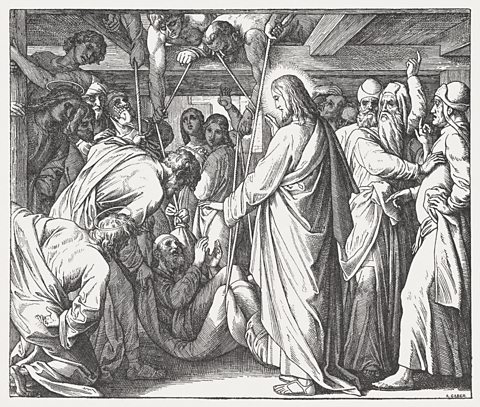
Mark 2:1 – 3:6: When he returned to Capernaum after some days, it was reported that he was at home. So many gathered around that there was no longer room for them, not even in front of the door, and he was speaking the word to them. Then some people came, bringing to him a paralyzed man, carried by four of them. And when they could not bring him to Jesus because of the crowd, they removed the roof above him, and after having dug through it, they let down the mat on which the paralytic lay. When Jesus saw their faith, he said to the paralytic, “Child, your sins are forgiven.” Now some of the scribes were sitting there questioning in their hearts, “Why does this fellow speak in this way? It is blasphemy! Who can forgive sins but God alone?” At once Jesus perceived in his spirit that they were discussing these questions among themselves, and he said to them, “Why do you raise such questions in your hearts? Which is easier: to say to the paralytic, ‘Your sins are forgiven,’ or to say, ‘Stand up and take your mat and walk’? But so that you may know that the Son of Man has authority on earth to forgive sins”—he said to the paralytic— “I say to you, stand up, take your mat, and go to your home.” And he stood up and immediately took the mat and went out before all of them, so that they were all amazed and glorified God, saying, “We have never seen anything like this!”
Jesus went out again beside the sea; the whole crowd gathered around him, and he taught them. As he was walking along, he saw Levi son of Alphaeus sitting at the tax-collection station, and he said to him, “Follow me.” And he got up and followed him.
And as he sat at dinner in Levi’s house, many tax collectors and sinners were also sitting with Jesus and his disciples, for there were many who followed him. When the scribes of the Pharisees saw that he was eating with sinners and tax collectors, they said to his disciples, “Why does he eat with tax collectors and sinners?” When Jesus heard this, he said to them, “Those who are well have no need of a physician but those who are sick; I have not come to call the righteous but sinners.”
Now John’s disciples and the Pharisees were fasting, and people came and said to him, “Why do John’s disciples and the disciples of the Pharisees fast, but your disciples do not fast?” Jesus said to them, “The wedding attendants cannot fast while the bridegroom is with them, can they? As long as they have the bridegroom with them, they cannot fast. The days will come when the bridegroom is taken away from them, and then they will fast on that day.
“No one sews a piece of unshrunk cloth on an old cloak; otherwise, the patch pulls away from it, the new from the old, and a worse tear is made. Similarly, no one puts new wine into old wineskins; otherwise, the wine will burst the skins, and the wine is lost, and so are the skins, but one puts new wine into fresh wineskins.”
One Sabbath he was going through the grain fields, and as they made their way his disciples began to pluck heads of grain. The Pharisees said to him, “Look, why are they doing what is not lawful on the Sabbath?” And he said to them, “Have you never read what David did when he and his companions were hungry and in need of food, how he entered the house of God when Abiathar was high priest and ate the bread of the Presence, which it is not lawful for any but the priests to eat, and he gave some to his companions?” Then he said to them, “The Sabbath was made for humankind and not humankind for the Sabbath, so the Son of Man is lord even of the Sabbath.”
Again he entered the synagogue, and a man was there who had a withered hand. They were watching him to see whether he would cure him on the Sabbath, so that they might accuse him. And he said to the man who had the withered hand, “Come forward.” Then he said to them, “Is it lawful to do good or to do harm on the Sabbath, to save life or to kill?” But they were silent. He looked around at them with anger; he was grieved at their hardness of heart and said to the man, “Stretch out your hand.” He stretched it out, and his hand was restored. The Pharisees went out and immediately conspired with the Herodians against him, how to destroy him.
The Scribes, Pharisees and Teachers of the Law Were Antagonists with a Few Exceptions
Nicodemus
The Scribe in Mark 12:28-34: One of the scribes came near and heard them disputing with one another, and seeing that he answered them well he asked him, “Which commandment is the first of all?” Jesus answered, “The first is, ‘Hear, O Israel: the Lord our God, the Lord is one; you shall love the Lord your God with all your heart and with all your soul and with all your mind and with all your strength.’ The second is this, ‘You shall love your neighbor as yourself.’ There is no other commandment greater than these.” Then the scribe said to him, “You are right, Teacher; you have truly said that ‘he is one, and besides him there is no other’; and ‘to love him with all the heart and with all the understanding and with all the strength’ and ‘to love one’s neighbor as oneself’—this is much more important than all whole burnt offerings and sacrifices.” When Jesus saw that he answered wisely, he said to him, “You are not far from the kingdom of God.” After that no one dared to ask him any question.
As we approach Easter, Christians all over the world focus their attention on the cross and tomb. And because of this, the usual challenge to follow Jesus just doesn’t seem appropriate. I mean, let’s face it, we’re not Jesus, and we usually stop short of going all the way to the cross and tomb; therefore, using him as an example just doesn’t seem particularly helpful, not as we deal with issues much less dramatic than the crucifixion and the resurrection. But fortunately, Jesus wasn’t the only character in this story. In fact, there were some who just might provide examples that we should follow while there were others whose actions and attitudes we might want to avoid. And this will be our focus on each of the Sundays leading up to and including Easter.
You see, using the Gospel of John, we’ll look at the following six men and women so that we might better understand who they were, what role they played in this story, and how we might use their examples in our own lives:
As we approach Easter, Christians all over the world focus their attention on the cross and tomb. And because of this, the usual challenge to follow Jesus just doesn’t seem appropriate. I mean, let’s face it, we’re not Jesus, and we usually stop short of going all the way to the cross and tomb; therefore, using him as an example just doesn’t seem particularly helpful, not as we deal with issues much less dramatic than the crucifixion and the resurrection. But fortunately, Jesus wasn’t the only character in this story. In fact, there were some who just might provide examples that we should follow while there were others whose actions and attitudes we might want to avoid. And this will be our focus on each of the Sundays leading up to and including Easter.
You see, using the Gospel of John, we’ll look at the following six men and women so that we might better understand who they were, what role they played in this story, and how we might use their examples in our own lives:
Well, here we are, Palm Sunday, the day we celebrate Jesus riding into Jerusalem on a donkey. And next week, we’ll go through what I call a ministerial marathon, passing through the Last Supper on Maundy Thursday and the crucifixion on Good Friday, right to the resurrection on Easter. And after that, we can all take a collective deep breath and then slowly let it out, knowing that there won’t be any special services or congregational dinners or Easter egg hunts any time soon. PTL.
And because of that, next week, we’ll be tying up this series on some of those individuals about whom John wrote as he described the last week in Jesus’s life. Now to this point, we’ve looked at Philip and Peter, Caiaphas and Annas and Pontus Pilate. And this morning, we’ll focus on Nicodemus, a person only mentioned by the Evangelist John, a Pharisee who did something truly remarkable. You see, during the course of the gospel, he actually changed.
And I say that’s truly remarkable, because, in my opinion, that’s not something we do particularly often or particularly well. You see, when push comes to shove, I believe most people are pretty resistant to change, even when change just makes sense. I mean, I think we all recognize that the world isn’t the way it used to be. For example, we face situations that couldn’t have been imagined twenty-five years ago, and those new situations bring new problems and new challenges that can’t be solved if we’re stuck in a world that no longer exists. You see, we’re going to have to change, right?
But right there is where it gets hard, because change is difficult. I know it makes me really uncomfortable, and I’m talking about when I have to deal with threats I don’t understand and assumptions I don’t share and values I frankly don’t like. And don’t get me started on modern “music.” No, change is difficult to accept, and that probably explains why, in an awful lot of situations, we simply don’t. We don’t accept it. And instead, we try to pretend that everything can still be the way we think it should be and that we can just ignore all those nasty threats and assumptions and values. You see, we try to pretend that we can move forward while looking back, back to an idyllic past that we believe was more simple and more pure and more true, but probably wasn’t. And as we look back, the world moves on, leaving us behind with our memories and our traditions and all those warm and fuzzy feelings. And I’ll tell you, I think it affects us both as individuals and communities. I mean, last week, I ran across a meme that sent a chill up my spine. It was from a great Southern Baptist evangelist named Thom Rainer. He wrote, “Some churches would rather die than get out of the comfort of the past.” Now that’s what he wrote, and you know, I think he’s right, but not just about churches. I think the same can be said of a lot of us; I know it can be said of me.
And you know, that’s why I think talking about a guy like Nicodemus is important, because he was willing and able to do something with which we sort of struggle. He was able to change. And I’ll tell you, that’s how we’re going to approach him this morning. You see, we’ll use the example of Nicodemus as we consider what we face in our own lives. And to do that, we’ll be answering two questions. First, how did Nicodemus change in the Gospel of John? And then, second, how can we apply his example?
And you know, when you consider how he’s presented by the Evangelist, change is really what Nicodemus is all about in the gospel of John. I mean, just consider the three times he’s mentioned; Nicodemus is not the same person at the end, right there after the crucifixion, as we was in the beginning.
For example, Nicodemus first appeared at the beginning of chapter three, in a passage that every Sunday School teacher has probably taught at least once. Just listen to what the Evangelist John wrote:
There was a man named Nicodemus who was a Pharisee and a Jewish leader. One night he went to Jesus and said, “Rabbi, we know that God has sent you to teach us. You could not work these miracles, unless God were with you.”
Jesus replied, “I tell you for certain that you must be born from above before you can see God’s kingdom!”
Nicodemus asked, “How can a grown man ever be born a second time?”
Jesus answered:
I tell you for certain that before you can get into God’s kingdom, you must be born not only by water, but by the Spirit. Humans give life to their children. Yet only God’s Spirit can change you into a child of God. Don’t be surprised when I say that you must be born from above. Only God’s Spirit gives new life. The Spirit is like the wind that blows wherever it wants to. You can hear the wind, but you don’t know where it comes from or where it is going.
“How can this be?” Nicodemus asked. [John 3:1-9, CEV]
Of course, after that Jesus goes on to explain the reason he came. Now that was the first appearance of Nicodemus.
But not his last, because about four chapters later, this happened:
When the temple police returned to the chief priests and Pharisees, they were asked, “Why didn’t you bring Jesus here?”
They answered, “No one has ever spoken like this man!”
The Pharisees said to them, “Have you also been fooled? Not one of the chief priests or the Pharisees has faith in him. And these people who don’t know the Law are under God’s curse anyway.”
Nicodemus was there at the time. He was a member of the council, and was the same one who had earlier come to see Jesus. He said, “Our Law doesn’t let us condemn people before we hear what they have to say. We cannot judge them before we know what they have done.”
Then they said, “Nicodemus, you must be from Galilee! Read the Scriptures, and you will find that no prophet is to come from Galilee.” [John 7:45-52, CEV]
Now, do you see what I’m talking about when I say he changed? I mean, this guy who was literally in the dark when he first came to Jesus, now he wants to give Jesus a hearing. In other words, now he wants to do some investigating before closing his mind to the possibility that Jesus was more than those other Pharisees assumed. You see, as I read it, in this second passage, we see an openness that doesn’t seem to be present when he asked a question that sounds a little sarcastic to me, “How can a grown man ever be born a second time?” [John 3:4b, CEV] Although certainly not a believer yet, Nicodemus has changed.
Something that, I think, becomes even more apparent near the end of Jesus’s story. You see, right after the crucifixion, this was what John wrote:
Joseph from Arimathea was one of Jesus’ disciples. He had kept it secret though, because he was afraid of the Jewish leaders. But now he asked Pilate to let him have Jesus’ body. Pilate gave him permission, and Joseph took it down from the cross.
Nicodemus also came with about 30 kilograms of spices made from myrrh and aloes. This was the same Nicodemus who had visited Jesus one night. The two men wrapped the body in a linen cloth, together with the spices, which was how the Jewish people buried their dead. In the place where Jesus had been nailed to a cross, there was a garden with a tomb that had never been used. The tomb was nearby, and since it was the time to prepare for the Sabbath, they were in a hurry to put Jesus’ body there. [John 19:38-42, CEV]
Now that’s what happened. Nicodemus had changed, moving from a skeptic who sought out Jesus to a person who was open to think about possibilities that he may not have entertained in the past to a man who assisted a disciple prepare and bury Jesus. You see, this was how Nicodemus changed in the Gospel of John.
And even though that’s certainly “nice to know” information, the rubber hits the road with the answer to our second question: How can we apply his example? In other words, how can we claim and use the example of this man who was able to change his perspective and his opinions, even his loyalty, how can we walk in his footprints as we face all the stuff that’s going on around us all the time? How can we do that? Now that’s a great question. And as to the answer, I think we can find something in what Nicodemus did in each of his appearances in the Gospel, something that I believe we can also do.
For example, first, we can decide to seek, to seek out new information that we may not have had before so that we might better understand. And I’ll tell you, I think that’s exactly what Nicodemus did. I mean, even though he entered the story in the dark both physically and spiritually, he didn’t stay there. Instead, he came to Jesus. And he asked questions, including “How can this be?” [John 3:9a, CEV], a question that set Jesus up to offer probably the most quoted verse in the entire New Testament: For God so loved the world, that he gave his only begotten Son, that whosoever believeth in him should not perish, but have everlasting life. [John 3:16, KJV] That’s what he said. And after the questions, he listened for the answers. You see, Nicodemus decided to seek the truth. And I’ll tell you, so can we. So can we as we try to navigate as Christians living in a constantly changing world. So can we when we decide to come to the places where we might hear the truth and where we can come with all our questions and where we can decide to wait patiently for the answers. Now that’s what we can decide to do. And I’ll tell you, when we do, I think we just might find ourselves in the same place Simon Peter found himself when this happened:
Because of what Jesus said, many of his disciples turned their backs on him and stopped following him. Jesus then asked his twelve disciples if they also were going to leave him. Simon Peter answered, “Lord, there is no one else that we can go to! Your words give eternal life. We have faith in you, and we are sure that you are God’s Holy One.” [John 6:66-69, CEV]
You see, like Nicodemus, we can decide to seek; that’s the first thing we can do.
And after seeking, second, we can decide to think, you know, to take a step back from what we may have assumed and to think about the situation and about the options, and to do it with an openness that just might lead to some real answers. And I’ll tell you, I believe that’s exactly what Nicodemus did when he was with those other Pharisees on council. You see, based on what John wrote, Nicodemus decided to pause and to look pass some of those assumptions held by everybody else in the room and to gather more information before making up his mind, in other words, before deciding what to believe and to do. And again, I believe we can do the same thing ourselves. Of course, I recognize that it’s not easy. I mean, it’s not easy to pause when everyone around us is all gung ho. And it’s not easy to look pass some assumptions with which we feel really, and I mean, really comfortable. And it’s sure not easy to gather more information when that little voice is telling us that all those threats I don’t understand and all those assumptions I don’t share and all those values I don’t like, well, they’re all just plain wrong...period, close the book, Elvis has left the building. You see, even though it may not be easy, we can still decide to think. And when we do, I believe we’ll be doing the very thing the Evangelist hoped everyone would do when they read his gospel. This was what he wrote:
Jesus worked many other miracles for his disciples, and not all of them are written in this book. But these are written so that you will put your faith in Jesus as the Messiah and the Son of God. If you have faith in him, you will have true life. [John 20:30-31, CEV]
You see, like Nicodemus, we can decide to think, and that’s the second thing we can do.
And finally, we can decide to act. I mean, after seeking and thinking, we can actually decide to do something. As a matter of fact, when you get right down to it, it’s in the actions we take, it’s right there where the seeking and thinking have meaning. And in the last Nicodemus story, I believe that was certainly the case. You see, after seeking and thinking, he took action. He came prepared and he worked with someone else and they did what was necessary, what was a appropriate, what was right. And you know, we can do the same. I mean, right here and right now, we can prepare ourselves to move forward within the world we have even if it may not be the one that we want. And we can gather together, first to seek the truth and then to think about what we’ve found and then to use what God has given us to do what’s necessary and appropriate and right. We can act, something that Jesus challenged his disciples to do right before they shared their last meal.
After Jesus had washed his disciples’ feet and had put his outer garment back on, he sat down again. Then he said:
Do you understand what I have done? You call me your teacher and Lord, and you should, because that is who I am. And if your Lord and teacher has washed your feet, you should do the same for each other. I have set the example, and you should do for each other exactly what I have done for you. I tell you for certain that servants are not greater than their master, and messengers are not greater than the one who sent them. You know these things, and God will bless you, if you do them. [John 13:12-17, CEV]
You see, like Nicodemus, we can decide to act, and that’s the third thing we can do.
Of course, I don’t believe doing this kind of thing will automatically make change comfortable and easy to do. I mean, it’s just plain hard to step away from all those places and ideas that have offered us so much peace and security in the past. Of course, maybe, if we lived on a deserted island, maybe we could cling to those things and be just fine. But in reality, we live on this island earth, and there are times when we’re going to need to change or be left behind. But as we saw with Nicodemus, change is more than possible when we decide to seek, to come and to ask and to listen, and when we decide to think, to pause and to look pass the assumptions and to gather information, and of course, when we decide to act, to be prepared and to join with others and to do what’s necessary and appropriate and right. You see, this we can do. And when we do, we’ll be walking in the footprints of Nicodemus, a Pharisee who was willing and able to change.
As we approach Easter, Christians all over the world focus their attention on the cross and tomb. And because of this, the usual challenge to follow Jesus just doesn’t seem appropriate. I mean, let’s face it, we’re not Jesus, and we usually stop short of going all the way to the cross and tomb; therefore, using him as an example just doesn’t seem particularly helpful, not as we deal with issues much less dramatic than the crucifixion and the resurrection. But fortunately, Jesus wasn’t the only character in this story. In fact, there were some who just might provide examples that we should follow while there were others whose actions and attitudes we might want to avoid. And this will be our focus on each of the Sundays leading up to and including Easter.
You see, using the Gospel of John, we’ll look at the following six men and women so that we might better understand who they were, what role they played in this story, and how we might use their examples in our own lives:
Although the life and work of Jesus Christ is the focus of the gospels, other characters play a role in his story. During eleven sessions, we’re looking at the following individuals and groups who encountered Jesus as he moved from birth to the cross. During the series, we'll look at the following persons:
Session 8 - The Scribes, Pharisees and Teachers of the Law
Session 9 - The Herods
Session 10 - Pilate and the Other Romans
Session 11 - The Crowds
Session 12 - The Rich Young Ruler and His Friend
In our third session, we considered Nicodemus. A recording of our discussion, some background material and the passages we discussed are below.
Important Information about John
Since Nicodemus is only found in John, it's important to understand some of the unique characteristics of the Gospel of John.
Irony is important in John.
John uses light and darkness symbolically.
John often uses word play.
People often misunderstand what Jesus says which gives Jesus the chance to explain.
From John
Nicodemus Visits Jesus - John 3:1-10: Now there was a Pharisee named Nicodemus, a leader of the Jews. He came to Jesus by night and said to him, “Rabbi, we know that you are a teacher who has come from God; for no one can do these signs that you do apart from the presence of God.” Jesus answered him, “Very truly, I tell you, no one can see the kingdom of God without being born from above.” Nicodemus said to him, “How can anyone be born after having grown old? Can one enter a second time into the mother’s womb and be born?” Jesus answered, “Very truly, I tell you, no one can enter the kingdom of God without being born of water and Spirit. What is born of the flesh is flesh, and what is born of the Spirit is spirit. Do not be astonished that I said to you, ‘You must be born from above.’ The wind blows where it chooses, and you hear the sound of it, but you do not know where it comes from or where it goes. So it is with everyone who is born of the Spirit.” Nicodemus said to him, “How can these things be?” Jesus answered him, “Are you a teacher of Israel, and yet you do not understand these things?
The Unbelief of Those in Authority - John 7:45-52: Then the temple police went back to the chief priests and Pharisees, who asked them, “Why did you not arrest him?” The police answered, “Never has anyone spoken like this!” Then the Pharisees replied, “Surely you have not been deceived too, have you? Has any one of the authorities or of the Pharisees believed in him? But this crowd, which does not know the law—they are accursed.” Nicodemus, who had gone to Jesus before, and who was one of them, asked, “Our law does not judge people without first giving them a hearing to find out what they are doing, does it?” They replied, “Surely you are not also from Galilee, are you? Search and you will see that no prophet is to arise from Galilee.”
The Burial of Jesus - John 19:38-42: After these things, Joseph of Arimathea, who was a disciple of Jesus, though a secret one because of his fear of the Jews, asked Pilate to let him take away the body of Jesus. Pilate gave him permission; so he came and removed his body. Nicodemus, who had at first come to Jesus by night, also came, bringing a mixture of myrrh and aloes, weighing about a hundred pounds. They took the body of Jesus and wrapped it with the spices in linen cloths, according to the burial custom of the Jews. Now there was a garden in the place where he was crucified, and in the garden there was a new tomb in which no one had ever been laid. And so, because it was the Jewish day of Preparation, and the tomb was nearby, they laid Jesus there.
Our Wednesday Morning Bible has been watching the series The Chosen. As we await the new season, we're looking at some of the people in the story of Jesus.
During this first session, we consider Nicodemus by discussing the following:
Nicodemus Visits Jesus (John 3:1-21)
1 Now there was a Pharisee named Nicodemus, a leader of the Jews. 2 He came to Jesus by night and said to him, “Rabbi, we know that you are a teacher who has come from God; for no one can do these signs that you do apart from the presence of God.” 3 Jesus answered him, “Very truly, I tell you, no one can see the kingdom of God without being born from above.” 4 Nicodemus said to him, “How can anyone be born after having grown old? Can one enter a second time into the mother’s womb and be born?” 5 Jesus answered, “Very truly, I tell you, no one can enter the kingdom of God without being born of water and Spirit. 6 What is born of the flesh is flesh, and what is born of the Spirit is spirit. 7 Do not be astonished that I said to you, ‘You must be born from above.’ 8 The wind blows where it chooses, and you hear the sound of it, but you do not know where it comes from or where it goes. So it is with everyone who is born of the Spirit.” 9 Nicodemus said to him, “How can these things be?” 10 Jesus answered him, “Are you a teacher of Israel, and yet you do not understand these things?
11 “Very truly, I tell you, we speak of what we know and testify to what we have seen; yet you do not receive our testimony. 12 If I have told you about earthly things and you do not believe, how can you believe if I tell you about heavenly things? 13 No one has ascended into heaven except the one who descended from heaven, the Son of Man. 14 And just as Moses lifted up the serpent in the wilderness, so must the Son of Man be lifted up, 15 that whoever believes in him may have eternal life. 16 For God so loved the world that he gave his only Son, so that everyone who believes in him may not perish but may have eternal life. 17 Indeed, God did not send the Son into the world to condemn the world, but in order that the world might be saved through him. 18 Those who believe in him are not condemned; but those who do not believe are condemned already, because they have not believed in the name of the only Son of God. 19 And this is the judgment, that the light has come into the world, and people loved darkness rather than light because their deeds were evil. 20 For all who do evil hate the light and do not come to the light, so that their deeds may not be exposed. 21 But those who do what is true come to the light, so that it may be clearly seen that their deeds have been done in God.”
The Unbelief of Those in Authority (John 7:45-52)
45 Then the temple police went back to the chief priests and Pharisees, who asked them, “Why did you not arrest him?” 46 The police answered, “Never has anyone spoken like this!” 47 Then the Pharisees replied, “Surely you have not been deceived too, have you? 48 Has any one of the authorities or of the Pharisees believed in him? 49 But this crowd, which does not know the law—they are accursed.” 50 Nicodemus, who had gone to Jesus before, and who was one of them, asked, 51 “Our law does not judge people without first giving them a hearing to find out what they are doing, does it?” 52 They replied, “Surely you are not also from Galilee, are you? Search and you will see that no prophet is to arise from Galilee.”
The Burial of Jesus (John 19:38-42)
38 After these things, Joseph of Arimathea, who was a disciple of Jesus, though a secret one because of his fear of the Jews, asked Pilate to let him take away the body of Jesus. Pilate gave him permission; so he came and removed his body. 39 Nicodemus, who had at first come to Jesus by night, also came, bringing a mixture of myrrh and aloes, weighing about a hundred pounds. 40 They took the body of Jesus and wrapped it with the spices in linen cloths, according to the burial custom of the Jews. 41 Now there was a garden in the place where he was crucified, and in the garden there was a new tomb in which no one had ever been laid. 42 And so, because it was the Jewish day of Preparation, and the tomb was nearby, they laid Jesus there.





.jpg)
.jpg)
.jpg)
.jpg)
.jpg)
.jpg)


.jpg)
.jpg)
