In this blog, we'll focus on the working being done at Sligo Presbyterian Church, Sligo, Pennsylvania. We'll also look at what's happening in Sligo, Rimersburg, Clarion, and all the other communities served by our congregation.
During the next few months, the SPC Thursday Evening Bible Study will be looking at Paul's Letter to the Romans, the single work that may best offer his theology and ethic. You see, in this letter, he explained to the church in Rome his understanding of human nature, faith, righteousness, and God's intention for everybody. He also offered practical ways we can live as Christians within the world and the church. And as we'll see during the seventeen sessions, what he had to say to the Romans is just as applicable today as it was almost 2,000 years ago. We'll following the schedule below:
Session 11 - But They Rejected Jesus (Romans 9:30 – 10:21)
Session 12 - God's Ultimate Plan (Romans 11:1-36)
Session 13 - Now What We Should Do (Romans 12:1-21)
Session 14 - Obedience and Love (Romans 13:1-14)
Session 15 - Concern for Brothers and Sisters (Romans 14:1 – 15:6)
Session 16 - Tying It Up (Romans 15:7-33)
Session 17 - Personal Greetings (Romans 16:1-27)
During our eighth session, we looked at Romans 7:7-25 and discussed how, in spite of what Jesus has done for us, we're still sinners. The recording of our discussion and the passage we discussed is below.
What then should we say? That the law is sin? By no means! Yet, if it had not been for the law, I would not have known sin. I would not have known what it is to covet if the law had not said, “You shall not covet.” But sin, seizing an opportunity in the commandment, produced in me all kinds of covetousness. Apart from the law sin lies dead. I was once alive apart from the law, but when the commandment came, sin revived and I died, and the very commandment that promised life proved to be death to me. For sin, seizing an opportunity in the commandment, deceived me and through it killed me. So the law is holy, and the commandment is holy and just and good. Did what is good, then, bring death to me? By no means! It was sin, working death in me through what is good, in order that sin might be shown to be sin, and through the commandment might become sinful beyond measure.
For we know that the law is spiritual; but I am of the flesh, sold into slavery under sin. I do not understand my own actions. For I do not do what I want, but I do the very thing I hate. Now if I do what I do not want, I agree that the law is good. But in fact it is no longer I that do it, but sin that dwells within me. For I know that nothing good dwells within me, that is, in my flesh. I can will what is right, but I cannot do it. For I do not do the good I want, but the evil I do not want is what I do. Now if I do what I do not want, it is no longer I that do it, but sin that dwells within me. So I find it to be a law that when I want to do what is good, evil lies close at hand. For I delight in the law of God in my inmost self, but I see in my members another law at war with the law of my mind, making me captive to the law of sin that dwells in my members. Wretched man that I am! Who will rescue me from this body of death? Thanks be to God through Jesus Christ our Lord! So then, with my mind I am a slave to the law of God, but with my flesh I am a slave to the law of sin.
During the next few months, the SPC Thursday Evening Bible Study will be looking at Paul's Letter to the Romans, the single work that may best offer his theology and ethic. You see, in this letter, he explained to the church in Rome his understanding of human nature, faith, righteousness, and God's intention for everybody. He also offered practical ways we can live as Christians within the world and the church. And as we'll see during the seventeen sessions, what he had to say to the Romans is just as applicable today as it was almost 2,000 years ago. We'll following the schedule below:
Session 7 - Sin, Slaves and Spouses (Romans 6:15 – 7:6)
Session 8 - Sin Remains (Romans 7:7-25)
Session 9 - New Life ( Romans 8:1-39)
Session 10 - Back to the Jews (Romans 9:1-29)
Session 11 - But They Rejected Jesus (Romans 9:30 – 10:21)
Session 12 - God's Ultimate Plan (Romans 11:1-36)
Session 13 - Now What We Should Do (Romans 12:1-21)
Session 14 - Obedience and Love (Romans 13:1-14)
Session 15 - Concern for Brothers and Sisters (Romans 14:1 – 15:6)
Session 16 - Tying It Up (Romans 15:7-33)
Session 17 - Personal Greetings (Romans 16:1-27)
During our sixth session, we looked at Romans 6:1-14 and discussed how we died in Christ. The recording of our discussion and the passage we discussed is below.
What then are we to say? Should we continue in sin in order that grace may abound? By no means! How can we who died to sin go on living in it? Do you not know that all of us who have been baptized into Christ Jesus were baptized into his death? Therefore we have been buried with him by baptism into death, so that, just as Christ was raised from the dead by the glory of the Father, so we too might walk in newness of life. For if we have been united with him in a death like his, we will certainly be united with him in a resurrection like his. We know that our old self was crucified with him so that the body of sin might be destroyed, and we might no longer be enslaved to sin. For whoever has died is freed from sin. But if we have died with Christ, we believe that we will also live with him. We know that Christ, being raised from the dead, will never die again; death no longer has dominion over him. The death he died, he died to sin, once for all; but the life he lives, he lives to God. So you also must consider yourselves dead to sin and alive to God in Christ Jesus. Therefore, do not let sin exercise dominion in your mortal bodies, to make you obey their passions. No longer present your members to sin as instruments of wickedness, but present yourselves to God as those who have been brought from death to life, and present your members to God as instruments of righteousness. For sin will have no dominion over you, since you are not under law but under grace.
During the next few months, the SPC Thursday Evening Bible Study will be looking at Paul's Letter to the Romans, the single work that may best offer his theology and ethic. You see, in this letter, he explained to the church in Rome his understanding of human nature, faith, righteousness, and God's intention for everybody. He also offered practical ways we can live as Christians within the world and the church. And as we'll see during the seventeen session, what he had to say to the Romans is just as applicable today as it was almost 2,000 years ago. We'll following the schedule below:
August 8 - Including the Jews and Everyone Else (Romans 2:17 – 3:20)
August 15 - But There's Faith (Romans 3:21 – 4:25)
August 22 - Faith and Righteousness ( Romans 5:1-21)
August 29 - The Living Dead ( Romans 6:1-14)
September 5 - Sin, Slaves and Spouses ( Romans 6:15 – 7:6)
September 12 - Sin Remains( Romans 7:7-25)
September 19 - New Life ( Romans 8:1-39)
September 26 - Back to the Jews (Romans 9:1-29)
October 3 - But They Rejected Jesus ( Romans 9:30 – 10:21)
October 10 - God's Ultimate Plan (Romans 11:1-36)
October 17 - Now What We Should Do (Romans 12:1-21)
October 24 - Obedience and Love (Romans 13:1-14)
November 7 - Concern for Brothers and Sisters (Romans 14:1 – 15:6)
November 14 - Tying It Up (Romans 15:7-33)
November 21 - Personal Greetings (Romans 16:1-27)
During our third session, we looked at Romans 2:17 – 3:20 and discussed why everyone needs to hear the gospel. The recording of our discussion and the passage we discussed are below.
But if you call yourself a Jew and rely on the law and boast of your relation to God and know his will and determine what is best because you are instructed in the law, and if you are sure that you are a guide to the blind, a light to those who are in darkness, a corrector of the foolish, a teacher of children, having in the law the embodiment of knowledge and truth, you, then, that teach others, will you not teach yourself? While you preach against stealing, do you steal? You that forbid adultery, do you commit adultery? You that abhor idols, do you rob temples? You that boast in the law, do you dishonor God by breaking the law? For, as it is written, “The name of God is blasphemed among the Gentiles because of you.” Circumcision indeed is of value if you obey the law; but if you break the law, your circumcision has become uncircumcision. So, if those who are uncircumcised keep the requirements of the law, will not their uncircumcision be regarded as circumcision? Then those who are physically uncircumcised but keep the law will condemn you that have the written code and circumcision but break the law. For a person is not a Jew who is one outwardly, nor is true circumcision something external and physical. Rather, a person is a Jew who is one inwardly, and real circumcision is a matter of the heart—it is spiritual and not literal. Such a person receives praise not from others but from God.
Then what advantage has the Jew? Or what is the value of circumcision? Much, in every way. For in the first place the Jews were entrusted with the oracles of God. What if some were unfaithful? Will their faithlessness nullify the faithfulness of God? By no means! Although everyone is a liar, let God be proved true, as it is written, “So that you may be justified in your words, and prevail in your judging.” But if our injustice serves to confirm the justice of God, what should we say? That God is unjust to inflict wrath on us? (I speak in a human way.) By no means! For then how could God judge the world? But if through my falsehood God’s truthfulness abounds to his glory, why am I still being condemned as a sinner? And why not say (as some people slander us by saying that we say), “Let us do evil so that good may come”? Their condemnation is deserved! What then? Are we any better off? No, not at all; for we have already charged that all, both Jews and Greeks, are under the power of sin, as it is written: “There is no one who is righteous, not even one; there is no one who has understanding, there is no one who seeks God. All have turned aside, together they have become worthless; there is no one who shows kindness, there is not even one.” “Their throats are opened graves; they use their tongues to deceive.” “The venom of vipers is under their lips.” “Their mouths are full of cursing and bitterness.” “Their feet are swift to shed blood; ruin and misery are in their paths, and the way of peace they have not known.” “There is no fear of God before their eyes.”
Now we know that whatever the law says, it speaks to those who are under the law, so that every mouth may be silenced, and the whole world may be held accountable to God. For “no human being will be justified in his sight” by deeds prescribed by the law, for through the law comes the knowledge of sin.
Here's a new devotion that I wrote. It's based on the passage below. You can find a recording of this devotion at the bottom of the page.
Romans 7:13-25 [Contemporary English Version]
Am I saying something good caused my death? Certainly not! It was sin that killed me by using something good. Now we can see how terrible and evil sin really is. We know that the Law is spiritual. But I am merely a human, and I have been sold as a slave to sin. In fact, I don't understand why I act the way I do. I don't do what I know is right. I do the things I hate. Although I don't do what I know is right, I agree that the Law is good. So I am not the one doing these evil things. The sin that lives in me is what does them.
I know that my selfish desires won't let me do anything that is good. Even when I want to do right, I cannot. Instead of doing what I know is right, I do wrong. And so, if I don't do what I know is right, I am no longer the one doing these evil things. The sin that lives in me is what does them.
The Law has shown me that something in me keeps me from doing what I know is right. With my whole heart I agree with the Law of God. But in every part of me I discover something fighting against my mind, and it makes me a prisoner of sin that controls everything I do. What a miserable person I am. Who will rescue me from this body that is doomed to die? Thank God! Jesus Christ will rescue me.
So with my mind I serve the Law of God, although my selfish desires make me serve the law of sin.
This “Giving Up” Business
A couple of hours ago I had a conversation with a woman in my congregation and somehow we drifted onto the subject of cakes. Now I honestly don’t remember how that happened, but it did. Anyway, right before she left, she told me that she was going home to bake a chocolate birthday cake for her husband without icing, because that’s the way he liked it. Now I already knew that she’d given up sugar for Lent, and so I asked her if she planned to eat a little bit of the cake herself, especially since cake is kind of like bread if you take away the extra chocolate fudge or the butter cream. And I’ll tell you, to her credit, she said no, but after a brief pause, she also said that she might have a little something at her grandson’s birthday party next week.
Of course, I have an enormous amount of respect for anyone who can make and keep a commitment like she has, because doing that kind of thing has always been a challenge for me. I mean, although I can dedicate myself to doing something extra and positive, it’s hard for me to give up something that may be negative and enjoyable. For example, I can’t even seem to stop biting my fingernails even though I know it’s not only a bad habit, but it probably doesn’t enhance my status in the minds of others. You see, even though I know it’s wrong, I can’t stop doing it. And that’s probably the reason I’ve never liked this “giving up” business, you know, the stuff we generally associate with both the new year and Lent.
And you know, it’s interesting, that’s exactly what Paul wrote about in the passage I just read. You see, as he looked at his life, he was forced to acknowledge his unfortunate relationship with sin. I mean, according to what he wrote, his own sin was shown by the fact that he knew the difference between right and wrong and sincerely wanted to do what was right. Still, there was something holding him back, preventing him from being the kind of person he wanted to be. And for him, it was sin that was getting in the way, and this was something he was forced to recognize. And this recognition, well, it made him miserable.
And I think the same thing applies to us as well. I mean, even when our intentions are good, often we fail to do what we know is right. You see, just like it did for Paul, sin gets in our way too. And even though we should do what we can to mitigate its impact on us and those around us, we’re not able to erase its presence and influence in our lives. In other words, we are sinners. But before we surrender to misery, I think it’s crucial for us to claim the same hope that Paul understood, the reality that we’ve been rescued by Jesus Christ. You see, he died and the Father loves and the Spirit inspires even though we’ve done nothing to earn or deserve this kind of grace from God. In other words, we are just not able to give up sin. And yet God loves us anyway.
The Book of Genesis establishes the foundation on which the Bible rests. It offers us insight into the nature of both God and humanity, and it begins a story of promise and hope that will culminate in the coming of Jesus. Over sixteen weeks, we’ll study the Genesis, focusing on the following:
Session 15 - Joseph and His Brothers, part 2 (Genesis 42:1 – 45:28)
Session 16 - Israel in Egypt (Genesis 46:1 – 50:26)
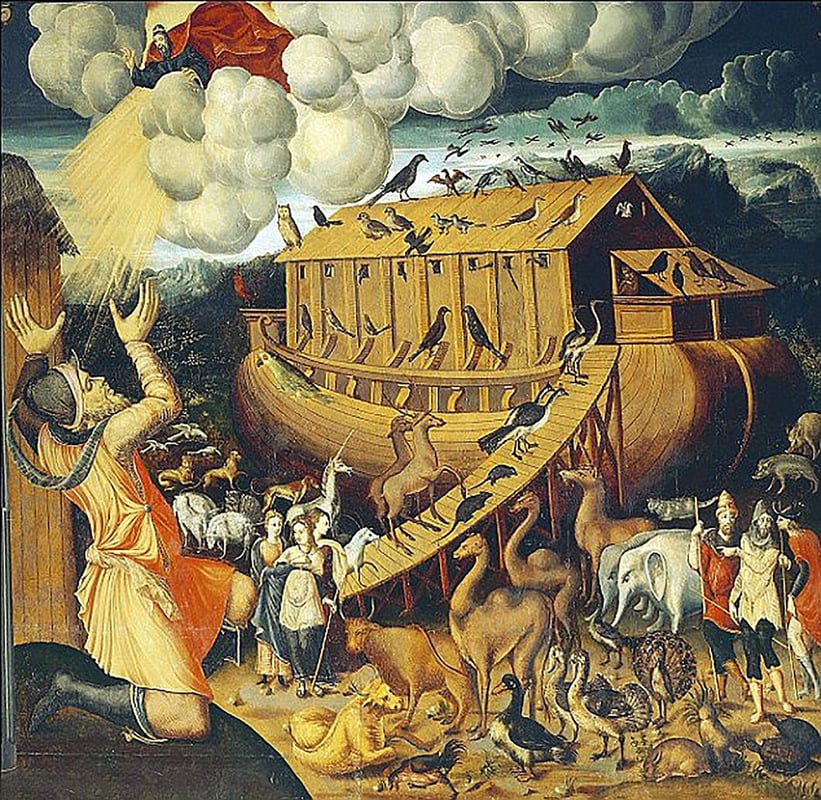
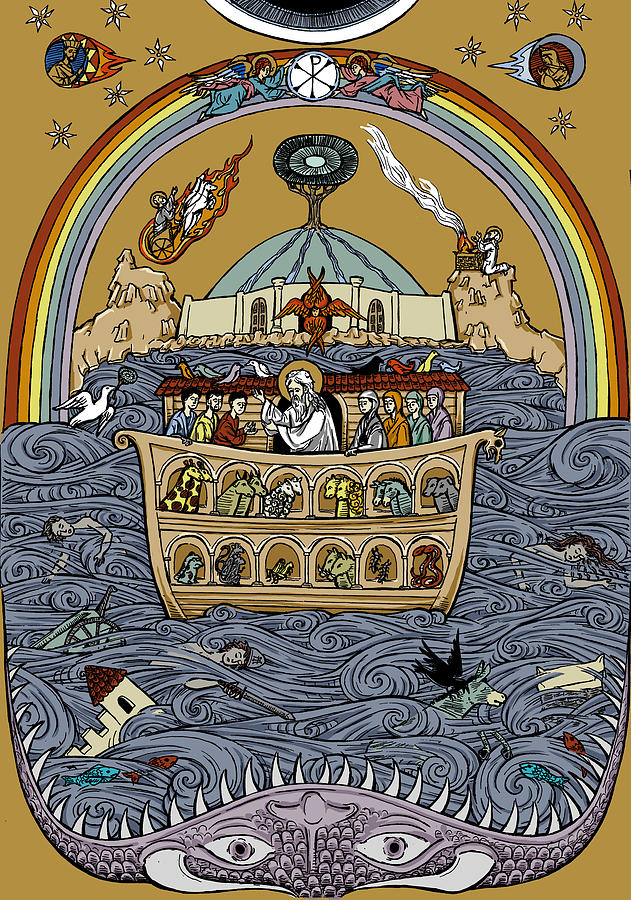
During our third discussion, we looked at the flood from Genesis 6:5 – 8:22. The passage is below:
Genesis 6:5 – 8:22
The Lord saw that the wickedness of humankind was great in the earth, and that every inclination of the thoughts of their hearts was only evil continually.
And the Lord was sorry that he had made humankind on the earth, and it grieved him to his heart. So the Lord said, “I will blot out from the earth the human beings I have created—people together with animals and creeping things and birds of the air, for I am sorry that I have made them.”
But Noah found favor in the sight of the Lord. These are the descendants of Noah. Noah was a righteous man, blameless in his generation; Noah walked with God. And Noah had three sons, Shem, Ham, and Japheth.
Now the earth was corrupt in God’s sight, and the earth was filled with violence. And God saw that the earth was corrupt; for all flesh had corrupted its ways upon the earth.
And God said to Noah, “I have determined to make an end of all flesh, for the earth is filled with violence because of them; now I am going to destroy them along with the earth. Make yourself an ark of cypress wood; make rooms in the ark, and cover it inside and out with pitch. This is how you are to make it: the length of the ark three hundred cubits, its width fifty cubits, and its height thirty cubits. Make a roof for the ark, and finish it to a cubit above; and put the door of the ark in its side; make it with lower, second, and third decks. For my part, I am going to bring a flood of waters on the earth, to destroy from under heaven all flesh in which is the breath of life; everything that is on the earth shall die. But I will establish my covenant with you; and you shall come into the ark, you, your sons, your wife, and your sons’ wives with you. And of every living thing, of all flesh, you shall bring two of every kind into the ark, to keep them alive with you; they shall be male and female. Of the birds according to their kinds, and of the animals according to their kinds, of every creeping thing of the ground according to its kind, two of every kind shall come in to you, to keep them alive. Also take with you every kind of food that is eaten, and store it up; and it shall serve as food for you and for them.”
Noah did this; he did all that God commanded him.
Then the Lord said to Noah, “Go into the ark, you and all your household, for I have seen that you alone are righteous before me in this generation. Take with you seven pairs of all clean animals, the male and its mate; and a pair of the animals that are not clean, the male and its mate; and seven pairs of the birds of the air also, male and female, to keep their kind alive on the face of all the earth. For in seven days I will send rain on the earth for forty days and forty nights; and every living thing that I have made I will blot out from the face of the ground.”
And Noah did all that the Lord had commanded him. Noah was six hundred years old when the flood of waters came on the earth. And Noah with his sons and his wife and his sons’ wives went into the ark to escape the waters of the flood. Of clean animals, and of animals that are not clean, and of birds, and of everything that creeps on the ground, two and two, male and female, went into the ark with Noah, as God had commanded Noah. And after seven days the waters of the flood came on the earth.
In the six hundredth year of Noah’s life, in the second month, on the seventeenth day of the month, on that day all the fountains of the great deep burst forth, and the windows of the heavens were opened. The rain fell on the earth forty days and forty nights.
On the very same day Noah with his sons, Shem and Ham and Japheth, and Noah’s wife and the three wives of his sons entered the ark, they and every wild animal of every kind, and all domestic animals of every kind, and every creeping thing that creeps on the earth, and every bird of every kind—every bird, every winged creature. They went into the ark with Noah, two and two of all flesh in which there was the breath of life. And those that entered, male and female of all flesh, went in as God had commanded him; and the Lord shut him in.
The flood continued forty days on the earth; and the waters increased, and bore up the ark, and it rose high above the earth. The waters swelled and increased greatly on the earth; and the ark floated on the face of the waters. The waters swelled so mightily on the earth that all the high mountains under the whole heaven were covered; the waters swelled above the mountains, covering them fifteen cubits deep.
And all flesh died that moved on the earth, birds, domestic animals, wild animals, all swarming creatures that swarm on the earth, and all human beings; everything on dry land in whose nostrils was the breath of life died. He blotted out every living thing that was on the face of the ground, human beings and animals and creeping things and birds of the air; they were blotted out from the earth. Only Noah was left, and those that were with him in the ark. And the waters swelled on the earth for one hundred fifty days.
But God remembered Noah and all the wild animals and all the domestic animals that were with him in the ark. And God made a wind blow over the earth, and the waters subsided; the fountains of the deep and the windows of the heavens were closed, the rain from the heavens was restrained, and the waters gradually receded from the earth. At the end of one hundred fifty days the waters had abated;
and in the seventh month, on the seventeenth day of the month, the ark came to rest on the mountains of Ararat. The waters continued to abate until the tenth month; in the tenth month, on the first day of the month, the tops of the mountains appeared.
At the end of forty days Noah opened the window of the ark that he had made and sent out the raven; and it went to and fro until the waters were dried up from the earth. Then he sent out the dove from him, to see if the waters had subsided from the face of the ground; but the dove found no place to set its foot, and it returned to him to the ark, for the waters were still on the face of the whole earth. So he put out his hand and took it and brought it into the ark with him. He waited another seven days, and again he sent out the dove from the ark; and the dove came back to him in the evening, and there in its beak was a freshly plucked olive leaf; so Noah knew that the waters had subsided from the earth. Then he waited another seven days, and sent out the dove; and it did not return to him any more.
In the six hundred first year, in the first month, the first day of the month, the waters were dried up from the earth; and Noah removed the covering of the ark, and looked, and saw that the face of the ground was drying. In the second month, on the twenty-seventh day of the month, the earth was dry.
Then God said to Noah, “Go out of the ark, you and your wife, and your sons and your sons’ wives with you. Bring out with you every living thing that is with you of all flesh—birds and animals and every creeping thing that creeps on the earth—so that they may abound on the earth, and be fruitful and multiply on the earth.” So Noah went out with his sons and his wife and his sons’ wives. And every animal, every creeping thing, and every bird, everything that moves on the earth, went out of the ark by families.
Then Noah built an altar to the Lord, and took of every clean animal and of every clean bird, and offered burnt offerings on the altar. And when the Lord smelled the pleasing odor, the Lord said in his heart, “I will never again curse the ground because of humankind, for the inclination of the human heart is evil from youth; nor will I ever again destroy every living creature as I have done. As long as the earth endures, seedtime and harvest, cold and heat, summer and winter, day and night, shall not cease.”
The Book of Genesis establishes the foundation on which the Bible rests. It offers us insight into the nature of both God and humanity, and it begins a story of promise and hope that will culminate in the coming of Jesus. Over sixteen weeks, we’ll study the Genesis, focusing on the following:
Session 15 - Joseph and His Brothers, part 2 (Genesis 42:1 – 45:28)
Session 16 - Israel in Egypt (Genesis 46:1 – 50:26)
During our second discussion, we looked at the introduction of sin from Genesis 3:1 – 6:4. The passage is below:
Genesis 3:1 – 6:4
Now the serpent was more crafty than any other wild animal that the Lord God had made. He said to the woman, “Did God say, ‘You shall not eat from any tree in the garden’?” The woman said to the serpent, “We may eat of the fruit of the trees in the garden; but God said, ‘You shall not eat of the fruit of the tree that is in the middle of the garden, nor shall you touch it, or you shall die.’” But the serpent said to the woman, “You will not die; for God knows that when you eat of it your eyes will be opened, and you will be like God, knowing good and evil.”
So when the woman saw that the tree was good for food, and that it was a delight to the eyes, and that the tree was to be desired to make one wise, she took of its fruit and ate; and she also gave some to her husband, who was with her, and he ate. Then the eyes of both were opened, and they knew that they were naked; and they sewed fig leaves together and made loincloths for themselves. They heard the sound of the Lord God walking in the garden at the time of the evening breeze, and the man and his wife hid themselves from the presence of the Lord God among the trees of the garden.
But the Lord God called to the man, and said to him, “Where are you?” He said, “I heard the sound of you in the garden, and I was afraid, because I was naked; and I hid myself.”
He said, “Who told you that you were naked? Have you eaten from the tree of which I commanded you not to eat?” The man said, “The woman whom you gave to be with me, she gave me fruit from the tree, and I ate.” Then the Lord God said to the woman, “What is this that you have done?” The woman said, “The serpent tricked me, and I ate.”
The Lord God said to the serpent, “Because you have done this, cursed are you among all animals and among all wild creatures; upon your belly you shall go, and dust you shall eat all the days of your life. I will put enmity between you and the woman, and between your offspring and hers; he will strike your head, and you will strike his heel.”
To the woman he said, “I will greatly increase your pangs in childbearing; in pain you shall bring forth children, yet your desire shall be for your husband, and he shall rule over you.”
And to the man he said, “Because you have listened to the voice of your wife, and have eaten of the tree about which I commanded you, ‘You shall not eat of it,’ cursed is the ground because of you; in toil you shall eat of it all the days of your life; thorns and thistles it shall bring forth for you; and you shall eat the plants of the field. By the sweat of your face you shall eat bread until you return to the ground, for out of it you were taken; you are dust, and to dust you shall return.”
The man named his wife Eve, because she was the mother of all living.
And the Lord God made garments of skins for the man and for his wife, and clothed them.
Then the Lord God said, “See, the man has become like one of us, knowing good and evil; and now, he might reach out his hand and take also from the tree of life, and eat, and live forever”— therefore the Lord God sent him forth from the garden of Eden, to till the ground from which he was taken. He drove out the man; and at the east of the garden of Eden he placed the cherubim, and a sword flaming and turning to guard the way to the tree of life.
Now the man knew his wife Eve, and she conceived and bore Cain, saying, “I have produced a man with the help of the Lord.” Next she bore his brother Abel. Now Abel was a keeper of sheep, and Cain a tiller of the ground.
In the course of time Cain brought to the Lord an offering of the fruit of the ground, and Abel for his part brought of the firstlings of his flock, their fat portions. And the Lord had regard for Abel and his offering, but for Cain and his offering he had no regard. So Cain was very angry, and his countenance fell.
The Lord said to Cain, “Why are you angry, and why has your countenance fallen? If you do well, will you not be accepted? And if you do not do well, sin is lurking at the door; its desire is for you, but you must master it.”
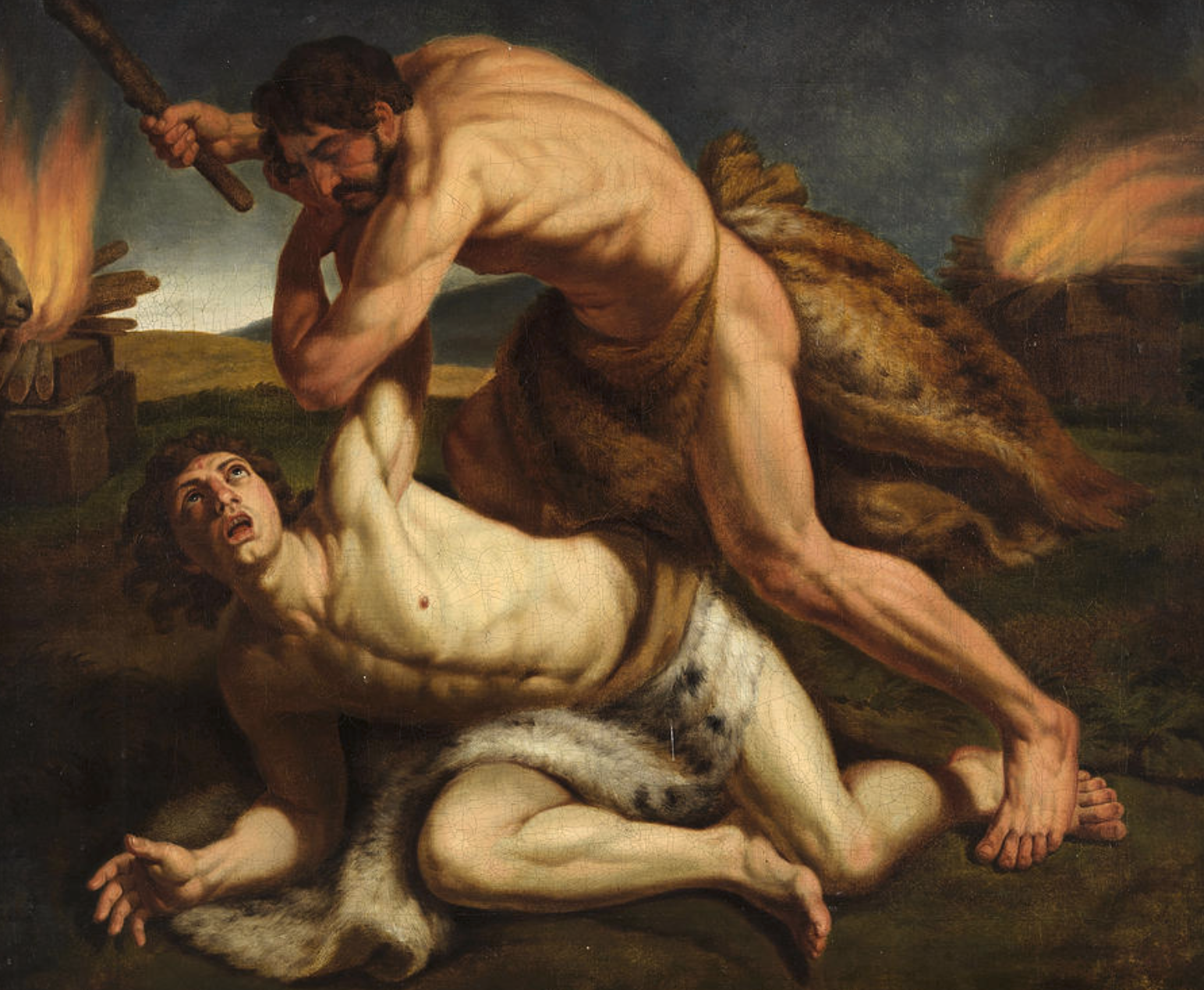
Cain said to his brother Abel, “Let us go out to the field.” And when they were in the field, Cain rose up against his brother Abel, and killed him.
Then the Lord said to Cain, “Where is your brother Abel?” He said, “I do not know; am I my brother’s keeper?” And the Lord said, “What have you done? Listen; your brother’s blood is crying out to me from the ground! And now you are cursed from the ground, which has opened its mouth to receive your brother’s blood from your hand. When you till the ground, it will no longer yield to you its strength; you will be a fugitive and a wanderer on the earth.”
Cain said to the Lord, “My punishment is greater than I can bear! Today you have driven me away from the soil, and I shall be hidden from your face; I shall be a fugitive and a wanderer on the earth, and anyone who meets me may kill me.” Then the Lord said to him, “Not so! Whoever kills Cain will suffer a sevenfold vengeance.” And the Lord put a mark on Cain, so that no one who came upon him would kill him.
Then Cain went away from the presence of the Lord, and settled in the land of Nod, east of Eden. Cain knew his wife, and she conceived and bore Enoch; and he built a city, and named it Enoch after his son Enoch. To Enoch was born Irad; and Irad was the father of Mehujael, and Mehujael the father of Methushael, and Methushael the father of Lamech.
Lamech took two wives; the name of the one was Adah, and the name of the other Zillah. Adah bore Jabal; he was the ancestor of those who live in tents and have livestock. His brother’s name was Jubal; he was the ancestor of all those who play the lyre and pipe. Zillah bore Tubal-cain, who made all kinds of bronze and iron tools. The sister of Tubal-cain was Naamah.
Lamech said to his wives: “Adah and Zillah, hear my voice; you wives of Lamech, listen to what I say: I have killed a man for wounding me, a young man for striking me. If Cain is avenged sevenfold, truly Lamech seventy-sevenfold.”
Adam knew his wife again, and she bore a son and named him Seth, for she said, “God has appointed for me another child instead of Abel, because Cain killed him.” To Seth also a son was born, and he named him Enosh. At that time people began to invoke the name of the Lord.
This is the list of the descendants of Adam. When God created humankind, he made them in the likeness of God. Male and female he created them, and he blessed them and named them “Humankind” when they were created. When Adam had lived one hundred thirty years, he became the father of a son in his likeness, according to his image, and named him Seth. The days of Adam after he became the father of Seth were eight hundred years; and he had other sons and daughters. Thus all the days that Adam lived were nine hundred thirty years; and he died.
When Seth had lived one hundred five years, he became the father of Enosh. Seth lived after the birth of Enosh eight hundred seven years, and had other sons and daughters. Thus all the days of Seth were nine hundred twelve years; and he died. When Enosh had lived ninety years, he became the father of Kenan. Enosh lived after the birth of Kenan eight hundred fifteen years, and had other sons and daughters. Thus all the days of Enosh were nine hundred five years; and he died. When Kenan had lived seventy years, he became the father of Mahalalel. Kenan lived after the birth of Mahalalel eight hundred and forty years, and had other sons and daughters. Thus all the days of Kenan were nine hundred and ten years; and he died. When Mahalalel had lived sixty-five years, he became the father of Jared. Mahalalel lived after the birth of Jared eight hundred thirty years, and had other sons and daughters. Thus all the days of Mahalalel were eight hundred ninety-five years; and he died. When Jared had lived one hundred sixty-two years he became the father of Enoch. Jared lived after the birth of Enoch eight hundred years, and had other sons and daughters. Thus all the days of Jared were nine hundred sixty-two years; and he died.
When Enoch had lived sixty-five years, he became the father of Methuselah. Enoch walked with God after the birth of Methuselah three hundred years, and had other sons and daughters. Thus all the days of Enoch were three hundred sixty-five years. Enoch walked with God; then he was no more, because God took him.
When Methuselah had lived one hundred eighty-seven years, he became the father of Lamech. Methuselah lived after the birth of Lamech seven hundred eighty-two years, and had other sons and daughters. Thus all the days of Methuselah were nine hundred sixty-nine years; and he died.
When Lamech had lived one hundred eighty-two years, he became the father of a son; he named him Noah, saying, “Out of the ground that the Lord has cursed this one shall bring us relief from our work and from the toil of our hands.” Lamech lived after the birth of Noah five hundred ninety-five years, and had other sons and daughters. Thus all the days of Lamech were seven hundred seventy-seven years; and he died. After Noah was five hundred years old, Noah became the father of Shem, Ham, and Japheth.
When people began to multiply on the face of the ground, and daughters were born to them, the sons of God saw that they were fair; and they took wives for themselves of all that they chose.
Then the Lord said, “My spirit shall not abide in mortals forever, for they are flesh; their days shall be one hundred twenty years.”
The Nephilim were on the earth in those days—and also afterward—when the sons of God went in to the daughters of humans, who bore children to them. These were the heroes that were of old, warriors of renown.
Here's a new devotion that I wrote. It's based on the passage below. You can find a recording of this devotion at the bottom of the page.
Romans 1:16-25 [Contemporary English Version]
I am proud of the good news! It is God's powerful way of saving all people who have faith, whether they are Jews or Gentiles. The good news tells how God accepts everyone who has faith, but only those who have faith. It is just as the Scriptures say, “The people God accepts because of their faith will live.”
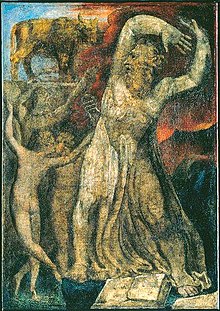
From heaven God shows how angry he is with all the wicked and evil things that sinful people do to crush the truth. They know everything that can be known about God, because God has shown it all to them. God's eternal power and character cannot be seen. But from the beginning of creation, God has shown what these are like by all he has made. That's why those people don't have any excuse. They know about God, but they don't honor him or even thank him. Their thoughts are useless, and their stupid minds are in the dark. They claim to be wise, but they are fools. They don't worship the glorious and eternal God. Instead, they worship idols that are made to look like humans who cannot live forever, and like birds, animals, and reptiles.
So God let these people go their own way. They did what they wanted to do, and their filthy thoughts made them do shameful things with their bodies. They gave up the truth about God for a lie, and they worshiped God's creation instead of God, who will be praised forever. Amen.
It’s Not Just for Pagans Anymore
When I was a young man, I remember a series of ads that the Florida Orange Growers ran on television promoting the drinking of orange juice. I guess they wanted to expand its consumption beyond people eating their corn flakes or drinking their screwdrivers. And so they ran commercials with folks, both young and old, rich and poor, chugging orange juice at different times and in different places, because, when you get right down to it, orange juice is refreshing whether you’re working or playing or even eating a hot dog. In other words, it was an all-purpose drink. Now that was their pitch. And the reason, just listen to the tag line: “Orange juice from Florida, it’s not just for breakfast anymore.” Of course, I guess the consumer would determine whether that was true or not.
But you know, considering what we just read from Romans, I think the same line might apply to human sin and in particular, idolatry. You see, for the Apostle Paul, whether we like it or not, human beings tend to be idol-worshipers. In a real sense, that lies at the core of sin. In other words, we tend to worship the creature rather than the creator. And as a result, not only do we create a barrier in our relationship with God, how we relate to the natural order and to one another becomes distorted. Now, that’s what idolatry does, at least according to Paul.
But before we all nod in agreement and then shake our heads in disgust, I think it’s important for us to remember that, when he wrote this, Paul wasn’t just talking about people who ran around worshiping bushes and trees and statues. You see, since idolatry involves worshiping the creature rather than the creator, whenever we assume that we have the right to do what only God can do, namely to condemn and to judge, and when we assume that whatever we want, God wants us to have, and whatever we value, God must value too, when this is how we live, we’re also worshiping the creature and not the creator, and I’m talking about the creature that looks back at us when we’re facing a mirror. In other words, we’re also idolaters. Therefore, I guess we can say that, when it comes to idolatry, well, it’s not just for pagans anymore. But praise the Lord, God still loves us and can still overcome power of idolatry, regardless of how good it might taste.