
Saturday, May 31, 2025
Mission Yearbook: 'Connection to Transformation'

Bible Readings for May 31, 2025

Prayers for Our Community, Our Nation and Our World

Friday, May 30, 2025
Mission Yearbook: Ways to build up the church and be responsive

Prayer Requests to be shared during Sunday’s service

On Sunday, June 1, Sligo Presbyterian Church will lift to God the following needs:
- Amy Milanovich
- Angel Wright
- Angela Zitman
- Barbara Yarchuk
- Betty Milanovich
- Betty Phillips
- Betty Terwint
- Bill Wingard
- Bob Varner
- Bus's Sister-in-Law
- Butch, Betsy's brother
- Butch, Cass's brother
- Cara Maguire Defibaugh
- Chris Sibert
- Corbin
- Dan Kemp
- Dan Wallace
- Denny Myers
- Duane Quinn
- Fred Ripper
- Gabe
- Jane
- Jason
- Jayden Shorts
- Jeb Rapp
- Jim Mahle
- Jim Mason
- Joann Klamer
- Jodi McNaughton
- Lana Todd
- Landdon Chalmers
- Leah
- Len Gaulin
- Levi Jack
- Libby Miller
- Lori Myers
- Madilyn Sherman
- Margie Henry
- Mary Lou McCormack
- Mason Martin
- Matt
- Michael Curran
- Nancy Blauser
- Nancy Wilson
- Patty Divins
- Robb Summerville
- Roberta Fetterman
- Robyn Bartmas
- Ron & Shelly Haines
- Ron Lerch
- Rowan Pinson
- Rudy
- Ryan Cornecki & Family
- Sam & Carol Mason
- Tadd French
- Tracy
- Van Watkins
- Velma Stewart
- Wes Summerville
- Zach Schieberl
The Bulletin for the SPC Worship Service - Sunday, June 1, 2025
Easter is the most important day in the year, because we celebrate the most important event in human history, the resurrection of Jesus Christ. During this sermon series, we’ll consider five ways the resurrection can impact our lives. They include the following:
- Living with Hope - April 27
- Living with Clarity - May 4
- Living with Purpose - May 11
- Living with Understanding - May 25
- Living with Courage - June 1
On Sunday, June 1, we'll focus on how we can live with courage. Faith in the resurrection empowers individuals to live with courage, knowing that death has been defeated and that our eternal destinies are in God’s hands. Below is the bulletin for the service. You can stream the service by going to the Sligo Presbyterian Church YouTube Channel on Sundays at 10:00 a.m. (EDT). You can hear a podcast of the service at the Sligo Presbyterian Church YouTube Channel or the Sligo Presbyterian Spotify Page.


Faces in the Crowd: Characters in the Story of Jesus (Pilate and the Other Romans)

- Session 1 - Mary, the Mother of Jesus
- Session 2 - John the Baptist
- Session 3 - Nicodemus
- Session 4 - Mary Magdalene
- Session 5 - Simon Peter (Part 1)
- Session 6 - Simon Peter (Part 2)
- Session 7 - Simon Peter (Part 3)
- Session 8 - Matthew and the Tax Collectors
- Session 9 - James, John, Thomas, Philip, and the Rest
- Session 10 - Judas
- Session 11 - The Scribes, Pharisees and Teachers of the Law
- Session 12 - The Herods
- Session 13 - Pilate and the Other Romans
- Session 14 - The Crowds
- Session 15 - The Rich Young Ruler and His Friends
In our thirteenth session, we looked at Pilate and the the nature of Roman authority in Judea. A recording of our discussion and some of the material and passages we discussed are below.
Roman Rule
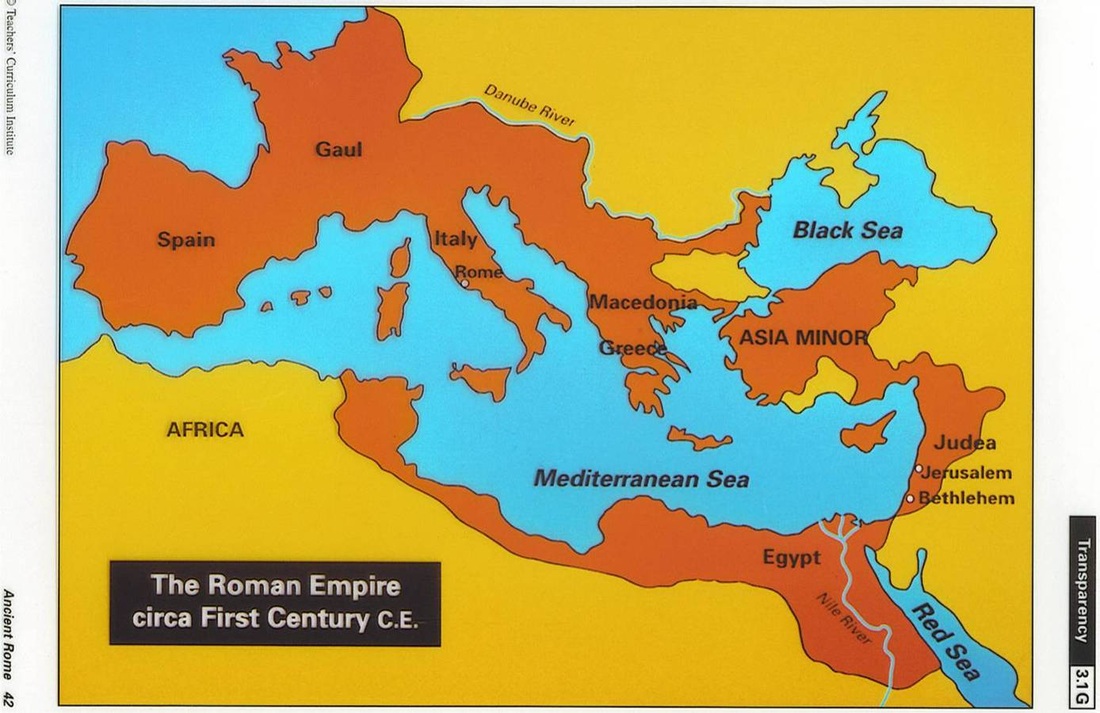
Roman Priorities
- Money
- Peace
- Unity
Pontus Pilate in Mark
Mark 15:1: As soon as it was morning, the chief priests held a consultation with the elders and scribes and the whole council. They bound Jesus, led him away, and handed him over to Pilate.
Mark 15:2-5: Pilate asked him, “Are you the King of the Jews?” He answered him, “You say so.” Then the chief priests accused him of many things. Pilate asked him again, “Have you no answer? See how many charges they bring against you.” But Jesus made no further reply, so that Pilate was amazed.
Mark 15:15: So Pilate, wishing to satisfy the crowd, released Barabbas for them, and after flogging Jesus he handed him over to be crucified.
Pontius Pilate in Matthew
Matthew 27:2-25: They bound him, led him away, and handed him over to Pilate the governor.
 Now Jesus stood before the governor, and the governor asked him, “Are you the king of the Jews?” Jesus said, “You say so.” But when he was accused by the chief priests and elders, he did not answer. Then Pilate said to him, “Do you not hear how many accusations they make against you?” But he gave him no answer, not even to a single charge, so that the governor was greatly amazed.
So when Pilate saw that he could do nothing but rather that a riot was beginning, he took some water and washed his hands before the crowd, saying, “I am innocent of this man’s blood; see to it yourselves.” Then the people as a whole answered, “His blood be on us and on our children!”.
When Judas, his betrayer, saw that Jesus was condemned, he repented and brought back the thirty pieces of silver to the chief priests and the elders. He said, “I have sinned by betraying innocent blood.” But they said, “What is that to us? See to it yourself.” Throwing down the pieces of silver in the temple, he departed, and he went and hanged himself. But the chief priests, taking the pieces of silver, said, “It is not lawful to put them into the treasury, since they are blood money.” After conferring together, they used them to buy the potter’s field as a place to bury foreigners. For this reason that field has been called the Field of Blood to this day. Then was fulfilled what had been spoken through the prophet Jeremiah, “And they took the thirty pieces of silver, the price of the one on whom a price had been set, on whom some of the people of Israel had set a price, and they gave them for the potter’s field, as the Lord commanded me.”
Now at the festival the governor was accustomed to release a prisoner for the crowd, anyone whom they wanted. At that time they had a notorious prisoner called Jesus Barabbas. So after they had gathered, Pilate said to them, “Whom do you want me to release for you, Jesus Barabbas or Jesus who is called the Messiah?” For he realized that it was out of jealousy that they had handed him over. While he was sitting on the judgment seat, his wife sent word to him, “Have nothing to do with that innocent man, for today I have suffered a great deal because of a dream about him.” Now the chief priests and the elders persuaded the crowds to ask for Barabbas and to have Jesus killed. The governor again said to them, “Which of the two do you want me to release for you?” And they said, “Barabbas.” Pilate said to them, “Then what should I do with Jesus who is called the Messiah?” All of them said, “Let him be crucified!” Then he asked, “Why, what evil has he done?” But they shouted all the more, “Let him be crucified!”
Matthew 27:26: So he released Barabbas for them, and after flogging Jesus he handed him over to be crucified.
Matthew 27:29-31: and after twisting some thorns into a crown they put it on his head. They put a reed in his right hand and knelt before him and mocked him, saying, “Hail, King of the Jews!” They spat on him and took the reed and struck him on the head. After mocking him, they stripped him of the robe and put his own clothes on him. Then they led him away to crucify him.
Pontius Pilate in Luke
Luke 23:1-12: Then the assembly rose as a body and brought Jesus before Pilate. They began to accuse him, saying, “We found this man inciting our nation, forbidding us to pay taxes to Caesar and saying that he himself is the Messiah, a king.” Then Pilate asked him, “Are you the king of the Jews?” He answered, “You say so.” Then Pilate said to the chief priests and the crowds, “I find no basis for an accusation against this man.” But they were insistent and said, “He stirs up the people by teaching throughout all Judea, from Galilee where he began even to this place.”
When Pilate heard this, he asked whether the man was a Galilean. And when he learned that he was under Herod’s jurisdiction, he sent him off to Herod, who was himself in Jerusalem at that time. When Herod saw Jesus, he was very glad, for he had been wanting to see him for a long time because he had heard about him and was hoping to see him perform some sign. He questioned him at some length, but Jesus gave him no answer. The chief priests and the scribes stood by vehemently accusing him. Even Herod with his soldiers treated him with contempt and mocked him; then he put an elegant robe on him and sent him back to Pilate. That same day Herod and Pilate became friends with each other; before this they had been enemies.

Then they all shouted out together, “Away with this fellow! Release Barabbas for us!” (This was a man who had been put in prison for an insurrection that had taken place in the city and for murder.) Pilate, wanting to release Jesus, addressed them again, but they kept shouting, “Crucify, crucify him!” A third time he said to them, “Why, what evil has he done? I have found in him no ground for the sentence of death; I will therefore have him flogged and then release him.” But they kept urgently demanding with loud shouts that he should be crucified, and their voices prevailed. So Pilate gave his verdict that their demand should be granted. He released the man they asked for, the one who had been put in prison for insurrection and murder, and he handed Jesus over as they wished.
Luke 23:26-31: As they led him away, they seized a man, Simon of Cyrene, who was coming from the country, and they laid the cross on him and made him carry it behind Jesus. A great number of the people followed him, and among them were women who were beating their breasts and wailing for him. But Jesus turned to them and said, “Daughters of Jerusalem, do not weep for me, but weep for yourselves and for your children. For the days are surely coming when they will say, ‘Blessed are the barren, and the wombs that never bore, and the breasts that never nursed.’ Then they will begin to say to the mountains, ‘Fall on us,’ and to the hills, ‘Cover us.’ For if they do this when the wood is green, what will happen when it is dry?”
Pontius Pilate in John
 John 18:28-19:16: Then they took Jesus from Caiaphas to Pilate’s headquarters. It was early in the morning. They themselves did not enter the headquarters, so as to avoid ritual defilement and to be able to eat the Passover. So Pilate went out to them and said, “What accusation do you bring against this man?” They answered, “If this man were not a criminal, we would not have handed him over to you.” Pilate said to them, “Take him yourselves and judge him according to your law.” The Jews replied, “We are not permitted to put anyone to death.” (This was to fulfill what Jesus had said when he indicated the kind of death he was to die.)
Then Pilate entered the headquarters again, summoned Jesus, and asked him, “Are you the King of the Jews?” Jesus answered, “Do you ask this on your own, or did others tell you about me?” Pilate replied, “I am not a Jew, am I? Your own nation and the chief priests have handed you over to me. What have you done?” Jesus answered, “My kingdom does not belong to this world. If my kingdom belonged to this world, my followers would be fighting to keep me from being handed over to the Jews. But as it is, my kingdom is not from here.” Pilate asked him, “So you are a king?” Jesus answered, “You say that I am a king. For this I was born, and for this I came into the world, to testify to the truth. Everyone who belongs to the truth listens to my voice.” Pilate asked him, “What is truth?”
After he had said this, he went out to the Jews again and told them, “I find no case against him. But you have a custom that I release someone for you at the Passover. Do you want me to release for you the King of the Jews?” They shouted in reply, “Not this man but Barabbas!” Now Barabbas was a rebel.
.jpg/960px-Ecce_homo_by_Antonio_Ciseri_(1).jpg)
Now when Pilate heard this, he was more afraid than ever. He entered his headquarters again and asked Jesus, “Where are you from?” But Jesus gave him no answer. Pilate therefore said to him, “Do you refuse to speak to me? Do you not know that I have power to release you and power to crucify you?” Jesus answered him, “You would have no power over me unless it had been given you from above; therefore the one who handed me over to you is guilty of a greater sin.” From then on Pilate tried to release him, but the Jews cried out, “If you release this man, you are no friend of Caesar. Everyone who claims to be a king sets himself against Caesar.”
When Pilate heard these words, he brought Jesus outside and sat on the judge’s bench at a place called The Stone Pavement, or in Hebrew Gabbatha. Now it was the day of Preparation for the Passover, and it was about noon. He said to the Jews, “Here is your King!” They cried out, “Away with him! Away with him! Crucify him!” Pilate asked them, “Shall I crucify your King?” The chief priests answered, “We have no king but Caesar.” Then he handed him over to them to be crucified.
So they took Jesus,
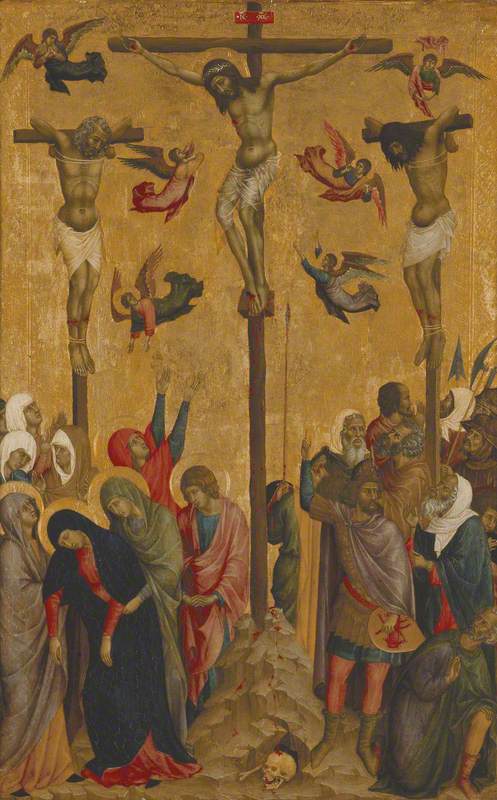
“They divided my clothes among themselves,
and for my clothing they cast lots.”
And that is what the soldiers did.
Meanwhile, standing near the cross of Jesus were his mother, and his mother’s sister, Mary the wife of Clopas, and Mary Magdalene. When Jesus saw his mother and the disciple whom he loved standing beside her, he said to his mother, “Woman, here is your son.” Then he said to the disciple, “Here is your mother.” And from that hour the disciple took her into his own home.
After this, when Jesus knew that all was now finished, he said (in order to fulfill the scripture), “I am thirsty.” A jar full of sour wine was standing there. So they put a sponge full of the wine on a branch of hyssop and held it to his mouth. When Jesus had received the wine, he said, “It is finished.” Then he bowed his head and gave up his spirit.
Bible Readings for May 30, 2025

Thursday, May 29, 2025
Mission Yearbook: 'Blessed are those who make excuses"

Study, Learn and Grow: Bible Readings for May 29, 2025

Wednesday, May 28, 2025
Mission Yearbook: Presbyterian Hunger Program Hosts Centering Partners’ Voices

On the Road to Jerusalem: A Study of Luke (Kingdom Etiquette - Luke 14:1-35)

- Session 1 - The Announcements (Luke 1:1-56)
- Session 2 - The Births (Luke 1:57–2:21)
- Session 3 - Jesus in the Temple (Luke 2:22-52)
- Session 4 - The Ministry of the Baptist (Luke 3:1-20)
- Session 5 - Jesus is Identified (Luke 3:21–4:13)
- Session 6 - Off and Running (Luke 4:14–5:16)
- Session 7 - Early Controversies (Luke 5:17–6:11)
- Session 8 - Choosing and Preparing the 12 (Luke 6:12-49)
- Session 9 - The Christ (Luke 7:1-50)
- Session 10 - Hearing and Doing (Luke 8:1-21)
- Session 11 - Revealing the Power of God (Luke 8:22-56)
- Session 12 - You Are the Christ of God (Luke 9:1-27)
- Session 13 - A Different Kind of Christ (Luke 9:28-50)
- Session 14 - Beginning the Journey (Luke 9:51–10:24)
- Session 15 - Love of God and Neighbor (Luke 10:25-42)
- Session 16 - Prayer (Luke 11:1-13)
- Session 17 - Conflicts and Controversies (Luke 11:14-54)
- Session 18 - Getting Ready [Part 1] (Luke 12:1-34)
- Session 19 - Getting Ready [Part 2] (Luke 12:35–13:9)
- Session 20 - Unexpected Reversals (Luke 13:10-35)
- Session 21 - Kingdom Etiquette (Luke 14:1-35)
- Session 22 - Parables of Joy (Luke 15:1-32)
- Session 23 - The Problem with Wealth (Luke 16:1-31)
- Session 24 - Forgiveness and Faith (Luke 17:1-19)
- Session 25 - The Kingdom Is Coming (Luke 17:20–18:8)
- Session 26 - Rich and Poor (Luke 18:9-18:30)
- Session 27 - Approaching the City (Luke 18:31–19:28)
- Session 28 - The Entry into Jerusalem (Luke 19:29-48)
- Session 29 - Jesus in the Temple Again (Luke 20:1–21:4)
- Session 30 - The Coming End (Luke 21:5-38)
- Session 31 - The Last Supper (Luke 22:1-20)
- Session 32 - Parting Words (Luke 22:21-38)
- Session 33 - Prayer, Arrest and Denials (Luke 22:39-62)
- Session 34 - Trials (Luke 22:63–23:25)
- Session 35 - Crucifixion and Death (Luke 23:26-56)
- Session 36 - Empty Tomb and Emmaus Road (Luke 24:1-35)
- Session 37 - The Blessing and Departure (Luke 24:36-53)
In our twenty-first session, we looked at Luke 14:1-35 and talked about more lessons Jesus had for his disciples. The discussion and passage are below.
Luke 14:1-35 [New Revised Standard Version Updated Edition]
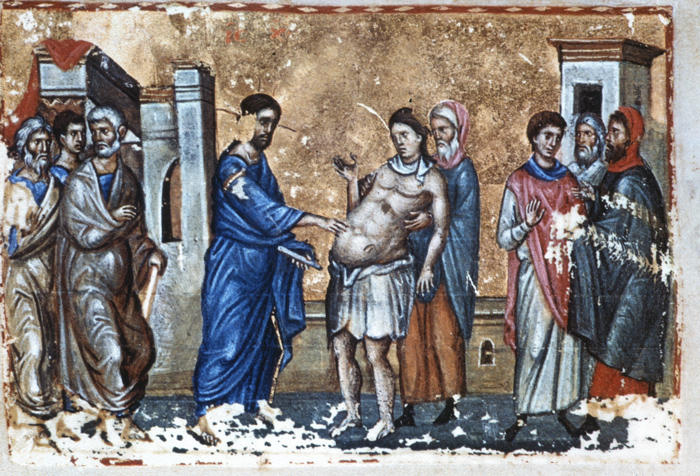
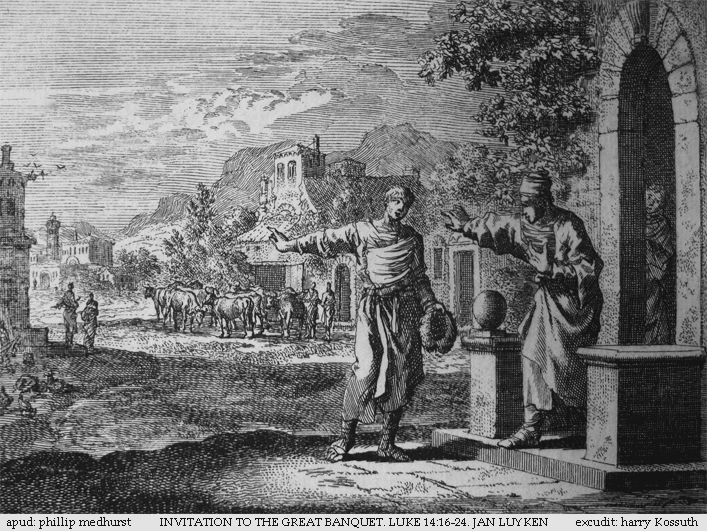
When he noticed how the guests chose the places of honor, he told them a parable. “When you are invited by someone to a wedding banquet, do not sit down at the place of honor, in case someone more distinguished than you has been invited by your host, and the host who invited both of you may come and say to you, ‘Give this person your place,’ and then in disgrace you would start to take the lowest place. But when you are invited, go and sit down at the lowest place, so that when your host comes, he may say to you, ‘Friend, move up higher’; then you will be honored in the presence of all who sit at the table with you. For all who exalt themselves will be humbled, and those who humble themselves will be exalted.”
He said also to the one who had invited him, “When you give a luncheon or a dinner, do not invite your friends or your brothers and sisters or your relatives or rich neighbors, in case they may invite you in return, and you would be repaid. But when you give a banquet, invite the poor, the crippled, the lame, and the blind. And you will be blessed because they cannot repay you, for you will be repaid at the resurrection of the righteous.”
“Salt is good, but if salt has lost its taste, how can its saltiness be restored? It is useful neither for the soil nor for the manure pile; they throw it away. If you have ears to hear, then hear!”
Bible Readings for May 28, 2025

Tuesday, May 27, 2025
Mission Yearbook: Afro-Peruvian justice wins national award

The Sligo Memorial Day Remembrance Service
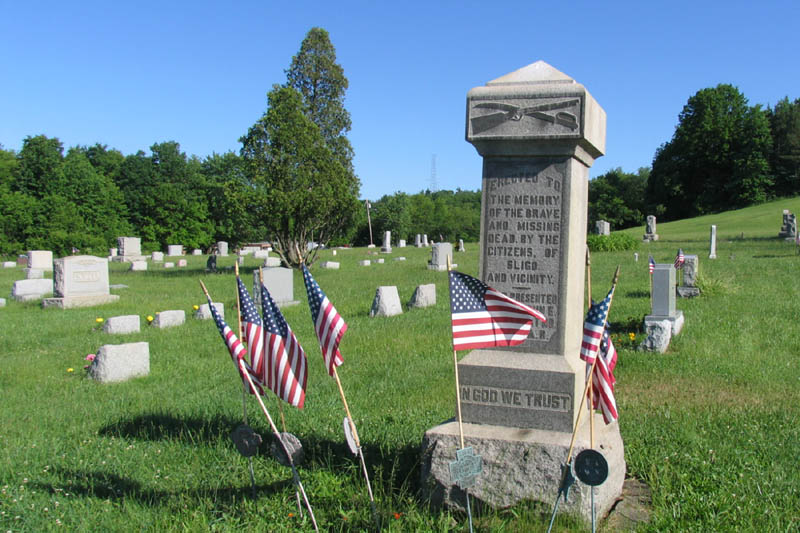
The annual Memorial Day Service in Sligo took place on Monday, May 26, at 11 a.m. at the Sligo Cemetery. The speaker for the service this year was Sydney P. Varner Hiles. Sydney is the operator of the Varner Funeral Homes in Rimersburg and Sligo. A native of Sligo, she is a 2014 graduate of Union High School and a 2017 graduate of the Pittsburgh Institute of Mortuary Science where she obtained her associate degree in specialized business in funeral management and embalming. She's is a member of the VFW Post 7132 of Rimersburg and the Rimersburg Lions Club, and she lives in East Brady with her husband, Jace Hiles, and their daughters, Cecelia and Clea. Maddie Coy, John Greenawalt and Melissa Shoemaker provided special music during the service and several area students shared readings. The Rev. Gene Hill and the Rev. Ed Rudiger offered the invocation and benediction. Veterans joined in a brief processional at the cemetery, marching behind the colors.
Below is a podcast of the service.
The Sligo Presbyterian Church Celebration Service - Sunday, May 25, 2025

Easter is the most important day in the year, because we celebrate the most important event in human history, the resurrection of Jesus Christ. During this sermon series, we’ll consider five ways the resurrection can impact our lives. They include the following:
- Living with Hope - April 27
- Living with Clarity - May 4
- Living with Purpose - May 11
- Living with Understanding - May 25
- Living with Courage - June 1
On Sunday, May 25, we focused on how we can live with understanding, because the resurrection enables us to understand the significance of Christ’s coming and our role in continuing his ministry. Below is a video of the service, the podcast of the sermon and the service bulletin. You can stream the service by going to the Sligo Presbyterian Church YouTube Channel on Sundays at 10:00 a.m. (EDT). You can hear a podcast of the service at the Sligo Presbyterian Church YouTube Channel or the Sligo Presbyterian Spotify Page.


Sunday's Message - After Easter: Living with Understanding

- Living with Hope - April 27
- Living with Clarity - May 4
- Living with Purpose - May 11
- Living with Understanding - May 25
- Living with Courage - June 1
On Sunday, May 25, we focused on how we can live with understanding, because the resurrection enables us to understand the significance of Christ’s coming and our role in continuing his ministry. Below is the podcast and text of the sermon. You can stream the service by going to the Sligo Presbyterian Church YouTube Channel on Sundays at 10:00 a.m. (EDT). You can hear a podcast of the service at the Sligo Presbyterian Church YouTube Channel or the Sligo Presbyterian Spotify Page.
Well, we’re about to enter a new month. And for me, May has just flown by. I mean, I’m really not sure where it went. Good night nurse, it seems like just yesterday we were celebrating Easter and getting ready for Spring and now, Pentecost is in a couple of weeks and Summer will be here before you know it. Of course, part of the reason it seems like a blur, at least to me, may have something to do with all the stuff that’s been going on within the Rudiger family particularly over the last few weeks. My goodness, last Sunday, Maggie graduated from WVU, although I think she’ll probably be a Mountaineer for life. And just a couple of days ago, Debbie officially retired. Now that’s a lot of stuff in my book. And speaking for myself, my dog and of course, my turtles, I just hope things settle down a little bit.
And since we’ll be at Pentecost in a couple of weeks, well, that means we’re about to wrap up this sermon series we started last month, you know, the one entitled After Easter: Living a New Reality. Now in three of the last four Sundays, we’ve talked about how, in light of the resurrection, we can live with hope and with clarity and with purpose. And during the message today, we’ll consider how the resurrection might help us live with understanding, in other words, how it might enable us to understand the significance of Christ’s coming and our role in continuing his ministry.

On this day, take time to remember those who have fallen. But on every day after, do more; put the freedoms they died for to greater and nobler uses. [Richelle E. Goodrich, Slaying Dragons: Quotes, Poetry, & a Few Short Stories for Every Day of the Year]
Now that’s what she wrote, and I think she’s right. If we don’t understand what the day means, we’re sure not going to learn from it, much less apply its meaning to our lives.
And I think we can say the same thing with respect to the resurrection. In fact, this idea of understanding actually played an important role in an encounter Jesus had with two disciples immediately after “...Peter ran to the tomb. And when he stooped down and looked in, he saw only the burial clothes. Then he returned, wondering what had happened.” [Luke 24:12, CEV] Just listen to what the Evangelist Luke wrote:
That same day two of Jesus’ disciples were going to the village of Emmaus, which was about eleven kilometers from Jerusalem. As they were talking and thinking about what had happened, Jesus came near and started walking along beside them. But they did not know who he was.Jesus asked them, “What were you talking about as you walked along?”
The two of them stood there looking sad and gloomy. Then the one named Cleopas asked Jesus, “Are you the only person from Jerusalem who didn’t know what was happening there these last few days?”
“What do you mean?” Jesus asked.
They answered:
Those things that happened to Jesus from Nazareth. By what he did and said he showed that he was a powerful prophet, who pleased God and all the people. Then the chief priests and our leaders had him arrested and sentenced to die on a cross. We had hoped that he would be the one to set Israel free! But it has already been three days since all this happened.
Some women in our group surprised us. They had gone to the tomb early in the morning, but did not find the body of Jesus. They came back, saying they had seen a vision of angels who told them that he is alive. Some men from our group went to the tomb and found it just as the women had said. But they didn’t see Jesus either.
Then Jesus asked the two disciples, “Why can’t you understand? How can you be so slow to believe all that the prophets said? Didn’t you know that the Messiah would have to suffer before he was given his glory?” Jesus then explained everything written about himself in the Scriptures, beginning with the Law of Moses and the Books of the Prophets.
When the two of them came near the village where they were going, Jesus seemed to be going farther. They begged him, “Stay with us! It’s already late, and the sun is going down.” So Jesus went into the house to stay with them.After Jesus sat down to eat, he took some bread. He blessed it and broke it. Then he gave it to them. At once they knew who he was, but he disappeared. They said to each other, “When he talked with us along the road and explained the Scriptures to us, didn’t it warm our hearts?” So they got up and returned to Jerusalem.
The two disciples found the eleven apostles and the others gathered together. And they learned from the group that the Lord was really alive and had appeared to Peter. Then the disciples from Emmaus told what happened on the road and how they knew he was the Lord when he broke the bread. [Luke 24:13-35, CEV]

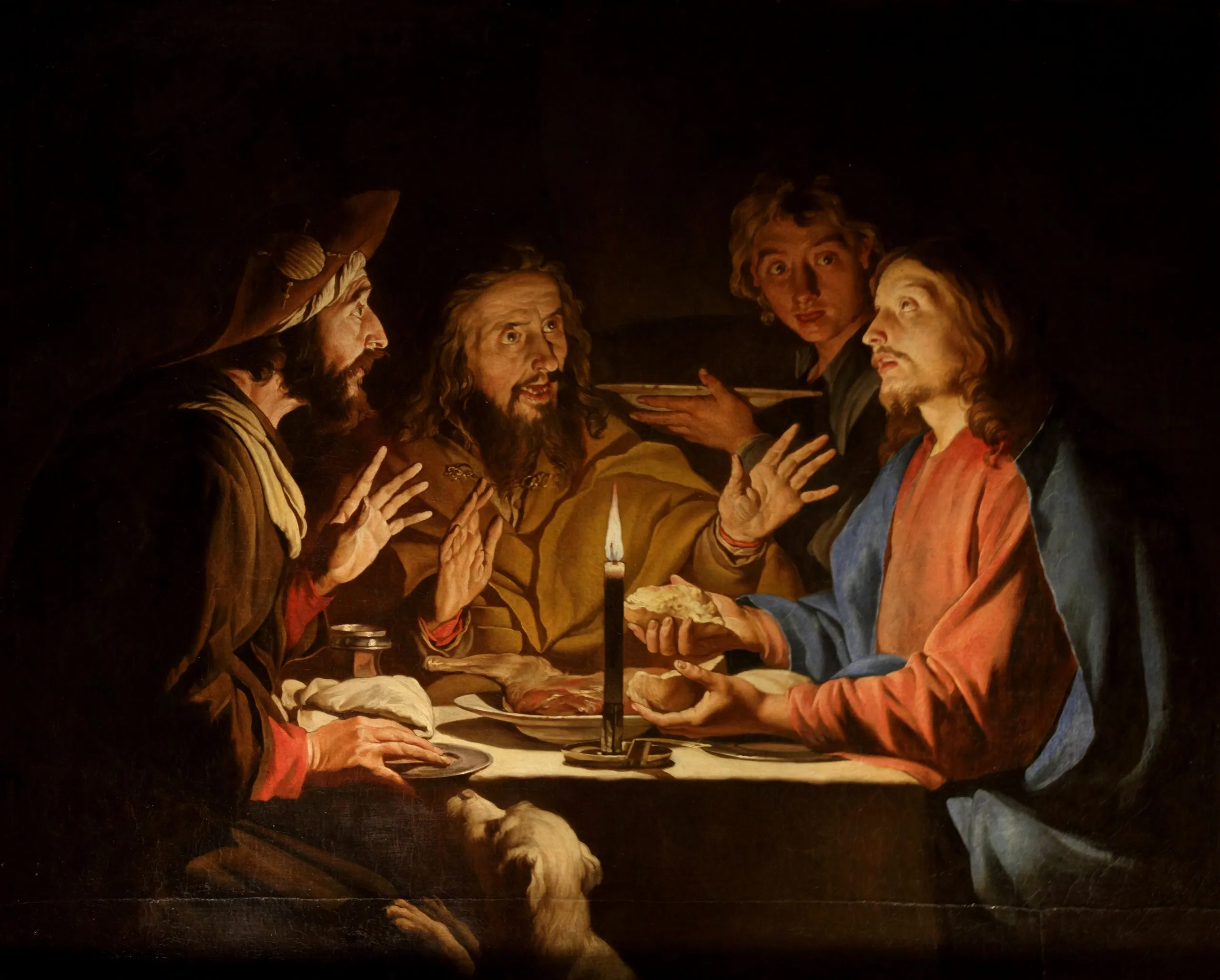
Now that’s what happened, and just think about what’s going on here. You see, when the resurrected Christ disappeared after breaking the bread, those disciples understood. I think they understood what Jesus had done and why it was important and, based on what they did, how they could respond.
.jpg)
My friends, I want you to remember the message I preached and that you believed and trusted. You will be saved by this message, if you hold firmly to it. But if you don’t, your faith was all for nothing.
I told you the most important part of the message exactly as it was told to me. This part is:
Christ died for our sins,
as the Scriptures say.
He was buried,
and three days later
he was raised to life,
as the Scriptures say.
Christ appeared to Peter,
then to the twelve. [1 Corinthians 15:1-5, CEV]
You see, the same thing that happened to those two disciples on the Emmaus Road can happen to us. In light of the resurrection, first, we can understand what Jesus did.
.jpg)
Don’t you know that all who share in Christ Jesus by being baptized also share in his death? When we were baptized, we died and were buried with Christ. We were baptized, so we would live a new life, as Christ was raised to life by the glory of God the Father.
If we shared in Jesus’ death by being baptized, we will be raised to life with him. We know that the persons we used to be were nailed to the cross with Jesus. This was done, so our sinful bodies would no longer be the slaves of sin. We know sin doesn’t have power over dead people.
As surely as we died with Christ, we believe we will also live with him. We know that death no longer has any power over Christ. He died and was raised to life, never again to die. When Christ died, he died for sin once and for all. But now he is alive, and he lives only for God. In the same way, you must think of yourselves as dead to the power of sin. But Christ Jesus has given life to you, and you live for God. [Romans 6:3-11, CEV]
You see, in light of the resurrection, second, we can understand why what Jesus did was important.
.jpg)
If our faith is strong, we should be patient with the Lord’s followers whose faith is weak. We should try to please them instead of ourselves. We should think of their good and try to help them by doing what pleases them. Even Christ did not try to please himself. But as the Scriptures say, “The people who insulted you also insulted me.” And the Scriptures were written to teach and encourage us by giving us hope. God is the one who makes us patient and cheerful. I pray that he will help you live at peace with each other, as you follow Christ. Then all of you together will praise God, the Father of our Lord Jesus Christ. [Romans 15:1-6, CEV]
You see, in light of the resurrection, third, we can understand how we might respond.
.jpg)
And you know, we can do this same kind of thing as we consider the resurrection. In other words, we can join those two disciples who walked and talked with the resurrected Christ on the Emmaus Road. And like them, in light of the resurrection, we can remember what Jesus did. And we can recognize why it was important. And we can decide how we might respond. In other words, after Easter, we can choose to live with understanding.
Subscribe to:
Comments (Atom)
Bible Readings for March 26, 2026
Study, Learn and Grow: Bible Readings for March 26, 2026 : Let's read the Bible together in the next year. Today, our passages are Deu...

-
Velma Grace Stewart, 92, of Shippenville Health Care Center, formerly of Perry Township, Parker, PA, passed away on Sunday, June 15, at the ...
-
Tracy L. Simpson, 55, of East Brady died Wednesday, June 4, 2025 after a brief illness. Born August 7, 1969 in Louisville, KY, she was the d...
-
 On Friday, June 13, the Sligo Presbyterian Church Brunch Bunch had lunch at O'Learys Retro River Diner in Parker. We thank Marcy Mason w...

