Showing posts with label Apostle Philip. Show all posts

Friday, April 25, 2025

Faces in the Crowd: Characters in the Story of Jesus (James, John, Thomas, Philip, and the Rest)

Although the life and work of Jesus Christ is the focus of the gospels, other characters play a role in his story. During fifteen sessions, we’re looking at the following individuals and groups who encountered Jesus as he moved from birth to the cross. During the series, we'll look at the following persons:

In our ninth session, we looked at James, John, Thomas, Philip, and the rest of the Apostles. A recording of our discussion and some of the passages we discussed are below.

The Apostles are listed in Mark, Matthew and Luke. 

Mark 3:16-18: So he appointed the twelve: Simon (to whom he gave the name Peter), James son of Zebedee and John the brother of James (to whom he gave the name Boanerges, that is, Sons of Thunder), nd Andrew, and Philip, and Bartholomew, and Matthew, and Thomas, and James son of Alphaeus, and Thaddaeus, and Simon the Cananaean, and Judas Iscariot, who handed him over.

Matthew 10:2-4: These are the names of the twelve apostles: first, Simon, also known as Peter, and his brother Andrew; James son of Zebedee and his brother John; Philip and Bartholomew; Thomas and Matthew the tax collector; James son of Alphaeus and Thaddaeus; Simon the Cananaean and Judas Iscariot, the one who betrayed him.

Luke 6:14-16: Simon, whom he named Peter, and his brother Andrew, and James, and John, and Philip, and Bartholomew, and Matthew, and Thomas, and James son of Alphaeus, and Simon, who was called the Zealot,  and Judas son of James, and Judas Iscariot, who became a traitor.
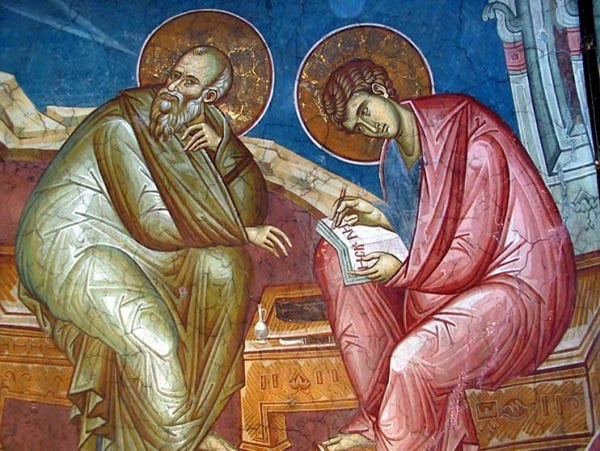
John & James are mentioned in all four gospels. 


Mark 1:19-20:
As he went a little farther, he saw James son of Zebedee and his brother John, who were in their boat mending the nets. Immediately he called them, and they left their father Zebedee in the boat with the hired men and followed him.

Mark 3:17: James son of Zebedee and John the brother of James (to whom he gave the name Boanerges, that is, Sons of Thunder),

Mark 5:37: He allowed no one to follow him except Peter, James, and John, the brother of James.. 

Mark 9:2-8: Six days later, Jesus took with him Peter and James and John and led them up a high mountain apart, by themselves. And he was transfigured before them, and his clothes became dazzling bright, such as no one on earth could brighten them. And there appeared to them Elijah with Moses, who were talking with Jesus.  Then Peter said to Jesus, “Rabbi, it is good for us to be here; let us set up three tents: one for you, one for Moses, and one for Elijah.” He did not know what to say, for they were terrified. Then a cloud overshadowed them, and from the cloud there came a voice, “This is my Son, the Beloved; listen to him!” Suddenly when they looked around, they saw no one with them any more, but only Jesus.

Mark 10:35-37: James and John, the sons of Zebedee, came forward to him and said to him, “Teacher, we want you to do for us whatever we ask of you.” And he said to them, “What is it you want me to do for you?” And they said to him, “Appoint us to sit, one at your right hand and one at your left, in your glory.. 

Mark 13:3: When he was sitting on the Mount of Olives opposite the temple, Peter, James, John, and Andrew asked him privately,. 

Mark 14:32-34: They went to a place called Gethsemane, and he said to his disciples, “Sit here while I pray.” He took with him Peter and James and John and began to be distressed and agitated. And he said to them, “My soul is deeply grieved, even to death; remain here, and keep awake.” 

Matthew 4:18-22: As he walked by the Sea of Galilee, he saw two brothers, Simon, who is called Peter, and Andrew his brother, casting a net into the sea—for they were fishers. And he said to them, “Follow me, and I will make you fishers of people.” Immediately they left their nets and followed him. As he went from there, he saw two other brothers, James son of Zebedee and his brother John, in the boat with their father Zebedee, mending their nets, and he called them. Immediately they left the boat and their father and followed him.

Matthew 10:2-4: These are the names of the twelve apostles: first, Simon, also known as Peter, and his brother Andrew; James son of Zebedee and his brother John; Philip and Bartholomew; Thomas and Matthew the tax collector; James son of Alphaeus and Thaddaeus; Simon the Cananaean and Judas Iscariot, the one who betrayed him. 

Matthew 17:1-8: Six days later, Jesus took with him Peter and James and his brother John and led them up a high mountain, by themselves. And he was transfigured before them, and his face shone like the sun, and his clothes became bright as light. Suddenly there appeared to them Moses and Elijah, talking with him. Then Peter said to Jesus, “Lord, it is good for us to be here; if you wish, I will set up three tents here, one for you, one for Moses, and one for Elijah.” While he was still speaking, suddenly a bright cloud overshadowed them, and a voice from the cloud said, “This is my Son, the Beloved; with him I am well pleased; listen to him!” When the disciples heard this, they fell to the ground and were overcome by fear. But Jesus came and touched them, saying, “Get up and do not be afraid.” And when they raised their eyes, they saw no one except Jesus himself alone.

Matthew 26:36-37:  Then Jesus went with them to a place called Gethsemane, and he said to his disciples, “Sit here while I go over there and pray.” He took with him Peter and the two sons of Zebedee and began to be grieved and agitated.

Luke 5:10: ...and so also were James and John, sons of Zebedee, who were partners with Simon. Then Jesus said to Simon, “Do not be afraid; from now on you will be catching people.”

Luke 6:14: Simon, whom he named Peter, and his brother Andrew, and James, and John, and Philip, and Bartholomew,

Luke 8:51: When he came to the house, he did not allow anyone to enter with him, except Peter, John, and James and the child’s father and mother.

Luke 9:28-36: Now about eight days after these sayings Jesus took with him Peter and John and James and went up on the mountain to pray. And while he was praying, the appearance of his face changed, and his clothes became as bright as a flash of lightning. Suddenly they saw two men, Moses and Elijah, talking to him. They appeared in glory and were speaking about his exodus, which he was about to fulfill in Jerusalem. Now Peter and his companions were weighed down with sleep, but as they awoke they saw his glory and the two men who stood with him. Just as they were leaving him, Peter said to Jesus, “Master, it is good for us to be here; let us set up three tents: one for you, one for Moses, and one for Elijah,” not realizing what he was saying. While he was saying this, a cloud came and overshadowed them, and they were terrified as they entered the cloud. Then from the cloud came a voice that said, “This is my Son, my Chosen; listen to him!” When the voice had spoken, Jesus was found alone. And they kept silent and in those days told no one any of the things they had seen.

Luke 9:53-56: but they did not receive him because his face was set toward Jerusalem. When his disciples James and John saw this, they said, “Lord, do you want us to command fire to come down from heaven and consume them?” But he turned and rebuked them. Then they went on to another village.

John 13:23: One of his disciples, whom Jesus loved, was reclining next to him.

John 19:26: When Jesus saw his mother and the disciple whom he loved standing nearby, he said to his mother, “Woman, here is your son." 

John 20:2: So, he got up and went to the tomb. Simon Peter followed him.

John 21:7, 20, 24: That disciple whom Jesus loved said to Peter, “It is the Lord!” When Simon Peter heard that it was the Lord, he put on his outer garment, for he had taken it off, and jumped into the sea. ...Peter turned and saw the disciple whom Jesus loved following them; he was the one who had reclined next to Jesus at the supper and had said, “Lord, who is it that is going to betray you?” ...This is the disciple who is testifying to these things and has written them, and we know that his testimony is true.

The Apostle Thomas appears only in the list in Mark, Matthew and Luke but a larger role in the Gospel of John. 

John 11:16: Thomas, who was called the Twin, said to his fellow disciples, “Let us also go, that we may die with him.” 

John 14:5: Thomas said to him, “Lord, we do not know where you are going. How can we know the way?”

John 20:24-29: But Thomas (who was called the Twin), one of the twelve, was not with them when Jesus came. So the other disciples told him, “We have seen the Lord.” But he said to them, “Unless I see the mark of the nails in his hands and put my finger in the mark of the nails and my hand in his side, I will not believe.”
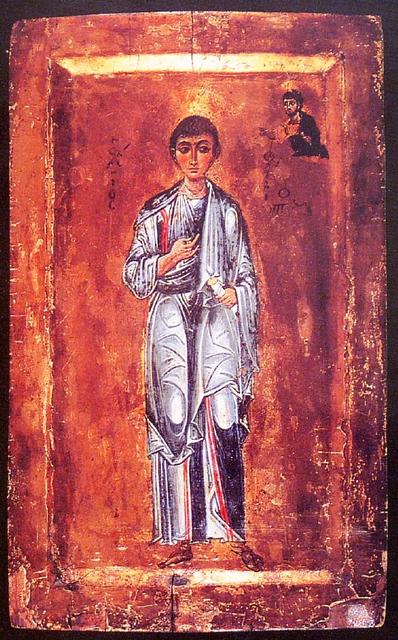
The Apostle Philip appears only in the list in Mark, Matthew and Luke but a larger role in the Gospel of John. 

John 1:43-46: The next day Jesus decided to go to Galilee. He found Philip and said to him, “Follow me.” Now Philip was from Bethsaida, the city of Andrew and Peter. Philip found Nathanael and said to him, “We have found him about whom Moses in the Law and also the Prophets wrote, Jesus son of Joseph from Nazareth.” Nathanael said to him, “Can anything good come out of Nazareth?” Philip said to him, “Come and see.”

John 6:5-6: When he looked up and saw a large crowd coming toward him, Jesus said to Philip, “Where are we to buy bread for these people to eat?” He said this to test him, for he himself knew what he was going to do.

John 12:20-22: Now among those who went up to worship at the festival were some Greeks. They came to Philip, who was from Bethsaida in Galilee, and said to him, “Sir, we wish to see Jesus.” Philip went and told Andrew, then Andrew and Philip went and told Jesus.

Tuesday, March 18, 2025

The Sligo Presbyterian Church Celebration Service - Sunday, March 16, 2025

As we approach Easter, Christians all over the world focus their attention on the cross and tomb. And because of this, the usual challenge to follow Jesus just doesn’t seem appropriate. I mean, let’s face it, we’re not Jesus, and we usually stop short of going all the way to the cross and tomb; therefore, using him as an example just doesn’t seem particularly helpful, not as we deal with issues much less dramatic than the crucifixion and the resurrection. But fortunately, Jesus wasn’t the only character in this story. In fact, there were some who just might provide examples that we should follow while there were others whose actions and attitudes we might want to avoid. And this will be our focus on each of the Sundays leading up to and including Easter. 

You see, using the Gospel of John, we’ll look at the following six men and women so that we might better understand who they were, what role they played in this story, and how we might use their examples in our own lives:

  • March 16 – Philip
  • March 23 – Peter
  • March 30 – Annas
  • April 6 – Pilate
  • April 13 – Nicodemus
  • April 20 – Mary Magdalene 

On Sunday, March 16, we looked at the Apostle Philip and discussed how we might connect people to Jesus. Below is a  video of the service, the podcast of the sermon and the service bulletin. You can stream the service by going to the Sligo Presbyterian Church YouTube Channel on Sundays at 10:00 a.m. (EDT).  You can hear a podcast of the service at the Sligo Presbyterian Church YouTube Channel or the Sligo Presbyterian Spotify Page.


Sunday's Message - Beside(s) Jesus: The Apostle Philip

As we approach Easter, Christians all over the world focus their attention on the cross and tomb. And because of this, the usual challenge to follow Jesus just doesn’t seem appropriate. I mean, let’s face it, we’re not Jesus, and we usually stop short of going all the way to the cross and tomb; therefore, using him as an example just doesn’t seem particularly helpful, not as we deal with issues much less dramatic than the crucifixion and the resurrection. But fortunately, Jesus wasn’t the only character in this story. In fact, there were some who just might provide examples that we should follow while there were others whose actions and attitudes we might want to avoid. And this will be our focus on each of the Sundays leading up to and including Easter. 

You see, using the Gospel of John, we’ll look at the following six men and women so that we might better understand who they were, what role they played in this story, and how we might use their examples in our own lives:

  • March 16 – Philip
  • March 23 – Peter
  • March 30 – Annas
  • April 6 – Pilate
  • April 13 – Nicodemus
  • April 20 – Mary Magdalene 

On Sunday, March 16, we looked at the Apostle Philip and discussed how we might connect people to Jesus. Below is the podcast and text of the sermon. You can stream the service by going to the Sligo Presbyterian Church YouTube Channel on Sundays at 10:00 a.m. (EDT).  You can hear a podcast of the service at the Sligo Presbyterian Church YouTube Channel or the Sligo Presbyterian Spotify Page.

Although we entered the season of Lent a week ago last Wednesday, this morning we’re starting a series of messages that focus on the last week in the life of Jesus and the resurrection that followed. And as you can see in the bulletin, the title of the series is Beside(s)Jesus: Other Characters Around the Cross and Tomb. And trust me, there’s a reason for this approach, and for me, it comes down to something I think most Christians have heard either from the pulpit or in conversations with other believers, an idea that Leif Hetland sort of summarized when he said, “If you’re not following Jesus, you’re not really a disciple.” Of course, he didn’t come up with this all by himself. Remember, according to Mark, Jesus said this to his disciples: 

If any of you want to be my followers, you must forget about yourself. You must take up your cross and follow me. [Mark 8:34, CEV]

And so, following Jesus would seem to be good, solid Biblical advice. But I’ll tell you, I think there’s a problem when we try to use it this time of year. I mean, we’re now focused on Jesus heading to the cross and the tomb. Good night nurse, that’s what Lent is all about. But right here’ the problem: we’re not Jesus and the odds are certainly against any of us facing our own crucifixion in the next six weeks, much less our own resurrection. And for that reason, for me to tell you to follow the example set by Jesus at this particular point in his ministry might not be all that helpful. 

But fortunately, the one who was lifted up on a cross, well, he’s not the only example that we can follow. You see, there were some other people besides Jesus who went with him to the cross and tomb, and I’m talking about a couple of apostles and a disciple, a chief priest and a Roman governor. There was even a Pharisee who was involved in actually burying Jesus. And because they were there, I think all these folks can offer us some kind of life lesson. And so, in the next seven services, we’re going to focus on these men and women, looking for examples that we might follow as well as examples we should probably avoid. And hopefully, when we tie this up on Easter morning, we’ll have some clear direction as we do the best we can, living our faith within the world that we have even if it’s not exactly the world that we want. And so that we don’t have to deal with some of the different ways these folks are presented in the different gospels, we’re going to stick to what the Evangelist John had to say.

And this morning, we’re going to start this series by looking at Philip, an apostle who’s barely mentioned in Matthew, Mark and Luke, but who plays a much bigger role in the Gospel of John, particularly as Jesus approached the cross. And I’ll tell you, I think it’s probably a good thing that we’re starting with him, because I think he offers a great example of how we might become better at doing something that we often find difficult and uncomfortable. This morning, we’re looking at the Apostle Philip. And to do that, we’ll be answering three questions: First, what role did Philip play in the passion story, in other words, the last week of Jesus’s life? And then, second, according to the rest of John, who was Philip? And then, third, how can we apply Philip’s example to our own lives? Now that’s what we’re going to cover this morning. But I’ll tell you, in future weeks, we’ll be doing the same kind of thing with each of the other five men and women on our list.

And like I said, we’ll start by spending a little time talking about Philip’s role in Jesus’s passion. In other words, what part did this particular apostle play in the last week of Jesus’s life here on earth, you know, as he prepared himself to be lifted up on the cross? And I’ll tell you, according to what the Evangelist John wrote, Philip’s name comes up twice in those last seven days. For example, right after Jesus entered Jerusalem on the first Palm Sunday, this happened:

Some Greeks had gone to Jerusalem to worship during Passover. Philip from Bethsaida in Galilee was there too. So they went to him and said, “Sir, we would like to meet Jesus.” Philip told Andrew. Then the two of them went to Jesus and told him. [John 12:20-21, CEV]

That’s one. And then, a little later, after they’d shared their last meal...

Jesus said to his disciples, “Don’t be worried! Have faith in God and have faith in me. There are many rooms in my Father’s house. I wouldn’t tell you this, unless it was true. I am going there to prepare a place for each of you. After I have done this, I will come back and take you with me. Then we will be together. You know the way to where I am going.”

Thomas said, “Lord, we don’t even know where you are going! How can we know the way?”

“I am the way, the truth, and the life!” Jesus answered. “Without me, no one can go to the Father. If you had really known me, you would have known the Father. But from now on, you do know him, and you have seen him.”

Philip said, “Lord, show us the Father. That is all we need.”

Jesus replied:

Philip, I have been with you for a long time. Don’t you know who I am? If you have seen me, you have seen the Father. How can you ask me to show you the Father? Don’t you believe that I am one with the Father and that the Father is one with me? What I say isn’t said on my own. The Father who lives in me does these things. [John 14:1-10, CEV]

Now those are the two passages during this last week in which Philip is mentioned.

And I’ll tell you, I think in both cases he was actually doing something very similar. You see, in my opinion, in both situations he was connecting people to Jesus. Now, that was certainly the case when those Greeks came to him, wanting to see Christ. I mean, it was Philip and Andrew who sort of connected these outsiders to the one who had just been greeted by a crowd, waving palm branches and shouting:

“Hooray!
God bless the one who comes
    in the name of the Lord!
God bless the King
    of Israel!” [John 12:13b, CEV]

You see, for those Greeks, Philip was their connection to Jesus.

And I’ll tell you, he did the same sort of thing for the other disciples, when “[he] said, ‘Lord, show us the Father. That’s all we need.’” [John 14:8, CEV] You see, I believe he was putting into words a desire that they all had, to see the Father. And that’s why he used “us” and “we” and not “me” and “I.” You see, Philip connected folks with Christ, and for me, that was the role he played in the passion story.

And I’ll tell you, that’s actually consistent with who Philip was according to John. In fact, early in the gospel, Philip did the same sort of thing he did with the Greeks and the disciples. As a matter of fact, I think you could say that’s exactly who Philip was right from the beginning. I mean, just listen to what the Evangelist John wrote in the first chapter. 

The next day Jesus decided to go to Galilee. There he met Philip, who was from Bethsaida, the hometown of Andrew and Peter. Jesus said to Philip, “Follow me.”

Philip then found Nathanael and said, “We have found the one that Moses and the Prophets wrote about. He is Jesus, the son of Joseph from Nazareth.”

Nathanael asked, “Can anything good come from Nazareth?”

Philip answered, “Come and see.” [John 1:43-46, CEV]

Now that’s what happened, and just think about what this says about Philip. I mean, when Jesus told him to follow, Philip responded. But that’s not all, he also shared what he believed. I mean, according to the Evangelist, before he did anything else, he found Nathanael and shared the identity of Jesus with him. And you know, after he’d responded but before he shared, Philip sure seemed to understand an awful lot. I mean, based on what he said, he understood exactly who Jesus was, both theologically and personally. In other words, his message reflected some genuine knowledge, not only that Jesus was the one about whom Moses and prophets wrote, but he was also the son of Joseph from Nazareth. You see, as he was doing the same kind of thing that he’d later do for some Greeks and the other disciples, this Apostle connected Nathanael to Christ by responding and by understanding and by sharing. Now, for the Evangelist John, I think that’s exactly who Philip was. Which also means, that’s the lesson that he left for us.

And so, how can we apply Philip’s example to our own lives? In other words, how can we as a community but also as individual believers connect others to Jesus Christ, especially during this time before Easter? Now that’s the question. And even though I’m sure there are all kinds of answers, I think the personal example of Philip might be an excellent place to start. You see, as we relate to the world around us, I think we can actually do the three things Philip did first with Nathanael and then, I believe, with the Greeks and with the other disciples. 

You see, first, like Philip, we can respond, and I’m talking about responding to Jesus’s call to us. But let me be clear, I’m not talking about one response at one point in our lives. Instead, for me, it’s about all those responses that we’re constantly making throughout our time here, and I’m talking about our response to Jesus calling us to follow and our response to his assurance that right here and now he’s prepared a place for us so that we don’t have to live alone and of course our response to this very clear command Jesus made to all the disciples:

But I am giving you a new command. You must love each other, just as I have loved you. If you love each other, everyone will know that you are my disciples. [John 13:34-35, CEV]

You see, first, like Philip, we can respond.

And then second, we can understand. Man, we can understand who Jesus is and why he came and how we might be changed by listening to what he taught. We can understand. And I’ll tell you, I think that’s crucial, because connecting someone with a name means absolutely nothing unless that person knows what that name means. And trust me, we are never going to be able to do that if we don’t understand what that name represents. In other words, in claiming Philip’s example, we might need to do what’s necessary to learn more about Jesus Christ before we start talking about him, to learn more about his life and his message and his meaning and to learn more about how his coming was a continuation of what God started in the beginning. Man, we really need to learn in order to understand. But before anyone says to him or herself, “Learning at my age is just too hard,” remember, according to Jesus, we’ve actually got a leg up. Just listen to what he said to his disciples:

I have told you these things while I am still with you. But the Holy Spirit will come and help you, because the Father will send the Spirit to take my place. The Spirit will teach you everything and will remind you of what I said while I was with you.

I give you peace, the kind of peace only I can give. It isn’t like the peace this world can give. So don’t be worried or afraid. [John 14:25-27, CEV]

I’m telling you, like Philip, we can understand. And that’s the second thing we can do.

And third, we can share. You see, we can respond to the call we’ve received and then take what we understand about Jesus and share it with others, just like Philip did with Nathanael. And this sharing, man, it can be as simple as inviting a friend or family member to the carry-in dinner on March 30 or to the Palm Sunday lunch on April 13 or to the Maundy Thursday and the Good Friday and the Easter services coming up next month. As a matter of fact, if you do Facebook, you can share an announcement or a thought or a message from our church page on your own timeline, and I’ve got to tell you, there are precious few things as easy as that. But I’ll tell you something else, I think we also need to come up with activities that might appeal to folks who may not be here this morning. Now don’t get me wrong, there’s nothing bad about doing things that we like doing, you know, stuff that we just plain like and that makes us feel warm and fuzzy and that brings back a whole bunch of pleasant memories. That’s fine, so long as we’re also intentionally thinking about how we might reach out to folks who don’t share our memories or our tastes or our sense of comfort. As a friend of mine used to say, “If we’re serious about sharing the Gospel in Korea, we really need to learn Korean,” something that I believe Jesus did when he shared with a Samaritan woman whose life involved drawing water from a certain well. 

Jesus asked her, “Would you please give me a drink of water?”

“You are a Jew,” she replied, “and I am a Samaritan woman. How can you ask me for a drink of water when Jews and Samaritans won’t have anything to do with each other?” 

Jesus answered, “You don’t know what God wants to give you, and you don’t know who is asking you for a drink. If you did, you would ask me for the water that gives life.” [John 4:8b-10, CEV]

You see, just like Philip, third, we can share.

Now in future weeks, we’ll look at other people who were involved in Jesus’s journey to the cross and tomb. For example, next Sunday, we’ll talk about what we can learn from the Apostle Peter as offered in the Gospel of John. But before we do that, let’s claim the example on which we’ve been focused this morning. I mean, let’s recognize that, whether it involved Greeks or disciples or a skeptical guy like Nathanael, one of the Apostles was all about connecting folks with Jesus. And then let’s claim his example by doing the same sort of thing he did, namely by responding to the call and by understanding Jesus and his meaning and by sharing the message to others. You see, during the next six weeks and beyond, let’s intentionally follow in the footsteps of the Apostle Philip. 

Friday, March 14, 2025

The Bulletin for the SPC Worship Service - Sunday, March 16, 2025

As we approach Easter, Christians all over the world focus their attention on the cross and tomb. And because of this, the usual challenge to follow Jesus just doesn’t seem appropriate. I mean, let’s face it, we’re not Jesus, and we usually stop short of going all the way to the cross and tomb; therefore, using him as an example just doesn’t seem particularly helpful, not as we deal with issues much less dramatic than the crucifixion and the resurrection. But fortunately, Jesus wasn’t the only character in this story. In fact, there were some who just might provide examples that we should follow while there were others whose actions and attitudes we might want to avoid. And this will be our focus on each of the Sundays leading up to and including Easter. 

You see, using the Gospel of John, we’ll look at the following six men and women so that we might better understand who they were, what role they played in this story, and how we might use their examples in our own lives:

  • March 16 – Philip
  • March 23 – Peter
  • March 30 – Annas
  • April 6 – Pilate
  • April 13 – Nicodemus
  • April 20 – Mary Magdalene 
During the first message, we'll focus on the Apostle Philip. Below is the bulletin for the service. You can stream the service by going to the Sligo Presbyterian Church YouTube Channel on Sundays at 10:00 a.m. (EDT).  You can hear a podcast of the service at the Sligo Presbyterian Church YouTube Channel or the Sligo Presbyterian Spotify Page.


Bible Readings for September 19, 2026

Study, Learn and Grow: Bible Readings for September 19, 2026 :   Let's read the Bible together in the next year. Today, our passages ar...