In this blog, we'll focus on the working being done at Sligo Presbyterian Church, Sligo, Pennsylvania. We'll also look at what's happening in Sligo, Rimersburg, Clarion, and all the other communities served by our congregation.
Showing posts with label Parable of the Prodigal Son. Show all posts
Showing posts with label Parable of the Prodigal Son. Show all posts
At Sligo Presbyterian Church, we're using the Gospel of Luke to discuss the journey made by Jesus Christ to the city of Jerusalem, from his birth to his ascension. During our time together, we’ll look at the following:
Session 23 - The Problem with Wealth (Luke 16:1-31)
Session 24 - Forgiveness and Faith (Luke 17:1-19)
Session 25 - The Kingdom Is Coming (Luke 17:20–18:8)
Session 26 - Rich and Poor (Luke 18:9-18:30)
Session 27 - Approaching the City (Luke 18:31–19:28)
Session 28 - The Entry into Jerusalem (Luke 19:29-48)
Session 29 - Jesus in the Temple Again (Luke 20:1–21:4)
Session 30 - The Coming End (Luke 21:5-38)
Session 31 - The Last Supper (Luke 22:1-20)
Session 32 - Parting Words (Luke 22:21-38)
Session 33 - Prayer, Arrest and Denials (Luke 22:39-62)
Session 34 - Trials (Luke 22:63–23:25)
Session 35 - Crucifixion and Death (Luke 23:26-56)
Session 36 - Empty Tomb and Emmaus Road (Luke 24:1-35)
Session 37 - The Blessing and Departure (Luke 24:36-53)
In our twenty-second session, we looked at Luke 15:1-32 and talked about the parables of the lost sheep, the lost coin and the lost son.The discussion and passage are below.
Now all the tax collectors and sinners were coming near to listen to him. And the Pharisees and the scribes were grumbling and saying, “This fellow welcomes sinners and eats with them.”
So he told them this parable: “Which one of you, having a hundred sheep and losing one of them, does not leave the ninety-nine in the wilderness and go after the one that is lost until he finds it? And when he has found it, he lays it on his shoulders and rejoices. And when he comes home, he calls together his friends and neighbors, saying to them, ‘Rejoice with me, for I have found my lost sheep.’ Just so, I tell you, there will be more joy in heaven over one sinner who repents than over ninety-nine righteous persons who need no repentance.
“Or what woman having ten silver coins, if she loses one of them, does not light a lamp, sweep the house, and search carefully until she finds it? And when she has found it, she calls together her friends and neighbors, saying, ‘Rejoice with me, for I have found the coin that I had lost.’ Just so, I tell you, there is joy in the presence of the angels of God over one sinner who repents.”
Then Jesus said, “There was a man who had two sons. The younger of them said to his father, ‘Father, give me the share of the wealth that will belong to me.’ So he divided his assets between them. A few days later the younger son gathered all he had and traveled to a distant region, and there he squandered his wealth in dissolute living. When he had spent everything, a severe famine took place throughout that region, and he began to be in need. So he went and hired himself out to one of the citizens of that region, who sent him to his fields to feed the pigs. He would gladly have filled his stomach with the pods that the pigs were eating, and no one gave him anything. But when he came to his senses he said, ‘How many of my father’s hired hands have bread enough and to spare, but here I am dying of hunger! I will get up and go to my father, and I will say to him, “Father, I have sinned against heaven and before you; I am no longer worthy to be called your son; treat me like one of your hired hands.” ’ So he set off and went to his father. But while he was still far off, his father saw him and was filled with compassion; he ran and put his arms around him and kissed him. Then the son said to him, ‘Father, I have sinned against heaven and before you; I am no longer worthy to be called your son.’ But the father said to his slaves, ‘Quickly, bring out a robe—the best one—and put it on him; put a ring on his finger and sandals on his feet. And get the fatted calf and kill it, and let us eat and celebrate, for this son of mine was dead and is alive again; he was lost and is found!’ And they began to celebrate.
“Now his elder son was in the field, and as he came and approached the house, he heard music and dancing. He called one of the slaves and asked what was going on. He replied, ‘Your brother has come, and your father has killed the fatted calf because he has got him back safe and sound.’ Then he became angry and refused to go in. His father came out and began to plead with him. But he answered his father, ‘Listen! For all these years I have been working like a slave for you, and I have never disobeyed your command, yet you have never given me even a young goat so that I might celebrate with my friends. But when this son of yours came back, who has devoured your assets with prostitutes, you killed the fatted calf for him!’ Then the father said to him, ‘Son, you are always with me, and all that is mine is yours. But we had to celebrate and rejoice, because this brother of yours was dead and has come to life; he was lost and has been found.’ ”
On Thursdays, Pastor Rudiger reads a story to the children who attend the Dancer’s Studio Performing Arts Christian Preschool in Clarion, Pennsylvania. On February 15, he shared with the children the story of the lost son. Below is a recording of their time together.
Join us as we use the Gospel of Luke to discuss the journey made by Jesus Christ to the city of Jerusalem, from his birth to his ascension. During our time together, we’ll look at the following:
Session 12 - Approaching the City (Luke 18:31–19:28)
Session 13 - Ministry in Jerusalem (Luke 19:29–21:38)
Session 14 - The Passion of the Christ [Part 1] (Luke 22:1-71)
Session 15 - The Passion of the Christ [Part 2] (Luke 23:1-56)
Session 16 - Resurrection (Luke 24:1-53)
During our tenth session in the series, we used Luke 15:1–16:31 to discuss how disciples are expected to use their possessions. The discussion and passage are below:
Luke 15:1–16:31
Now all the tax collectors and sinners were coming near to listen to him. And the Pharisees and the scribes were grumbling and saying, “This fellow welcomes sinners and eats with them.” So he told them this parable: “Which one of you, having a hundred sheep and losing one of them, does not leave the ninety-nine in the wilderness and go after the one that is lost until he finds it? When he has found it, he lays it on his shoulders and rejoices. And when he comes home, he calls together his friends and neighbors, saying to them, ‘Rejoice with me, for I have found my sheep that was lost.’ Just so, I tell you, there will be more joy in heaven over one sinner who repents than over ninety-nine righteous persons who need no repentance. “Or what woman having ten silver coins, if she loses one of them, does not light a lamp, sweep the house, and search carefully until she finds it? When she has found it, she calls together her friends and neighbors, saying, ‘Rejoice with me, for I have found the coin that I had lost.’ Just so, I tell you, there is joy in the presence of the angels of God over one sinner who repents.”
Then Jesus said, “There was a man who had two sons. The younger of them said to his father, ‘Father, give me the share of the property that will belong to me.’ So he divided his property between them. A few days later the younger son gathered all he had and traveled to a distant country, and there he squandered his property in dissolute living. When he had spent everything, a severe famine took place throughout that country, and he began to be in need. So he went and hired himself out to one of the citizens of that country, who sent him to his fields to feed the pigs. He would gladly have filled himself with the pods that the pigs were eating; and no one gave him anything. But when he came to himself he said, ‘How many of my father’s hired hands have bread enough and to spare, but here I am dying of hunger! I will get up and go to my father, and I will say to him, “Father, I have sinned against heaven and before you; I am no longer worthy to be called your son; treat me like one of your hired hands.”’ So he set off and went to his father. But while he was still far off, his father saw him and was filled with compassion; he ran and put his arms around him and kissed him. Then the son said to him, ‘Father, I have sinned against heaven and before you; I am no longer worthy to be called your son.’ But the father said to his slaves, ‘Quickly, bring out a robe—the best one—and put it on him; put a ring on his finger and sandals on his feet. And get the fatted calf and kill it, and let us eat and celebrate; for this son of mine was dead and is alive again; he was lost and is found!’ And they began to celebrate. “Now his elder son was in the field; and when he came and approached the house, he heard music and dancing. He called one of the slaves and asked what was going on. He replied, ‘Your brother has come, and your father has killed the fatted calf, because he has got him back safe and sound.’ Then he became angry and refused to go in. His father came out and began to plead with him. But he answered his father, ‘Listen! For all these years I have been working like a slave for you, and I have never disobeyed your command; yet you have never given me even a young goat so that I might celebrate with my friends. But when this son of yours came back, who has devoured your property with prostitutes, you killed the fatted calf for him!’ Then the father said to him, ‘Son, you are always with me, and all that is mine is yours. But we had to celebrate and rejoice, because this brother of yours was dead and has come to life; he was lost and has been found.’”
Then Jesus said to the disciples, “There was a rich man who had a manager, and charges were brought to him that this man was squandering his property. So he summoned him and said to him, ‘What is this that I hear about you? Give me an accounting of your management, because you cannot be my manager any longer.’ Then the manager said to himself, ‘What will I do, now that my master is taking the position away from me? I am not strong enough to dig, and I am ashamed to beg. I have decided what to do so that, when I am dismissed as manager, people may welcome me into their homes.’ So, summoning his master’s debtors one by one, he asked the first, ‘How much do you owe my master?’ He answered, ‘A hundred jugs of olive oil.’ He said to him, ‘Take your bill, sit down quickly, and make it fifty.’ Then he asked another, ‘And how much do you owe?’ He replied, ‘A hundred containers of wheat.’ He said to him, ‘Take your bill and make it eighty.’ And his master commended the dishonest manager because he had acted shrewdly; for the children of this age are more shrewd in dealing with their own generation than are the children of light. And I tell you, make friends for yourselves by means of dishonest wealth so that when it is gone, they may welcome you into the eternal homes. “Whoever is faithful in a very little is faithful also in much; and whoever is dishonest in a very little is dishonest also in much. If then you have not been faithful with the dishonest wealth, who will entrust to you the true riches? And if you have not been faithful with what belongs to another, who will give you what is your own? No slave can serve two masters; for a slave will either hate the one and love the other, or be devoted to the one and despise the other. You cannot serve God and wealth.” The Pharisees, who were lovers of money, heard all this, and they ridiculed him. So he said to them, “You are those who justify yourselves in the sight of others; but God knows your hearts; for what is prized by human beings is an abomination in the sight of God. “The law and the prophets were in effect until John came; since then the good news of the kingdom of God is proclaimed, and everyone tries to enter it by force. But it is easier for heaven and earth to pass away, than for one stroke of a letter in the law to be dropped. “Anyone who divorces his wife and marries another commits adultery, and whoever marries a woman divorced from her husband commits adultery.
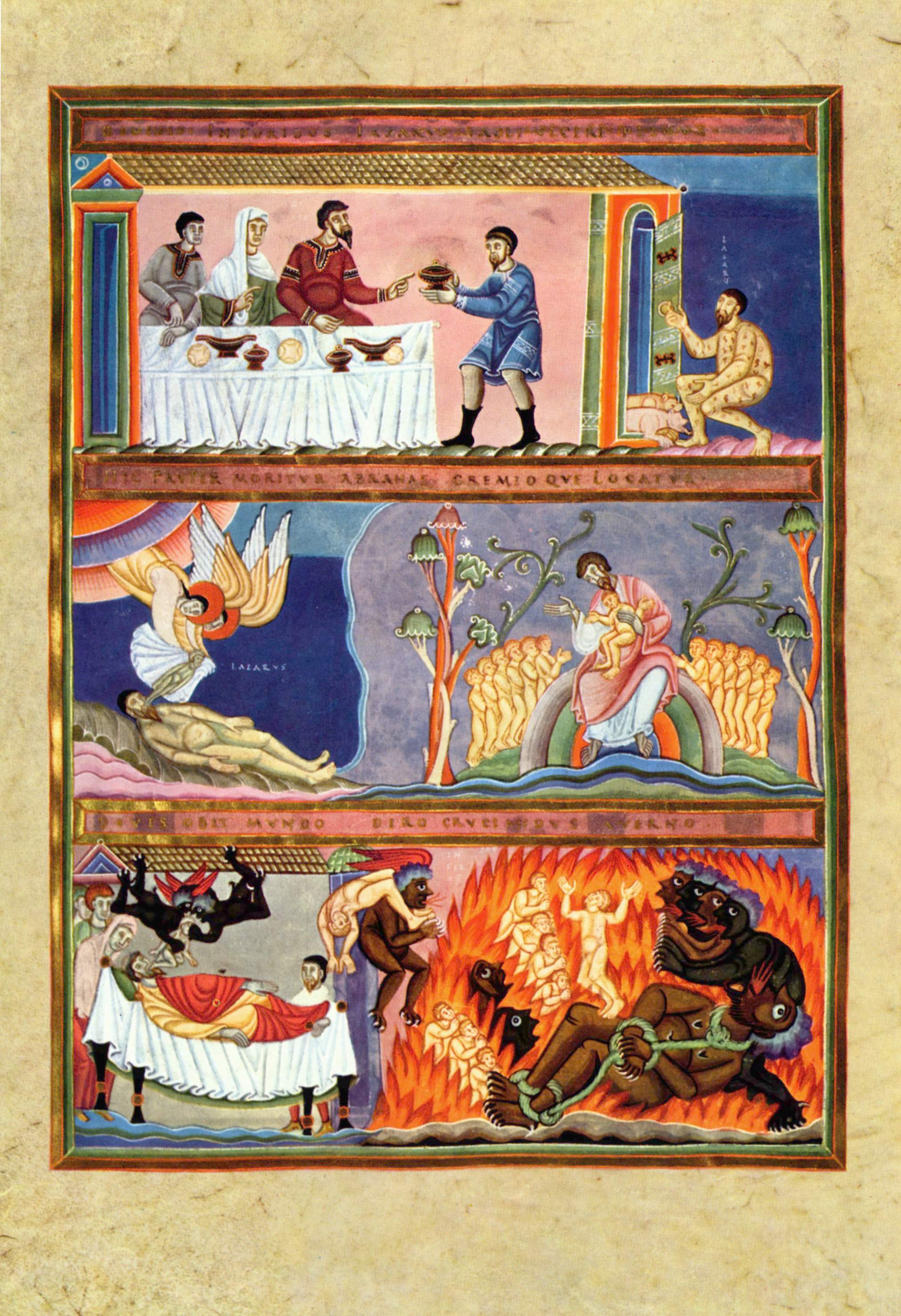
“There was a rich man who was dressed in purple and fine linen and who feasted sumptuously every day. And at his gate lay a poor man named Lazarus, covered with sores, who longed to satisfy his hunger with what fell from the rich man’s table; even the dogs would come and lick his sores. The poor man died and was carried away by the angels to be with Abraham. The rich man also died and was buried. In Hades, where he was being tormented, he looked up and saw Abraham far away with Lazarus by his side. He called out, ‘Father Abraham, have mercy on me, and send Lazarus to dip the tip of his finger in water and cool my tongue; for I am in agony in these flames.’ But Abraham said, ‘Child, remember that during your lifetime you received your good things, and Lazarus in like manner evil things; but now he is comforted here, and you are in agony. Besides all this, between you and us a great chasm has been fixed, so that those who might want to pass from here to you cannot do so, and no one can cross from there to us.’ He said, ‘Then, father, I beg you to send him to my father’s house— for I have five brothers—that he may warn them, so that they will not also come into this place of torment.’ Abraham replied, ‘They have Moses and the prophets; they should listen to them.’ He said, ‘No, father Abraham; but if someone goes to them from the dead, they will repent.’ He said to him, ‘If they do not listen to Moses and the prophets, neither will they be convinced even if someone rises from the dead.’”
October 30 – The Unrighteous Manager (Luke 16:1-9)
November 6 – The Rich Man and Lazarus (Luke 16:19-31)
November 13 – The Pharisee and the Tax Collector (Luke 18:9-14)
In our second service, we looked at the Parable of the Lost Son. Below is the sermon and a recording of the sermon:
*******
I’ve got to tell you; I find northwestern Pennsylvania weather fascinating. I mean, I’ve lived in quite a few places, and whether it’s south Louisiana or eastern Montana, folks who live there have all said the exact same thing: If you don’t like the weather around here, just wait five minutes, and it’ll change. But I’ve got to tell you, moving from snow and the low thirties to the low seventies and sunshine in about five days, man, that’s pretty impressive. Of course, we all know, the warm temperature, now it’s not going to last. As a matter of fact, today could be the last gasp of summer, although “if you don’t like the weather around here...” Well, y’all know the rest.
Anyway, on this bright, warm Sunday morning, I’m delighted that you’re here, as we look at another one of the parables found only in the Gospel of Luke. Now we started this series last week when we looked at the Parable of the Good Samaritan and talked about how we might never really know what it means to love our neighbors unless we intentionally put ourselves in the position of a person who desperately needs our help. Now that’s what we did last Sunday.
And today, we’ll look at another parable that, like the Good Samaritan, is probably pretty familiar to most folks both within and outside the church, and I’m talking about the Parable of the Lost or the Prodigal Son. Now that’s what it’s called, but you know, I’m not sure that’s the best title for this particular story. You see, saying that it’s about a wayward son sort of encourages us to concentrate our attention on his actions, when I think the focus should probably be on the father. And I’ll tell you, that’s what we’re going to do this morning. We’re going to look at what the father did within this story and to use it to shape how we might respond to our heavenly father. And to do that, I’ll break the message into three parts: first, the context for the parable; and second, the parable itself; and then, third, the application, you know, at how we might apply the story to our own lives. Now that’s the plan.
And you know, it all starts with the context, and in the case of this particular parable, what came before, because nothing happens after. Now this was what the Evangelist Luke wrote:
Tax collectors and sinners were all crowding around to listen to Jesus. So the Pharisees and the teachers of the Law of Moses started grumbling, “This man is friendly with sinners. He even eats with them.”
Then Jesus told them this story:
If any of you has 100 sheep, and one of them gets lost, what will you do? Won’t you leave the 99 in the field and go look for the lost sheep until you find it? And when you find it, you will be so glad that you will put it on your shoulder and carry it home. Then you will call in your friends and neighbors and say, “Let’s celebrate! I’ve found my lost sheep.”
Jesus said, “In the same way there is more happiness in heaven because of one sinner who turns to God than over 99 good people who don’t need to.”
Jesus told the people another story:
What will a woman do if she has ten silver coins and loses one of them? Won’t she light a lamp, sweep the floor, and look carefully until she finds it? Then she will call in her friends and neighbors and say, “Let’s celebrate! I’ve found the coin I lost.”
Jesus said, “In the same way God’s angels are happy when even one person turns to him.” [Luke 15:1-10, CEV]
Now that’s what Luke wrote right before the parable of the prodigal.
And let’s take a minute to think about what was happening here. I mean, we’ve got the situation; a bunch of Pharisees and teachers of the Law, in other words, the most moral guys in town were grumbling about Jesus hanging out with tax collectors and sinners, what I think you could call lowlifes in ancient Judea. And since it certainly seems as though this moral indignation prompted Jesus to speak, I think we can assume that what he had to say was related to their attitude, right?
But I want you to notice that he didn’t launch right into the parable of the prodigal; instead, our story is sort of like Return of the Jedi. It was the third instalment in a trilogy, with two very short parables coming before: one dealing with a shepherd and a lost sheep and the other, a woman and a lost coin. And since Jesus told these three one right after the other, I think it’s reasonable to assume that they all have the same lesson for those grumbling Pharisees, especially, since the first two have almost the exact same structure. I mean, in each, Jesus focused on a story about a person who lost something and about what they did to find it and about how they rejoiced when it was found. And then, for each one, Jesus offered a lesson, didn’t he; that God does the same thing when one person turns to him and is found, something that was directly related to all the sinners and tax collectors who were turning to Jesus, folks who caused the most religious people around to grumble. Now that’s the context for the Parable of the Lost Son.
And I’ll tell you, for this reason, it’s really not surprising that, when you look at the first half of the parable we’re looking at this morning, the pattern we saw with the shepherd finding the lost sheep and the woman finding the lost coin, man, it’s the same. Just listen to what Jesus said,
Jesus told them yet another story:
Once a man had two sons. The younger son said to his father, “Give me my share of the property.” So the father divided his property between his two sons.
Not long after that, the younger son packed up everything he owned and left for a foreign country, where he wasted all his money in wild living. He had spent everything, when a bad famine spread through that whole land. Soon he had nothing to eat.
He went to work for a man in that country, and the man sent him out to take care of his pigs. He would have been glad to eat what the pigs were eating, but no one gave him a thing.
Finally, he came to his senses and said, “My father’s workers have plenty to eat, and here I am, starving to death! I will go to my father and say to him, ‘Father, I have sinned against God in heaven and against you. I am no longer good enough to be called your son. Treat me like one of your workers.’”
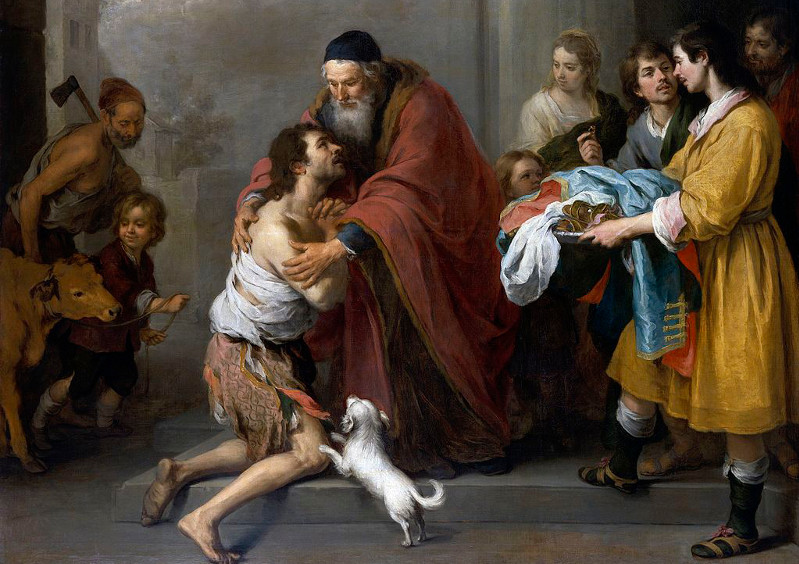
The younger son got up and started back to his father. But when he was still a long way off, his father saw him and felt sorry for him. He ran to his son and hugged and kissed him.
The son said, “Father, I have sinned against God in heaven and against you. I am no longer good enough to be called your son.”
But his father said to the servants, “Hurry and bring the best clothes and put them on him. Give him a ring for his finger and sandals for his feet. Get the best calf and prepare it, so we can eat and celebrate. This son of mine was dead, but has now come back to life. He was lost and has now been found.” And they began to celebrate. [Luke 15:11-24, CEV]
Now, that’s the first half of the third parable. And like I said, I think it followed pretty much the same structure as the first two. For example, it focused on a person who’d lost something, in this case, a father who had lost his son. And although it really didn’t involve the father actively looking, his son sort of found himself and returned to his father. And then it ended with great rejoicing, didn’t it? I mean, not only did the father run out to greet the prodigal with hugs and kisses, he got his son a new suit of clothes and prepared for him a fancy feast and then said, "This son of mine was dead, but has now come back to life. He was lost and has now been found.” [Luke 15:24a, CEV] You see, just like in the first two, there was losing, finding and celebrating, something which Jesus already said that God does when the lost are found.
But you know, it was right here where Jesus threw those grumblers a curve. You see, based on what he’d already said, they probably expected Jesus to offer a lesson, making the same point, now for the third time, you know, how this is what happens in heaven when the lost are found. But that’s not what he did, did he? Instead of just telling them what it meant, Jesus did something that I think is really cool; he sort of brought them into the parable itself. And I’ll tell you, when we grumble about folks coming to Jesus who are just as unacceptable to us as sinners and tax collectors were to the Pharisees, when all we can see are their clothes and their backgrounds, their values and their opinions, their life-styles and their language, when those things blind us to their decision to trust in God and so we grumble, you know, about them being there and calling themselves Christians, maybe Jesus is also bringing us into his parable when he said this:
The older son had been out in the field. But when he came near the house, he heard the music and dancing. So he called one of the servants over and asked, “What’s going on here?”
The servant answered, “Your brother has come home safe and sound, and your father ordered us to kill the best calf.” The older brother got so angry that he would not even go into the house.
His father came out and begged him to go in. But he said to his father, “For years I have worked for you like a slave and have always obeyed you. But you have never even given me a little goat, so that I could give a dinner for my friends. This other son of yours wasted your money on prostitutes. And now that he has come home, you ordered the best calf to be killed for a feast.”
His father replied, “My son, you are always with me, and everything I have is yours. But we should be glad and celebrate! Your brother was dead, but he is now alive. He was lost and has now been found.” [Luke 15:25-32, CEV]
You see, while his father was celebrating his child coming home, his older son just couldn’t get past himself. He couldn’t get past his opinion of and his feelings about his younger brother, a guy who’d actually done what he was accused of doing. Man he couldn’t just let it go. And so he resented the actions of his father, the one for whom he’d worked like a slave and always obeyed. You see, he resented that his father had shown his brother grace and mercy and compassion and had given him much more than he deserved. I mean, instead of bringing down the hammer and treating him like one of his workers, you know, showing tough love and blind justice, his father threw his younger son, the one who’d ripped him off, a party. And that wasn’t fair, not to the older son. And I’ll tell you, because of this, the older son wouldn’t or couldn’t share in his father’s joy. Instead, he stood outside the house, all mad and angry, probably grumbling about how he’d been slighted by the man who was going to give his older son everything. And that’s where the story ends. And there they were, those Pharisees and teachers of the Law, wondering about how the actions and attitude of the older son might apply to them. You see, Jesus never told them; they had to figure that out on their own.
But of course, they’re not the only ones left to decide about the application. You see, if we feel as though Jesus might be talking about us when he described the older son, well then I think we also might have few questions to ponder. For example, knowing that God celebrates when the lost are found, maybe we should ask ourselves if we’re willing to put aside our assumptions about those folks whom we believe are and should always be on the outside, you know, if we’re willing to put aside our opinions about where they should stand within the Body of Christ and about what they should receive from God. Are we willing to put those assumptions aside? Now that’s one question, but that’s not all. Maybe we should also ask ourselves if we’re willing to accept God’s unconditional love for both us and them, you know, to accept that, since Jesus Christ came to save sinners, salvation is beyond the limits we may set and that, since God has every right to be generous with those things that belong to him, grace and mercy are not ours to control. Are we willing to accept God’s love? And that’s another question. And finally, maybe we should ask ourselves if we’re willing to celebrate with our Lord when the lost are found? I mean, are we willing to enter the party with all those who were once on the outside but who are now on the inside, in other words, to enter into a new relationship with God, one that’s grounded on his will and not our wants, and to enter into a new relationship with one another, one that will enable us to reach out to everyone who trusts in God so that together we can reach out to everyone in our world who might feel physically and emotionally and spiritually lost. Brothers and sisters, are we willing to celebrate with the lost who’ve been found? Now, in light of that Jesus said, I think these are three questions we really need to answer. And you know, when we do, I believe we’ll be applying this parable to ourselves.
Although it may be really nice today, I think we’d all agree that we’ll be seeing some colder weather sooner than later. Now, this is just something that we know, right? And as we leave here this morning, thanks to the story Jesus offered a bunch of Pharisees who grumbled because the wrong kind of people were coming, we also know that, in spite of what we may think or want, the Father rejoices whenever the lost are found and that we need to decide whether or not we’re going to put aside our assumptions and to accept God’s unconditional love and to celebrate with him and with them. You see, I think this is the decision we have to make, when we listen to the Parable of the Lost Son.
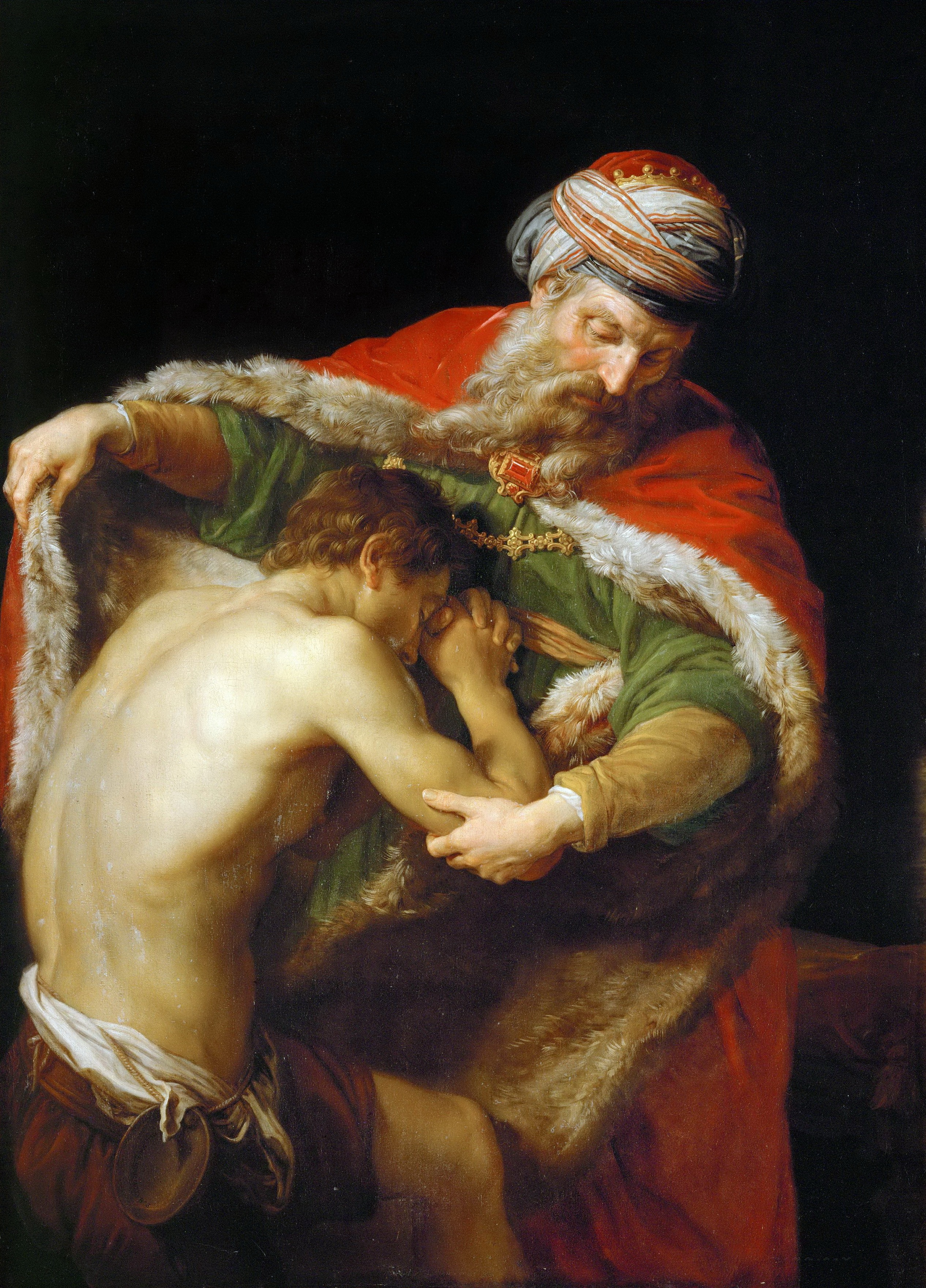
.jpg)









.jpg)
.jpg)
