
- Session 1 - The Announcements (Luke 1:1-56)
- Session 2 - The Births (Luke 1:57–2:21)
- Session 3 - Jesus in the Temple (Luke 2:22-52)
- Session 4 - The Ministry of the Baptist (Luke 3:1-20)
- Session 5 - Jesus is Identified (Luke 3:21–4:13)
- Session 6 - Off and Running (Luke 4:14–5:16)
- Session 7 - Early Controversies (Luke 5:17–6:11)
- Session 8 - Choosing and Preparing the 12 (Luke 6:12-49)
- Session 9 - The Christ (Luke 7:1-50)
- Session 10 - Hearing and Doing (Luke 8:1-21)
- Session 11 - Revealing the Power of God (Luke 8:22-56)
- Session 12 - You Are the Christ of God (Luke 9:1-27)
- Session 13 - A Different Kind of Christ (Luke 9:28-50)
- Session 14 - Beginning the Journey (Luke 9:51–10:24)
- Session 15 - Love of God and Neighbor (Luke 10:25-42)
- Session 16 - Prayer (Luke 11:1-13)
- Session 17 - Conflicts and Controversies (Luke 11:14-54)
- Session 18 - Getting Ready [Part 1] (Luke 12:1-34)
- Session 19 - Getting Ready [Part 2] (Luke 12:35–13:9)
- Session 20 - Unexpected Reversals (Luke 13:10-35)
- Session 21 - Kingdom Etiquette (Luke 14:1-35)
- Session 22 - Parables of Joy (Luke 15:1-32)
- Session 23 - The Problem with Wealth (Luke 16:1-31)
- Session 24 - Forgiveness and Faith (Luke 17:1-19)
- Session 25 - The Kingdom Is Coming (Luke 17:20–18:8)
- Session 26 - Humility (Luke 18:9-30)
- Session 27 - Approaching the City (Luke 18:31–19:28)
- Session 28 - The Entry into Jerusalem (Luke 19:29-48)
- Session 29 - Jesus in the Temple Again (Luke 20:1–21:4)
- Session 30 - The Coming End (Luke 21:5-38)
- Session 31 - The Last Supper (Luke 22:1-20)
- Session 32 - Parting Words (Luke 22:21-38)
- Session 33 - Prayer, Arrest and Denials (Luke 22:39-62)
- Session 34 - Trials (Luke 22:63–23:25)
- Session 35 - Crucifixion and Death (Luke 23:26-56)
- Session 36 - Empty Tomb and Emmaus Road (Luke 24:1-35)
- Session 37 - The Blessing and Departure (Luke 24:36-53)
In our thirty-fourth session, we looked at Luke 22:63–23:25 and talked about Jesus's trials. The discussion and passage are below.
Luke 22:63-23:25 [New Revised Standard Version Updated Edition]

When day came, the assembly of the elders of the people, both chief priests and scribes, gathered together, and they brought him to their council. They said, “If you are the Messiah, tell us.” He replied, “If I tell you, you will not believe, and if I question you, you will not answer. But from now on the Son of Man will be seated at the right hand of the power of God.” All of them asked, “Are you, then, the Son of God?” He said to them, “You say that I am.” Then they said, “What further testimony do we need? We have heard it ourselves from his own lips!”
Then the assembly rose as a body and brought Jesus before Pilate. They began to accuse him, saying, “We found this man inciting our nation, forbidding us to pay taxes to Caesar and saying that he himself is the Messiah, a king.” Then Pilate asked him, “Are you the king of the Jews?” He answered, “You say so.” Then Pilate said to the chief priests and the crowds, “I find no basis for an accusation against this man.” But they were insistent and said, “He stirs up the people by teaching throughout all Judea, from Galilee where he began even to this place.”

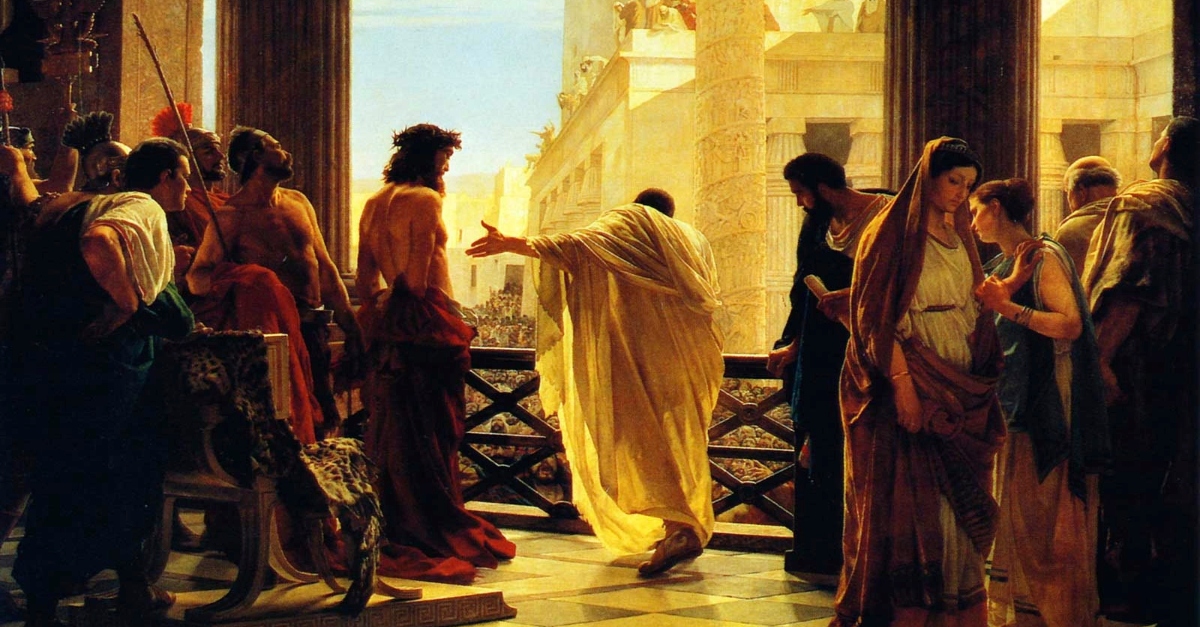
Then they all shouted out together, “Away with this fellow! Release Barabbas for us!” (This was a man who had been put in prison for an insurrection that had taken place in the city and for murder.) Pilate, wanting to release Jesus, addressed them again, but they kept shouting, “Crucify, crucify him!” A third time he said to them, “Why, what evil has he done? I have found in him no ground for the sentence of death; I will therefore have him flogged and then release him.” But they kept urgently demanding with loud shouts that he should be crucified, and their voices prevailed. So Pilate gave his verdict that their demand should be granted. He released the man they asked for, the one who had been put in prison for insurrection and murder, and he handed Jesus over as they wished.


No comments:
Post a Comment